

Sustainability · 2025
In this section51 topics
- Sustainability Policy3 items
- Sustainability Goals & UN SDGs3 items
- Policy Review3 items
- Business Value Chain1 item
- Stakeholder Analysis1 item
- Environmental Policy & Guidelines3 items
- Environmental Policy Review3 items
- Energy — Plan & Guidelines2 items
- Energy — Electricity Consumption1 item
- Energy — Fuel Consumption1 item
- Energy — Targets2 items
- Energy — Performance & Outcomes2 items
- Water — Plan & Guidelines2 items
- Water — Withdrawal, Discharge & Consumption1 item
- Water — Targets2 items
- Water — Performance & Outcomes2 items
- Waste — Plan & Guidelines2 items
- Waste — Generation, Disposal & Recycling1 item
- Waste — Targets2 items
- Waste — Performance & Outcomes2 items
- GHG — Plan & Guidelines2 items
- GHG — Emissions1 item
- GHG — Emissions Verification2 items
- GHG — Principles & Standards1 item
- GHG — Targets1 item
- GHG Targets — Net Zero1 item
- GHG Targets — Carbon Neutrality1 item
- GHG — Performance & Outcomes2 items
- Environmental Legal Incidents1 item
- Social Policy & Guidelines3 items
- Social Policy Review4 items
- Social — Principles & Standards Practised2 items
- Human Rights Due Diligence2 items
- Employees — Plan & Guidelines3 items
- Employees — Workforce1 item
- Employees — Remuneration & Provident Fund1 item
- Employees — Training & Development1 item
- Employees — Occupational Health & Safety1 item
- Employees — Labour Relations1 item
- Employees — Employee Representation2 items
- Employees — Targets2 items
- Employees — Performance & Outcomes2 items
- Customers — Plan & Guidelines3 items
- Customers — Satisfaction Results1 item
- Customers — Targets2 items
- Customers — Performance & Outcomes2 items
- Community & Social — Plan & Guidelines3 items
- Community & Social — Targets2 items
- Community & Social — Performance & Outcomes2 items
- Other Social Management1 item
- Law Violation Incidents1 item
Sustainability Policy
Has a Sustainability Policy
Yes
Policy Description
Ubon Bio Ethanol Public Company Limited and its subsidiaries (" The Company " or " UBE Group ") operates its business under a new vision: "To be a leading organization committed to enhancing the quality of life and well-being of society through organic agriculture, food, and bio-innovations for sustainable development." The Company has established a sustainable development policy under the framework of balanced development across three dimensions (ESG), namely:
-
Economic Dimension (Profit/Governance): focuses on transparent and good governance management, and comprehensive risk management, with a strong internal control system applying the COSO (ICSR) framework to verify the accuracy of ESG data, and external data verification (Third-party Verification) for transparency.
-
Environmental Dimension (Planet): operates under the QSHE&E policy (Quality, Occupational Health, Safety, Environment, and Energy Management) to mitigate the impacts of business operations, focusing on management according to the BCG (Bio-Circular-Green) model, with key projects such as Zero Waste management, biogas production from wastewater and cassava pulp for recycling as alternative energy, as well as enhancing water use efficiency (Water Security).
-
Social Dimension (People): driven by the "UBE CARE" strategy and Creating Shared Value (CSV), prioritizing safety and occupational health in accordance with ISO 45001 standards, and enhancing the quality of life for farmers through the "Ubon Model Plus" project to promote low-carbon agriculture and the international sustainability standard system ISCC PLUS.
Policy Document Link
https://www.ubonbioethanol.com/storage/document/corporate-governance/ube-sustainability-policy-th.pdf
Sustainability Goals & UN SDGs
Has Sustainability Goals
Yes
Goals Description
Sustainability Management Goals of Ubon Bio Ethanol Public Company Limited and its subsidiaries (" The Company " or " UBE Group ") are established under a balanced development framework across three dimensions: Economy (Profit), Environment (Planet), and Society (People), linked to the United Nations Sustainable Development Goals (UN SDGs) and the concept of Creating Shared Value (CSV).
Target information aligned with both short-term and long-term business strategies is detailed as follows:
Climate and Greenhouse Gas Management Goals (Climate Action)
The Company has developed a clear GHG Emissions Roadmap to become a low-carbon organization, in line with its new vision focused on bio-innovation.
-
Short-term (2025 – 2030)
-
2025: Reduce greenhouse gas emissions by 3% from the 2024 base year.
-
2030: Aim to reduce greenhouse gas emissions (Scope 1 and 2) by 50%.
-
-
Medium-term (2040): Achieve Carbon Neutrality covering Scope 1, 2, and 3.
-
Long-term (2050): Achieve Net Zero Greenhouse Gas Emissions.
Resource and Environmental Management Goals
The Company focuses on enhancing resource efficiency in line with the Circular Economy concept.
-
Water Management
-
set quantitative targets (Water Intensity), such as ethanol production not exceeding 14.73 cubic meters/liter of water.
-
Medium-term goal (2028): Increase the proportion of recycled water to no less than 15%,
-
-
Energy Management: Reduce electricity consumption and increase fuel efficiency per unit of production through measurable Key Performance Indicators (KPIs),
-
Waste Management:
-
2025: Increase the volume of recycled waste sold by no less than 5% compared to the base year,
-
2026: Reduce the volume of general solid waste by 2%.
-
3. Social & Supply Chain Goals
-
Raw Material Sustainability: Promote sustainable agriculture through ISCC PLUS standards, aiming to expand certified cassava cultivation areas to 10,000 rai by 2027.
-
Organizational Safety: Adhere to the "Safety First" policy, aiming for a continuous zero Lost Time Injury Frequency Rate (LTIFR).
-
International Standards: Elevate ESG operations to achieve international assessments, such as FTSE Russell by 2026, and disclose information according to SET ESG criteria.
The Company has Review policies and Organizational sustainability management goals aligned with business operating strategies Annually (last updated on December 8, 2025) to ensure these goals align with the organizational strategy, sustainable development direction, and the expectations of all stakeholder groups. ,, with oversight by the Risk and Sustainability Management Committee to achieve the planned Roadmap results.
UN Sustainable Development Goals
| SDG Goal |
|---|
| Goal 1 No Poverty |
| Goal 2 Zero Hunger |
| Goal 3 Good Health and Well-being |
| Goal 4 Quality Education |
| Goal 5 Gender Equality |
| Goal 6 Clean Water and Sanitation |
| Goal 7 Affordable and Clean Energy |
| Goal 8 Decent Work and Economic Growth |
| Goal 9 Industry, Innovation and Infrastructure |
| Goal 10 Reduce Inequalities |
| Goal 11 Sustainable Cities and Communities |
| Goal 12 Responsible Consumption and Production |
| Goal 13 Climate Action |
| Goal 14 Life below Water |
| Goal 15 Life on Land |
| Goal 16 Peace, Justice and Strong Institutions |
| Goal 17 Partnerships for the Goals |
Policy Review
Policy Reviewed This Year
Yes
Policy Changed This Year
Yes
Review Details
On December 8, 2025, the ESG & CFO Working Group reviewed the company's sustainability policy and goals to align them with business operating strategies and FTSE Russell's assessment criteria. Clarity was added to key issues, including Climate Change, Water Management, Circular Economy, and Biodiversity. Subsequently, the Board of Directors' meeting resolved to approve the revised sustainability policy and goals on February 24, 2026.
Business Value Chain
Value Chain Description
An overview of the company's key activities, covering from upstream to downstream, focusing on creating sustainable value through the BCG (Bio-Circular-Green) model, can be summarized as follows:
Upstream Activities
Raw Material Sourcing and Agricultural Sustainability: The company prioritizes the security and sustainability of its main raw material (cassava) by implementing the following:
Farmer Promotion: Implementing the "Ubon Model Plus" project to provide knowledge on organic cassava cultivation and agricultural innovation, helping to reduce costs and increase farmers' income.
International Sustainability Standards: Promoting production under the ISCC PLUS system, which emphasizes traceability, efficient resource utilization, and prevention of deforestation (No Deforestation).
Green Supply Chain Management: Focusing on Low-Carbon Agriculture to reduce greenhouse gas emissions from the agricultural sector (Scope 3) and strictly enforcing the Supplier Code of Conduct.
Midstream Activities
Environmentally friendly production processes and innovations, focusing on maximum production efficiency under the concept of Circular Economy and international standards.
Production Standards: Operating under Quality, Environmental, and Occupational Health and Safety Management Systems (ISO 9001, ISO 14001, ISO 45001).
Zero Waste to Landfill Management: Utilizing by-products from production processes, such as wastewater and cassava pulp, to produce biogas for use as renewable energy in the factory and for electricity generation.
Resource Management: Focusing on Water Security through water recycling and enhancing energy efficiency to achieve Carbon Neutrality and Net Zero goals.
Downstream Activities
Products and Consumer Response: Delivering quality products and elevating them to high-value products.
Business Diversity: Covering ethanol business, high-value cassava starch (e.g., gluten-free flour), solar energy, and food business.
Innovation and Research (R&D): Focusing on developing products that meet global health trends and environmentally friendly biological products, such as Sustainable Aviation Fuel (SAF).
Relationship Management: Providing diverse communication channels with customers, including product traceability to ensure sustainability throughout the supply chain.
Stakeholder Management Throughout the Value Chain
The company has processes to analyze and respond to the expectations of all stakeholder groups in a balanced manner.
Employees: Emphasizing "Safety First" (Zero Accident) and skill development towards a Smart Factory.
Community and Society: Driven by the "UBE CARE" strategy across four dimensions (Environment, Culture, Education, and Health) to create shared value (Creating Shared Value: CSV).
Governance: Utilizing a robust internal control system (COSO/ICSR) to ensure that ESG disclosures in the One Report are accurate, transparent, and verified by external agencies. This overview demonstrates that UBE Group not only focuses on business profits but also concretely integrates environmental and social responsibilities into every activity of its value chain.
Stakeholder Analysis
Stakeholder Analysis
| Stakeholder Type | Stakeholders | Stakeholder Expectations | Response to Expectations | Communication Activities |
|---|---|---|---|---|
| Internal stakeholders | 2921 · Description: Employees | Fair and competitive compensation and benefits - Workplace safety - Opportunities for skill development and career advancement | The Company provides a compensation and welfare structure that is appropriate and competitive in the labor market, while promoting a safety culture at work under the concept of Safety First, aiming for a Zero Accident goal in the production process. Additionally, the Company has developed a personnel development plan (Training Roadmap) to enhance employee skills and prepare for operations in a Smart Factory format. | 2941 · Description: Online Communication · 2942 · Description: Internal Meeting · 2945 · Description: Complaint Reception · 2946 · Description: Employee Engagement Survey · 2947 · Description: Satisfaction Survey · 2948 · Description: Training / Seminar |
| External stakeholders | 2923 · Description: Customers | High-quality and high-standard products, such as ethanol and starch products. Timely delivery of products. Continuous development of product innovation. | The Company aims to maintain international quality standards such as ISO, GMP, and HACCP, while also prioritizing research and development of new products to meet evolving consumer demands, such as gluten-free flour products (Gluten-Free). | 2941 · Description: Online Communication · 2945 · Description: Complaint Reception · 2949 · Other name: Customer Relationship Management System (CRM) · Description: Others |
| External stakeholders | 2913 · Description: Shareholders | Sustainable performance growth - Good corporate governance - Transparent and equitable disclosure of information | The company operates its business under good corporate governance principles, establishes an appropriate dividend policy, and transparently discloses information to shareholders through investor relations channels. | 2939 · Description: Press Release · 2941 · Description: Online Communication · 2944 · Description: Annual General Meeting (AGM) · 2949 · Other name: Opportunity Day · Description: Others |
| External stakeholders | 2936 · Other name: Tapioca Yard · Description: Others | Stable and long-term business relationships - Standardized and transparent procurement system | The Company developed a fast payment system (Fast Payment) and established clear criteria for cassava quality inspection to build confidence and transparency in the procurement process. | 2945 · Description: Complaint Reception · 2949 · Other name: Site visit by the Purchasing Department · Description: Others · 2949 · Other name: Partner Meeting · Description: Others |
| External stakeholders | 2893 · Description: Farmers | Fair product prices - Support for knowledge and production inputs | The Company continuously implements the "Ubon Model" project to promote knowledge in organic cassava cultivation, which helps reduce production costs, increase product quality, and create stable income for farmers. | 2938 · Description: Visit · 2941 · Description: Online Communication · 2949 · Other name: Agricultural Learning Center · Description: Others |
| External stakeholders | 2918 · Description: Contractors | Fair and Transparent Procurement Process - Operational Safety Standards | The Company establishes a transparent vendor selection process (Vendor Selection) and rigorously defines safety standards for operations within the factory premises. | 2949 · Other name: Pre-commencement briefing meeting · Description: Others · 2949 · Other name: Safety Training · Description: Others |
| External stakeholders | 2902 · Description: Community · 2928 · Description: Society | Environmentally friendly business operations - Local employment - Community development participation | The Company implements environmental management under the Zero Waste concept, utilizing a wastewater treatment system and effective odor control technology. In addition, the Company organizes Open House events to provide opportunities for the community to study and inspect the factory's operational processes, as well as continuously support community development activities. | 2943 · Description: External Meeting · 2949 · Other name: Corporate Social Projects (UBE CARE) · Description: Others |
| External stakeholders | 2931 · Description: Government agencies and Regulators | - Strict compliance with laws and regulations - Participation in local economic development | The Company operates its business in strict adherence to relevant laws and regulations, consistently reporting environmental and operational data to regulatory bodies. Additionally, it collaborates with government agencies to support the development of the bio-economy (Bio-Economy). | 2949 · Other name: Inspection by government agencies · Description: Others · 2949 · Other name: Participation in government activities and projects · Description: Others |
| External stakeholders | 2898 · Description: Competitors | - Fair trade competition - Collaborative development of industry standards | The Company operates its business under the framework of competition law and participates in industry networks or associations to collectively elevate the standards of Thailand's ethanol industry. | 2943 · Description: External Meeting · 2949 · Other name: Industrial data exchange · Description: Others |
| External stakeholders | 2929 · Description: Media | Access to accurate and timely information | The Company prioritizes accurate and transparent information disclosure, disseminating data through its corporate website, press releases, and various communication channels to ensure stakeholders receive accurate and timely information. | 2939 · Description: Press Release · 2941 · Description: Online Communication · 2949 · Other name: Executive-Media Engagement Activity · Description: Others |
Environmental Policy & Guidelines
Has an Environmental Policy
Yes
Policy Description
Overall Environmental Policy and Practices
The company operates under its Quality, Occupational Health, Safety, Environment, and Energy Management (QSHE&E) policy, which focuses on environmentally friendly production in accordance with international standards (ISO 14001) and the Circular Economy concept, with annual policy reviews to align with organizational strategies and SET ESG and FTSE Russell criteria.
Environmental Guidelines
Energy management (electricity, fuel, and clean energy)
Focus on increasing energy efficiency per unit of production (Energy Intensity).
Renewable Energy: Utilize by-products (cassava pulp and wastewater) to produce Biogas for use as fuel in boilers and electricity generation, including the use of Floating Solar to reduce reliance on external electricity.
Water resource and water quality management
Adhere to the principle of Water Security by regularly conducting Water Risk Assessment.
Goal: Set Water Intensity per unit of product for ethanol not exceeding 14.73 m3/liter and for starch not exceeding 15 m3/ton.
Recycling: Increase the proportion of water reuse (Recycle) to at least 15% by 2028 and ensure 100% of wastewater quality meets standard criteria.
Waste management
Implement 3R (Reduce, Reuse, Recycle) strategies and 8R activities to achieve the goal of Zero Waste to Landfill.
Waste is clearly separated by type (general, recyclable, hazardous) and aims to increase the sale of recyclable waste by at least 5%.
Greenhouse gas and climate change management
Establish a clear roadmap: Carbon Neutrality by 2040 and Net Zero Emissions by 2050.
Prepare greenhouse gas inventory according to ISO 14064-1 standard and undergo Third-party Verification.
In 2025, greenhouse gas emissions were reduced by 29.33% compared to the base year 2024, through 11 greenhouse gas reduction projects.
Biodiversity management
Commit to "No Deforestation" throughout the supply chain.
Elevate farmer standards through the ISCC PLUS system to promote sustainable cultivation.
Maintain green areas around the factory and restore ecosystems, such as developing treatment ponds into habitats for waterfowl.
Air quality and noise pollution management
Control stack emissions (CO, NOx, SO2, TSP) to be better than legal standard values.
Implement dust prevention measures, such as installing water curtains around cassava pulp warehouses and a wheel washing system for transport vehicles before leaving the factory.
Excellent operational performance for the year 2025.
The company has no cases of environmental law violations or incidents that significantly negatively impact the environment, and has received certificates for good safety and environmental management systems from government agencies.
Environmental Guidelines
| Guideline |
|---|
| Electricity Management |
| Fuel Management |
| Renewable/Clean Energy Management |
| Water Management |
| Waste Management |
| Biodiversity Management |
| Greenhouse Gas and Climate Change Management |
| Air Quality Management |
| Noise Pollution Management |
Environmental Policy Review
Policy Reviewed This Year
Yes
Review Details
Review Process and Operational Framework
The company has reviewed its sustainability management policies and targets through the consideration of the Sustainability (ESG) Working Group and the Greenhouse Gas Management (CFO) in their 4th meeting on December 8, 2025. Subsequently, the Board of Directors' meeting approved the revised sustainability policies and targets on February 24, 2026.
This review aims to align with the organizational strategy, international sustainable development trends, and evaluation criteria from external agencies such as SET ESG and FTSE Russell.
Significant Changes and Developments
The review results led to the improvement of policies and practices in several dimensions to elevate operational standards, as follows:
Improvement of QSHE&E Policy
The company has revised its Quality, Occupational Health, Safety, Environment, and Energy Management (QSHE&E) policy by clearly separating environmental issues to align with FTSE Russell's assessment dimensions.
Elevation of Climate Change Targets
-
The company has reviewed and elevated its previous goal of achieving carbon neutrality by 2065, adjusting it to focus on achieving Net Zero greenhouse gas emissions by 2050 (B.E. 2593) in alignment with the national direction.
-
Defined clear greenhouse gas reduction targets covering Scope 1, 2, and 3, with a short-term target of a 3% reduction by 2025 compared to the 2024 baseline year.
Clarity on other environmental issues
Increased clarity and defined targets in water management (e.g., a target of 15% recycled water usage by 2028), circular economy, and biodiversity (e.g., a commitment to No Deforestation).
Driving towards Implementation (Concrete KPIs)
Management emphasized setting environmental operational targets as concrete, measurable Key Performance Indicators (KPIs). Examples of targets confirmed by the review include:
-
Energy Management: Reduce electricity consumption per unit of production and increase fuel efficiency.
-
Water Management: Set a Water Intensity Target for ethanol not exceeding 14.73 cubic meters/liter and for starch not exceeding 15 cubic meters/ton.
-
Waste Management: Set a target to increase the volume of recycled waste sold by no less than 5% compared to the baseline year.
The review also includes the adoption of international standard ISO 14064-1 for greenhouse gas accounting and arranging for data verification by an independent external agency (Third-party Verification) to build confidence and transparency in disclosing information to stakeholders.
Policies & Guidelines Changed
| Change |
|---|
| Electricity Management |
| Fuel Management |
| Renewable/Clean Energy Management |
| Water Management |
| Waste Management |
| Biodiversity Management |
| Greenhouse Gas and Climate Change Management |
| Air Quality Management |
| Noise Pollution Management |
Energy — Plan & Guidelines
Has an Energy Management Plan
Yes
Plan Description
Policy Framework and Key Objectives
The Company operates under its Quality, Occupational Health, Safety, Environment, and Energy Management (QSHE&E) Policy and its Greenhouse Gas Management (CFO) Policy, focusing on the following approaches:
-
Efficient Energy Utilization: Aim to reduce electricity and fuel consumption per unit of production (Energy Intensity) in the ethanol and tapioca starch businesses.
-
Reliance on Internal Renewable Energy: By applying the Circular Economy concept, by-products and waste from the production process are converted back into energy to reduce external energy consumption.
-
KPI Setting: 2024 is designated as the baseline year to continuously monitor and evaluate energy reduction efforts towards the target years of 2026 and 2027.
Clean Energy Production and Resource Circularity
The Company concretely utilizes technology to convert "waste" into "energy" (Waste-to-Energy).
-
Biogas: Wastewater and tapioca pulp are processed through anaerobic treatment systems (MUR, UASB, CLBR) to produce biogas. This biogas is then used as fuel in boilers to generate heat/steam and as fuel for generators with a total capacity of 7.5 megawatts.
-
Solar Floating: Installation of a 2.83-megawatt floating solar power generation system to enhance the proportion of clean electricity usage.
-
Results: In 2025, the Company was able to generate a total of 23,038,022 kWh of electricity from renewable energy sources (biogas and solar power) for use in its production processes. However, this renewable electricity volume decreased by 29.4% compared to 2024 due to a reduction in biogas production from the manufacturing process. This enabled the Company to reduce external electricity purchase costs by approximately 92 million baht. Despite the decrease in renewable electricity from the previous year, the Company can still utilize over 23 million units of renewable energy internally per year.
Efficiency Improvement Project Plan for 2025
The Company has defined specific projects to reduce energy consumption in each operational area as follows:
Ethanol Production Plant
-
Steam Trap Replacement Project to reduce heat energy loss
-
MUR Biogas Leaks Control Project
-
Installation of inverters to control wastewater pumps and replacement of light bulbs with LEDs throughout the treatment system.
Tapioca Starch Production Plant
-
Project to improve tapioca starch drying to reduce fuel consumption.
-
Utilizing SCADA L1 system to reduce human error and maintain stable energy consumption.
-
Project to reduce water usage in the production process, which directly impacts the reduction of electricity consumption in pumping systems.
Strategic Plan based on Greenhouse Gas Emission Scopes (Scope 1 & 2)
-
Scope 1 (Direct): Focus on improving the stability of machinery (Boiler, Generator) and increasing the proportion of biofuel usage to replace fossil fuels.
-
Scope 2 (Indirect - Energy): Aim to maximize the use of self-generated renewable energy and implement basic energy-saving measures, such as controlling the shutdown of electricity and air conditioning during breaks.
Linkage to Long-Term Sustainability Goals
The entire energy management plan is part of the organization's Net Zero Greenhouse Gas Emissions Roadmap.
-
2040: Achieve Carbon Neutrality
-
2050: Achieve Net Zero greenhouse gas emissions, covering Scope 1, 2, and 3.
Energy — Electricity Consumption
Electricity Consumption
| Metric | Current Year | Previous Year | Two Years Ago |
|---|---|---|---|
| Total electricity consumption within the organization (Kilowatt-Hours) | 59,172,943 | 71,646,482.44 | 55,567,109.86 |
| Electricity purchased for consumption from non-renewable energy sources (Kilowatt-Hours) | 36,134,921 | 41,081,277.44 | 27,314,795.55 |
| Electricity purchased or generated for consumption from renewable energy sources (Kilowatt-Hours) | 23,038,022 | 30,565,205 | 28,252,314.31 |
Energy — Fuel Consumption
Fuel Consumption
| Metric | Current Year | Previous Year | Two Years Ago |
|---|---|---|---|
| Crude oil (Barrels) | 0 | 0 | 0 |
| Coal (Metric tonnes) | 0 | 0 | 0 |
| Jet fuel (Litres) | 0 | 0 | 0 |
| Diesel (Litres) | 1,933,865 | 2,649,616 | 2,318,483 |
| Gasoline (Litres) | 2,570.5 | 1,160.4 | 0 |
| Fuel oil (Litres) | 231 | 27,037 | 0 |
| Natural gas (Standard cubic feet) | 0 | 0 | 0 |
| LPG (Kilograms) | 654 | 2,844 | 0 |
| Steam (Metric tonnes) | 0 | 0 | 0 |
Energy — Targets
Has Set Targets
Yes
Targets
| Target | Base Year | Base Year Value | Target Year | Target Year Value | Unit |
|---|---|---|---|---|---|
| Reduction of electricity purchased and fuel consumption | 2,024 | 0.3 | 2,026 | 0.28 | Kilowatt-hour |
| Reduction of fuel consumption | 2,024 | 7.97 | 2,027 | 7.5 | Mega Joules |
Energy — Performance & Outcomes
Has Performance Results
Yes
Performance Description
In 2025, the Group of Companies demonstrated outstanding performance in energy management, focusing on enhancing resource efficiency and self-reliance through renewable energy. Details of key projects and awards are as follows:
Energy Performance Results for 2025
-
Electricity Consumption: The company's total electricity consumption across the organization was 59,172,943 kilowatt-hours (kWh), with external electricity purchases reduced to 36,134,921 kWh (a decrease from 41.08 million kWh in 2024).
-
Renewable Energy Proportion: 23,038,022 kWh of electricity was generated from self-produced renewable energy sources within the organization, comprising 20,492,822 kWh from Biogas and 2,545,200 kWh from Solar energy.
-
Fuel Management: A total of 32,522,885 Nm of biogas was produced internally. 3 and used as fuel in boilers to reduce fossil fuel consumption by 22,752,818 Nm. 3
Key Energy Efficiency Improvement Projects in 2025
In 2025, the company implemented a total of 11 greenhouse gas reduction and energy management projects, achieving targets for 10 projects. Key projects include:
Floating Solar Project 2 : Successfully generated electricity for internal use and reduced greenhouse gas emissions by 601.09 tCO2e.
Wastewater Treatment System Projects :
-
Stop Leak Reactor tank A, B, C, D (Plant MUR): Controlled methane gas leakage by 912,864 Nm. 3
-
Inverter Installation: To control the flow rate of wastewater pumps instead of the traditional on-off method, reducing electricity consumption by 86,400 kWh/year.
-
Pump Type Change: From screw pumps to centrifugal pumps to reduce energy consumption per unit of water.
Projects in the Tapioca Starch Production Plant
-
Project for Improving Dried Starch (Finished Goods) Drying: To enhance efficiency and reduce energy consumption.
-
SCADA L1 System Improvement Project: To reduce human error and maintain stable energy consumption.
Projects in the Ethanol Production Plant : Replaced Steam Traps to reduce heat energy loss and converted all treatment system lights to LED.
Awards and Certifications Received in 2025
-
Safety and Environmental Certificate: UBE and UBS companies received certificates from the "Safety Culture Together in The Work Place" campaign for the year 2025 from the Ubon Ratchathani Provincial Labor Protection and Welfare Office, reflecting a standardized management system.
-
Role Model Award: The Safety and Environment Department Manager received a certificate as "Occupational Safety Officer, Co-driver and Supporter of Safety Activities for the Year 2025".
-
International Standard Certification: The company's greenhouse gas emission data for 2025 (113,689 tCO2e) has been verified and certified by Bureau Veritas (Thailand) Ltd.
-
National Project Participation: The company has joined the Net Zero Pathway Accelerator project with the Stock Exchange of Thailand to drive the organization towards a sustainable low-carbon society.
Water — Plan & Guidelines
Has a Water Management Plan
Yes
Plan Description
Key Policies and Objectives
The Company has established an efficient water resource management policy to reduce environmental and community impacts, with the objective of creating a clear operational framework for valuable water use, managing climate-related water risks (e.g., droughts), and fostering transparency in data disclosure according to international standards such as FTSE Russell (FTSE Theme E3).
Setting Quantitative Targets (Water Intensity Target)
In 2025, the Company has set stricter water consumption targets per unit of production to monitor resource utilization efficiency, as follows:
Ethanol Production Business: Water consumption target is set at no more than 14.73 cubic meters per liter of product.
Tapioca Starch Production Business: Water consumption target is set at no more than 15 cubic meters per ton of starch.
Mid-term Target: Aim to increase the water recycle rate to no less than 15% by 2028.
Management Approaches and Key Measures
To achieve these targets, the Company has established the following practices:
Efficiency Improvement and Reuse/Recycle: Technology is installed to more precisely control water usage in production lines, and processed water is reused, for example, for washing raw materials and fermentation tanks.
Wastewater Management: The wastewater treatment systems (MUR, UASB, CLBR) are controlled for maximum efficiency to ensure that effluent quality meets standards. It is stipulated that 100% of wastewater from the production process must undergo treatment before discharge.
Risk Assessment: Water risks are assessed in the Lam Dom Yai watershed, which is considered a Water-Stressed Area, using international standard tools.
Corporate Social Value (CSV) Project: Treated water is utilized to its fullest potential through the "Treated Water Distribution for Agriculture Project" (Fertilizer Water) to support farmers around the factory.
Monitoring and Oversight
Monitoring: Water consumption volume and wastewater quality are monitored monthly, and results are regularly reported to senior management.
Board Oversight: The Enterprise Risk and Sustainability Management Committee is directly responsible for overseeing water-related policies and monitoring performance.
Target Review: In 2025, the ESG & CFO Working Group reviewed and confirmed these targets to align with sustainable growth strategies.
Water — Withdrawal, Discharge & Consumption
Water Withdrawal, Discharge & Consumption
| Metric | Current Year | Previous Year | Two Years Ago |
|---|---|---|---|
| Total water withdrawal (Cubic meters) | 5,316,035 | 5,597,087 | 5,313,158 |
| Total water withdrawal by third-party water (Cubic meters) | 3,769,235 | 4,187,087 | 3,718,358 |
| Total water withdrawal by surface water (Cubic meters) | 1,546,800 | 1,410,000 | 1,594,800 |
| Total water withdrawal by groundwater (Cubic meters) | |||
| Total water withdrawal by seawater (Cubic meters) | |||
| Total water withdrawal by produced water (Cubic meters) | |||
| Percentage of wastewater treated before discharge (%) | 64.27 | 87.26 | 77.7 |
| Total water discharge (Cubic meters) | 4,401,868 | 4,600,039 | 3,760,412 |
| Total water discharge to third-party water (Cubic meters) | |||
| Total water discharge to surface water (Cubic meters) | |||
| Total water discharge to groundwater (Cubic meters) | |||
| Total water discharge to seawater (Cubic meters) | |||
| Total water consumption (Cubic meters) | 914,167 | 997,048 | 1,552,746 |
| Recycled water (Cubic meters) |
Water — Targets
Has Set Targets
Yes
Targets
| Target | Base Year | Base Year Value | Target Year | Target Year Value | Unit | Per Unit (Intensity) | Per Unit — Please Specify |
|---|---|---|---|---|---|---|---|
| Reduction of water withdrawal | 2,024 | 16.58 | 2,025 | 17.74 | Cubic meters | Litre of product | Litre of product |
| Reduction of water consumption | 2,024 | 21.84 | 2,025 | 21.74 | Cubic meters | Litre of product | Litre of product |
Water — Performance & Outcomes
Has Performance Results
Yes
Performance Description
In 2025, the company's water management performance focused on Water Security and enhancing resource circulation efficiency in line with the circular economy concept, with details as follows:
Key Quantitative Statistics and Results
-
Total Water Consumption: In 2025, the company's total water consumption was 3,769,235 cubic meters, divided into 1,546,800 cubic meters drawn from surface water sources (Lam Dom Yai River) and 2,222,435 cubic meters from the organization's retention ponds.
-
Water Recycle Rate: The company successfully increased the proportion of recycled water to 7.63 percent of total water consumption (or 287,586 cubic meters), an increase from 4.13 percent in 2024.
-
Water Intensity: (1) The ethanol business has an average water consumption rate of 17.74 cubic meters per liter (while the target is 14.73), and (2) the cassava starch business has an average water consumption rate of 21.74 cubic meters per ton of starch (while the target is 15.00).
Note: Although the operational results have not yet met the set targets due to limitations in production process efficiency, the company has continuously upgraded its production process improvement measures to achieve the medium-term target of 15 percent by 2028.
Key Water Management Projects
-
Treated Water Distribution Project for Agriculture (Fertilizer Water): This is a Creating Shared Value (CSV) project that distributes 100% standard-compliant treated wastewater from the production process to farmers around the factory to cope with drought. In 2025, a total of 3,522,504 cubic meters of water were distributed, covering over 10,647 rai of agricultural land, with 503 farmers participating in the project.
-
Water Reduction Project in Starch Production Process: The company implemented improvement projects to reduce water consumption in the cassava starch production process from the original 20-22 cubic meters per ton of starch to only 10-13 cubic meters per ton of starch, which directly results in reduced electricity consumption in the water pumping system.
-
Water Treatment System Efficiency Improvement Projects: Such as the installation of Inverters to control wastewater pumps and the project to change the type of sludge pumps from Screw systems to Centrifugal systems to reduce energy per volume of water managed.
Related Awards and Certifications
-
Compliance with laws and international standards: In 2025, no cases of environmental law violations or wastewater discharge exceeding standard limits were found, and there were no complaints regarding water impacts from the community.
-
Safety and Environmental Certificate of Honor: The company received a certificate of honor from the “Safety Culture Together in The Work Place” campaign for 2025, which reflects its internationally standardized environmental and safety management system.
-
Greenhouse Gas Data Verification: Environmental data, including water management linked to greenhouse gas emissions, has been verified by an independent external agency, Bureau Veritas (Thailand) Ltd., for data transparency and accuracy.
Waste — Plan & Guidelines
Has a Waste Management Plan
Yes
Plan Description
The company's waste management plan for 2025 focuses on systematic management under the concept of a Circular Economy and the 3R strategy (Reduce, Reuse, Recycle) to achieve the Zero Waste to Landfill goal, with details as follows:
Key Policies and Practices
The company prioritizes waste reduction at the source, efficient waste sorting, and resource recovery for maximum value and reduced environmental impact. Operations adhere to ISO 14001:2015 standards.
Waste Management Details by Type
The company has categorized its waste collection and disposal plan into three main types as follows:
General Waste: Collection and disposal by relevant agencies are scheduled three times a week (Tuesdays, Thursdays, and Saturdays) to maintain cleanliness and prevent accumulation in operational areas.
Recyclable Waste: Employees are regularly encouraged to sort recyclable waste monthly, and recyclable materials (e.g., paper, plastic, metal) are sold off from the company once a month.
Hazardous Waste: Stored and sorted appropriately in controlled areas, with coordination for legally authorized disposal contractors to operate at least once a year or according to the volume of waste generated.
Strategic Goals for 2025
Increase Recyclable Waste Volume: Aiming to increase the volume of recyclable waste sold by no less than 5% compared to the base year (2024).
Incentive Program: Implementing the "Waste Sorting for Points" project under the concept of efficient resource utilization to incentivize employees to participate in proper waste sorting.
UBEYOND CARE 8R Activities: Raising employee awareness through various activities such as "Bottle for Egg," which uses proceeds from the sale of recyclable waste to purchase consumer goods for employees participating in the program.
Waste Management as Co-products
In line with the low-carbon business model, the company transforms waste from production processes into added value.
Wastewater and Cassava Pulp (Wet Cake): Introduced into an anaerobic wastewater treatment system to produce biogas for use as fuel for heat generation in the factory and electricity production.
Ethanol Residue (Distiller's Grains): Used to produce soil conditioners or raw materials for the organic bio-fertilizer industry.
Additional Guidelines for Sustainability
The company has planned to expand its management efforts in 2025 to prepare for targets in the following year (2026), which include:
Organic Waste Management: Food scraps and vegetable waste are sorted and forwarded to local farmers for use as animal feed. Reduce single-use plastics.
Campaigning for employees to use personal water bottles and tiffin carriers instead of foam boxes or plastic bags. All these operations are concretely monitored through Key Performance Indicators (KPIs) and internal data control is conducted to ensure that waste management aligns with the company's environmental goals.
Waste — Generation, Disposal & Recycling
Waste Generation, Disposal & Recycling
| Metric | Previous Year | Two Years Ago |
|---|---|---|
| Total waste generated (Kilograms) | 34,461,840 | 99,890 |
| Non-hazardous waste (Kilograms) | 34,401,540 | 82,690 |
| Non-hazardous waste - Landfilling (Kilograms) | ||
| Non-hazardous waste - Incineration (with energy recovery) (Kilograms) | ||
| Non-hazardous waste - Incineration (without energy recovery) (Kilograms) | ||
| Non-hazardous waste - Other disposal operations (Kilograms) | ||
| Hazardous waste (Kilograms) | 60,300 | 17,200 |
| Hazardous waste - Landfilling (Kilograms) | ||
| Hazardous waste - Incineration (with energy recovery) (Kilograms) | ||
| Hazardous waste - Incineration (without energy recovery) (Kilograms) | ||
| Hazardous waste - Other disposal operations (Kilograms) | ||
| Total reused/recycled waste (Kilograms) | ||
| Reused/Recycled non-hazardous waste (Kilograms) | ||
| Reused non-hazardous waste (Kilograms) | ||
| Recycled non-hazardous waste (Kilograms) | ||
| Reused/Recycled hazardous waste (Kilograms) | ||
| Reused hazardous waste (Kilograms) | ||
| Recycled hazardous waste (Kilograms) |
Waste — Targets
Has Set Targets
Yes
Targets
| Waste Type | Disposal Approach | Target | Base Year | Base Year Value | Target Year | Target Year Value | Unit |
|---|---|---|---|---|---|---|---|
| Non-hazardous waste | 2758 · Description: Reuse · 2759 · Description: Recycle · 2760 · Description: Landfilling | Increase waste utilization | 2,024 | 34,461.84 | 2,025 | 36,131.39 | Tonne |
Waste — Performance & Outcomes
Has Performance Results
Yes
Performance Description
In 2025, the Group implemented waste management performance and projects focusing on the Circular Economy concept and the 3R strategy (Reduce, Reuse, Recycle) to tangibly reduce the amount of waste requiring disposal. The details are summarized as follows:
Quantitative Performance in 2025
The Company clearly segregates and manages waste by type as follows:
Recyclable Waste: 5,630 kilograms were segregated and sold, an increase of 13.3% from 2024 (an increase of 1,330 kilograms), reflecting higher efficiency in resource segregation for reuse.
General Solid Waste: A total of 79,470 kilograms were disposed of by the Company through service providers in accordance with appropriate environmental management principles.
Hazardous Waste from Production Process: 5,620 kilograms were properly disposed of through legally authorized service providers.
Management of Waste as Co-products: The Company processes wet cake and wastewater through an anaerobic treatment system to produce biogas for use as alternative energy. In the past year, 100% of the total wet cake volume was managed.
Key Waste Management Projects in 2025
The Company conducts activities to foster participation and raise awareness among employees and youth, as follows:
Waste Segregation Point Accumulation Project: This project, launched in 2025, aims to incentivize employees to correctly segregate waste through a point accumulation system on Line Official.
UBEYOND CARE 8R Activities: Include sub-activities such as “Bottle for Egg Exchange,” where employees exchanged plastic bottles, glass, and aluminum, totaling 502 kilograms, for consumer goods. The revenue from selling this waste will be recirculated within the project.
UBE CARE National Youth Day 2025 Open House Project: Activity bases on “Waste Management Technology” were organized to educate youth around the factory about sustainable waste and environmental management approaches. Reuse Promotion Activities: such as reusing urea sacks and using deteriorated gasket sheets for ground cover to prevent grass growth in the treatment system area.
Awards and Certifications Received
Certificate of Honor: In 2025, UBE and UBS Companies received a certificate of honor for the “Safety Culture Together in The Work Place” campaign from the Ubon Ratchathani Provincial Labor Protection and Welfare Office, which includes good environmental and safety management standards.
International Standard Verification: Waste management and environmental data for 2025 were verified by Bureau Veritas (Thailand) Ltd. to confirm the accuracy, transparency, and reliability of the information.
Role Model Award: The Safety and Environment Section Manager received a certificate of honor as a safety officer contributing to safety and environmental activities in the province for 2025.
Additionally, in 2025, the Company conducted a wastewater spill emergency response drill on August 1, 2025, to prepare and prevent negative environmental impacts in the event of unforeseen incidents.
GHG — Plan & Guidelines
Has a GHG Management Plan
Yes
Plan Description
Greenhouse Gas Emission Targets and Cap
In 2025, the company has set more ambitious targets and plans compared to the 2024 baseline year, as follows:
-
Reduction Target: Aim to reduce greenhouse gas emissions by 3% from the 2024 baseline year, or by no less than 4,826 tons of carbon dioxide equivalent (tCO2e).
-
Emission Cap: The greenhouse gas emission cap for 2025 is set at no more than 156,043 tCO2e.
-
Target Enhancement: Previously aiming for carbon neutrality by 2065, in 2025 the company reviewed and elevated its new target to achieve Net Zero by 2050, in line with international standards and national directions.
Key Greenhouse Gas Reduction Projects for 2025
The company has defined a total of 11 greenhouse gas reduction projects, covering both Scope 1 and Scope 2, with the following key details:
Direct greenhouse gas emission reduction (Scope 1)
-
Stop Leak Reactor tank A, B, C, D Project (Plant MUR): To control methane leakage in the wastewater treatment system, which can reduce greenhouse gas emissions by approximately 9,928.97 tCO2e.
-
Improving the stability of machinery (Boiler, Generator, Fire Pump) and selecting refrigerants with low GWP values.
Indirect greenhouse gas emission reduction from energy consumption (Scope 2)
-
Floating Solar Project 2: Electricity generation from solar energy for in-house consumption.
-
Machinery Efficiency Improvement Projects: such as installing inverters to control wastewater pumps, changing sludge pumps to centrifugal types, and improving the efficiency of starch drying.
-
Water Reduction Project: Reduce water consumption in the starch production process from 20-22 cubic meters/ton to 10-13 cubic meters/ton, which directly reduces electricity consumption for water pumping. Supply Chain (Scope 3): Encourage partners (suppliers) to use biofuels and procure environmentally friendly products/services (Green Procurement).
Management Approach and International Standards
-
Data Verification: The company prepares its greenhouse gas inventory according to ISO 14064-1. In 2025, data verification was conducted by an independent external body, Bureau Veritas (Thailand) Ltd., for transparency and accuracy.
-
Participation in International Projects: Participating in the Science-based Target Alignment project (Phase 2) to set science-based targets, and the Net Zero Pathway Accelerator project in collaboration with the Stock Exchange of Thailand.
-
Organizational Culture Building: Implement the "UBEYOND CARE 8R" project and a point accumulation system via Line Official to raise awareness among employees to participate in reducing greenhouse gas emissions through daily activities.
Future Plans (GHG Emissions Roadmap)
The 2025 plan is part of the long-term roadmap set by the company, as follows:
-
2026: 17% reduction
-
2027: 30% reduction
-
2030: 50% reduction (short-term target for Scope 1 and 2)
-
2040: Achieve Carbon Neutrality
-
2050: Achieve Net Zero greenhouse gas emissions, covering Scope 1, 2, and 3.
GHG — Emissions
GHG Emissions
| Metric | Current Year | Previous Year |
|---|---|---|
| Total GHG emissions (Metric tonnes of carbon dioxide equivalent) | 113,689 | 160,869 |
| Total greenhouse gas emissions 1 (Metric tonnes of carbon dioxide equivalent) | 65,642 | 101,117 |
| Total greenhouse gas emissions 2 (Metric tonnes of carbon dioxide equivalent) | 16,995 | 20,538 |
| Total greenhouse gas emissions 3 (Metric tonnes of carbon dioxide equivalent) | 31,052 | 39,214 |
GHG — Emissions Verification
Emissions Verified by a Third Party
Yes
Verifying Body
2648
GHG — Principles & Standards
Principles & Standards Applied
| Standard |
|---|
| 2671 |
| 2677 |
GHG — Targets
Has Set GHG Targets
Yes
GHG Targets — Net Zero
Net Zero Targets
| Emission Scope | SBTi Status | TGO Certification | Base Year | Base Year Emissions | Near-term Target Year | Near-term Target Change (%) | Long-term Target Year | Long-term Target Change (%) | Target Year | Target Change (%) | Unit |
|---|---|---|---|---|---|---|---|---|---|---|---|
| 2716 | Commit | Net zero | 2,024 | 160,869 | 2,027 | 30 | 2,030 | 50 | 2,027 | 30 | Metric tonnes of carbon dioxide equivalent |
GHG Targets — Carbon Neutrality
Carbon Neutrality Targets
| Emission Scope | Carbon Neutrality Certified | Certifying Body | Base Year | Base Year Emissions | Target Year | Target Change (%) | Unit |
|---|---|---|---|---|---|---|---|
| 2716 | Y | Thailand Greenhouse Gas Management Organization | 2,024 | 160,869 | 2,040 | 100 | Metric tonnes of carbon dioxide equivalent |
GHG — Performance & Outcomes
Has Performance Results
Yes
Performance Description
The Group's greenhouse gas management performance and results in 2025 have shown significant progress through the implementation of concrete and positive greenhouse gas reduction projects, as follows:
Quantitative Performance (Performance Results)
-
Total Greenhouse Gas Emissions: In 2025, the Company's total greenhouse gas emissions (Scope 1, 2, and 3) amounted to 113,689 tons of carbon dioxide equivalent (tCO2e).
-
Emission Reduction Rate: Compared to the 2024 baseline year with total emissions of 160,869 tCO2e, the Company successfully reduced greenhouse gas emissions by 29.33%, exceeding the short-term target of 3%.
-
Success Factors: These results stem from energy efficiency measures, the use of biogas to replace fossil fuels, and continuous improvements in production processes.
Key Greenhouse Gas Reduction Projects (Key Projects)
In 2025, the Company implemented a total of 11 internal greenhouse gas reduction projects and successfully achieved 10 of them, categorized by scope as follows:
Scope 1 Reduction (Scope 1) : Implemented the Stop Leak Reactor Tank A, B, C, D project to control methane leakage in the MUR treatment system, reducing emissions by approximately 10,296.71 tCO2e.
Scope 2 Reduction (Scope 2 ) : Implemented a total of 9 projects that helped reduce emissions by approximately 1,342.98 tCO2e. Key project examples include:
-
Floating Solar Project 2: Electricity generation from solar energy.
-
Wastewater Treatment System Efficiency Improvement Projects: Such as installing inverters to control pumps and changing sludge pump types from screw to centrifugal systems.
-
Projects in the Starch Production Plant: Improved efficiency of starch drying and enhanced efficiency of starch milk extraction (Extractor).
Supply Chain Projects (Scope 3) : ISCC PLUS project, which promotes sustainable cassava production. In 2025/26, 226 farmers participated in the project, covering an area of 5,500 rai, to reduce the carbon footprint from raw materials.
Awards & Certifications Received (Awards & Certifications)
-
Certificate of Honor: The UBE and UBS Group of Companies received the "Safety Culture Together in The Work Place" campaign certificate of honor for 2025 from the Ubon Ratchathani Provincial Labor Protection and Welfare Office, reflecting their excellent safety management system and environment.
-
Role Model Award: The Safety and Environment Department Manager received a certificate of honor as a Safety Officer, co-driving and supporting safety activities for the year 2025.
-
International Standard Certification: Greenhouse gas emission data for 2025 has been verified and certified by Bureau Veritas (Thailand) Co., Ltd. to confirm the accuracy and transparency of the information.
-
Product Registration: Ubon Sunflower Co., Ltd. (UBS) submitted data for 5 organic tapioca starch products for Carbon Footprint Product (CFP) registration with the Thailand Greenhouse Gas Management Organization (TGO).
Furthermore, the Company has participated in national and international projects, such as the Science Based Target project (Phase 2) and the Net Zero Pathway Accelerator project with the Stock Exchange of Thailand, to elevate greenhouse gas reduction targets in line with scientific principles and sustainably achieve Net Zero by 2050.
Environmental Legal Incidents
Legal Violation Incidents
| Metric | Current Year | Previous Year | Two Years Ago |
|---|---|---|---|
| Number of cases or incidents of legal violations or negative environmental impact (cases) | 0 | 0 | 0 |
Human Rights Due Diligence
Conducts Human Rights Due Diligence
Yes
Due Diligence Description
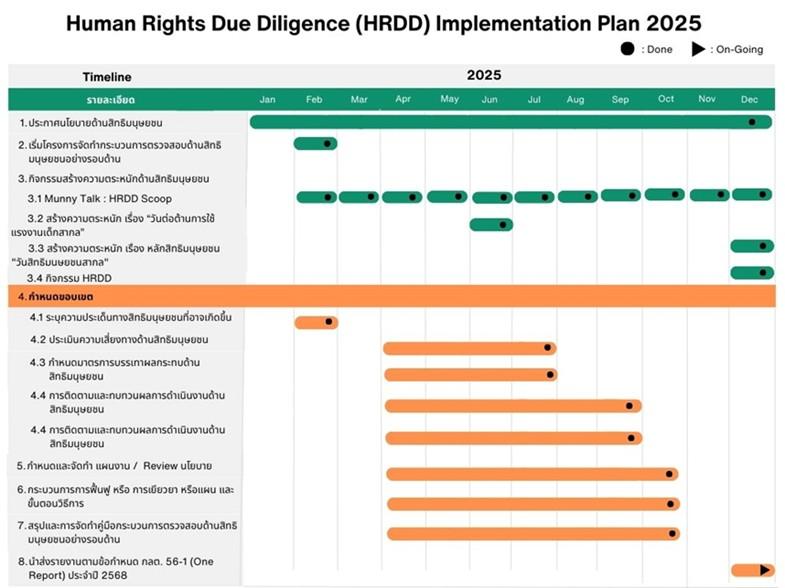
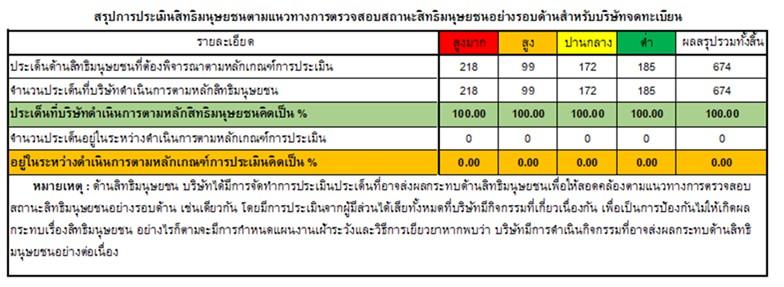
The Company monitors and tracks human rights risk issues. It conducted a comprehensive risk assessment in 2025, covering all stakeholder groups in accordance with corporate governance principles, business ethics, and respect for human rights. The assessment results indicate that no human rights violations have been found. However, from the comprehensive human rights due diligence conducted in 2025, there are issues that still require control and monitoring to prevent human rights violations: 218 very high-level issues, 99 high-level issues, 172 medium-level issues, and 185 low-level issues.

Human Rights Campaign Activities
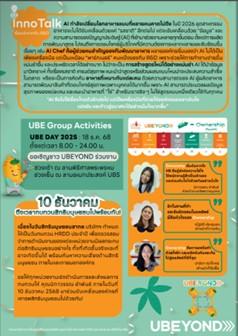
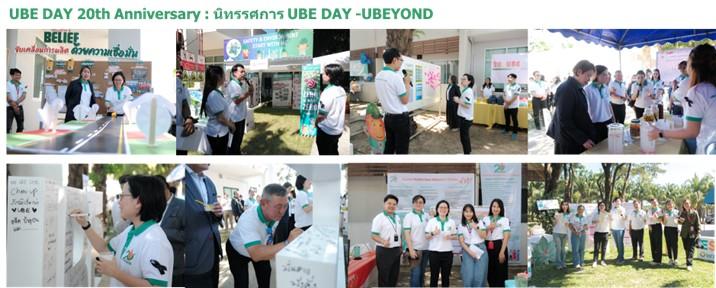
The Company consistently prioritizes instilling human rights principles in employees at all levels. This is achieved by communicating knowledge about human rights principles and comprehensive Human Rights Due Diligence (HRDD) through the E-Book Munny Talk channel on a monthly basis. Additionally, human rights campaign activities will be held at UBE DAY, the company's annual founding anniversary event in 2025.
Employees — Plan & Guidelines
Has an Employee Management Plan
Yes
Plan Description
Fair Employee Compensation
-
Consideration Criteria: The company determines compensation based on skills, experience, responsibilities, and performance (KPI) to ensure appropriateness and fairness at all levels.
-
Market Survey: Compares compensation rates with leading companies in the same business group through surveys by PMAT and HR Center to ensure competitive compensation in the market.
-
System Enhancement: In 2025, the company plans to develop a Performance Management System (PMS) through the HRIS to ensure greater transparency and fairness in compensation and bonus consideration processes.
-
Welfare: Provides flexible benefits that cater to employees' lifestyles and a Provident Fund (PVD) for long-term financial security.
Employee Training and Development
-
Quantitative Goal: Sets an average training hour per person per year of no less than 30-36 hours.
-
Key Courses: Implements the Training Roadmap to upskill employees for a Smart Factory, including the ESG DNA Phase 2 project to foster sustainability.
-
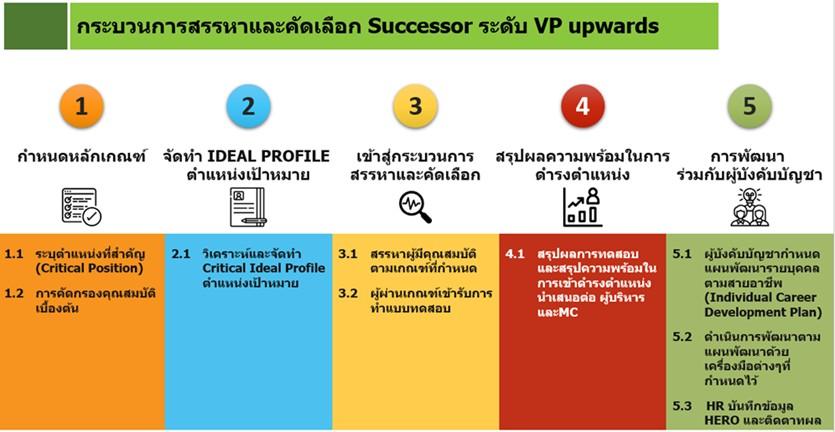
Leadership and Succession Development: Applies the Total Leader principle in the Leadership Development Program and reviews the Succession Development Plan to ensure a 1:1 successor ratio for VP level and above by 2027.
-
Other Support Programs: Mentoring Program ('Mentor of Change') and Referral Program.
Promoting Employee Relations and Engagement
-
Engagement Measurement: Aims for an Employee Engagement score of no less than 80%.
-
Communication Channels: Organizes quarterly Town Hall meetings to communicate organizational direction and provides channels for feedback, such as 16 suggestion boxes, Line Official (@UBBECARE), and Whistleblowing email.
-
Welfare Committee: Promotes the role of the elected Welfare Committee in the establishment to serve as a bridge between employers and employees.
-
Employee Relations Activities: Organizes sports activities (football, badminton), the 'Good Labor' project, and provides scholarships for employees' children.
Migrant/Foreign Workers
-
Prohibition of Forced Labor: Has a strict policy prohibiting all forms of forced labor, including coercion, intimidation, physical harm, or confiscation of personal identification documents.
-
Fair Employment: Treats all employees equally in accordance with human rights principles without discrimination, and the employment process must comply with qualifications and legal requirements.
-
Supply Chain: Requires partners and contractors to comply with the Supplier Code of Conduct, which covers the prohibition of forced labor.
Child Labor
-
No Child Labor Policy: The company has a policy against child labor and is not involved in illegal labor practices in any activity.
-
Legal Protection: In cases where the law permits the employment of young workers, the company will not allow them to work between 10:00 PM and 6:00 AM, nor in dangerous environments or conditions that affect their education.
-
Supplier Standards: Specifies the prohibition of child labor as a key condition in the Supplier Code of Conduct and regularly assesses supplier risks.
Occupational Safety and Health
-
International Standards: Utilizes a management system compliant with ISO 45001:2018 and operates under the Safety Act B.E. 2554 (2011).
-
Ultimate Goal: Aims to be a Zero Accident organization by continuously maintaining a Lost Time Injury Frequency Rate (LTIFR) of zero (0 case).
-
Proactive Measures: Utilizes a Permit to Work system, Job Safety Analysis (JSA), and Site Safety Audits (SAA).
-
Employee Rights: Employees and contractors have the right to immediately stop or refuse work if they assess the environment to be unsafe.
-
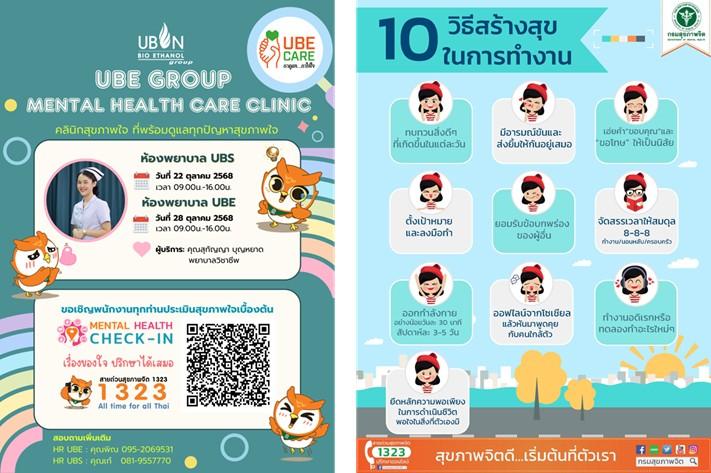
Healthcare: Conducts annual health check-ups based on risk factors, offers a Mental Health Care Clinic project for mental well-being, and the 'UBE CARE Breastfeeding Corner' project for female workers.
Plan Areas
| Plan Area |
|---|
| Fair employee compensation |
| Employee training and development |
| Promoting employee relations and participation |
| Migrant/foreign labor |
| Child labor |
| Occupational health and safety in workplace |
Employees — Workforce
Workforce Data
| Metric | Current Year | Previous Year | Two Years Ago |
|---|---|---|---|
| Total number of employees (Persons) | 340 | 346 | 294 |
| Number of male employees (Persons) | 210 | 211 | 191 |
| Number of female employees (Persons) | 130 | 135 | 103 |
| Total employment of disabled persons (people) | |||
| Total disabled employees (people) | |||
| Total male disabled employees (people) | |||
| Total female disabled employees (people) | |||
| Total disabled workers who are non-employee (people) | |||
| Contributions to the fund for promoting and improving the quality of life for disabled persons | 1 | 1 | 1 |
| Total number of male employees in operational level (Persons) | |||
| Total number of male employees in management level (Persons) | |||
| Total number of male employees in executive level (Persons) | |||
| Total number of female employees in operational level (Persons) | |||
| Total number of female employees in management level (Persons) | |||
| Total number of female employees in executive level (Persons) |
Employees — Remuneration & Provident Fund
Remuneration & Provident Fund
| Metric | Current Year | Previous Year | Two Years Ago |
|---|---|---|---|
| Total disabled employees (people) | 164,451,279 | 222,633,606.11 | 179,234,571.72 |
| Total male employee remuneration (Baht) | 91,454,366 | 127,326,925.91 | 108,656,090.3 |
| Total female employee remuneration (Baht) | 72,996,913 | 95,306,680.2 | 70,578,481.42 |
| Number of employees eligible to participate in PVD (persons) | 329 | 329 | 292 |
| Total number of employees joining employee provident fund (Persons) | 209 | 224 | 193 |
| Percentage of total number of employees joining employee provident fund to total number of employees (%) | 61.47 | 64.74 | 65.65 |
| Number of PVD members / Total eligible employees (%) | 63.53 | 68.09 | 66.1 |
| Total amount of provident fund contributed by the Company (Baht) | |||
| Total amount of provident fund contributed by employee (baht) |
Employees — Training & Development
Training Data
| Metric | Current Year | Previous Year | Two Years Ago |
|---|---|---|---|
| Average employee training hours (Hours / Person / Year) | 54.46 | 42.44 | 37.41 |
| Employee development and training expenses (baht) | 2,450,000 | 3,425,622.75 | 1,611,832.31 |
Employees — Occupational Health & Safety
Occupational Health & Safety Data
| Metric | Current Year | Previous Year | Two Years Ago |
|---|---|---|---|
| Total number of lost time injury incidents by employees (Cases) | 0 | 0 | 1 |
Employees — Labour Relations
Labour Relations Data
| Metric | Current Year | Previous Year | Two Years Ago |
|---|---|---|---|
| Total voluntary resignations (Persons) | 41 | ||
| Male employees who voluntary resigned (Persons) | 22 | ||
| Female employees who voluntary resigned (Persons) | 19 | ||
| Percentage of employee turnover leaving the Company voluntarily (%) | 12.06 | 15.32 | 22.11 |
| Evaluation result of employee engagement |
Employees — Employee Representation
Employees Are Represented Collectively
Yes
Forms of Representation
| Form | Other — Please Specify |
|---|---|
| Welfare committee | |
| Others | Occupational Safety, Health, and Environment Committee |
Employees — Targets
Has Set Employee Targets
Yes
Targets
| Indicator | Target Areas | Base Year | Base Year — Description | Target Year | Target Year — Description |
|---|---|---|---|---|---|
| Training hours per person per year | 2984 · Description: Employee training and development | 2,024 | 37.41 hours/person/year | 2,025 | 54.46 hours/person/year |
| Percentage of employees who completed training | 2984 · Description: Employee training and development | 2,024 | 75% | 2,025 | 88.83 % |
| Not less than 80% | 2985 · Description: Promoting employee relations and participation · 2990 · Other name: Results of the organizational engagement activities evaluation · Description: Others | 2,024 | 80% | 2,025 | 86.7% |
| Not exceeding 5% | 2990 · Other name: Voluntary employee turnover rate not exceeding 5% · Description: Others | 2,024 | 1.87 | 2,025 | 0.47 |
| By December 10 | 2990 · Other name: Review of Comprehensive Human Rights Due Diligence (Human Rights Due Diligence: HRDD) · Description: Others | 2,024 | By December 10 | 2,025 | By December 10 |
| No complaints or disputes | 2990 · Other name: Human rights violation complaints · Description: Others | 2,024 | No complaints or disputes | 2,025 | No complaints or disputes |
| Successor ratio for VP level and above | 2990 · Other name: Review the Succession Development Plan to ensure a sufficient ratio of successors. · Description: Others | 2,024 | 2,027 | In progress | |
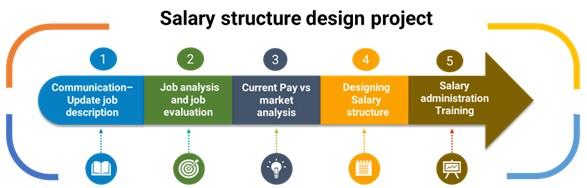
| To be implemented by 2025 | 2990 · Other name: Salary Structure Review Project · Description: Others | 2,025 | 2,025 | Completed in October 2025 |
Employees — Performance & Outcomes
Has Performance Results
Yes
Performance Description
Employee management performance met targets
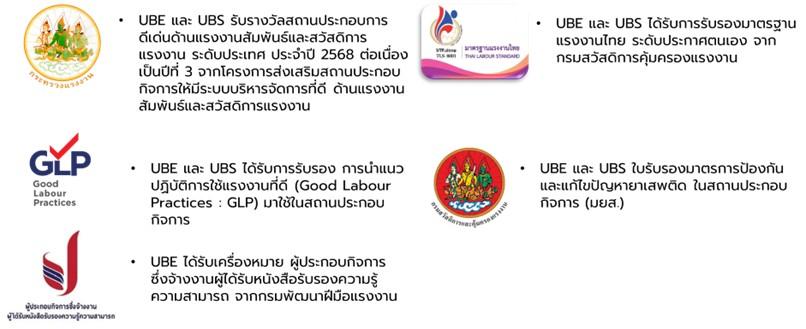
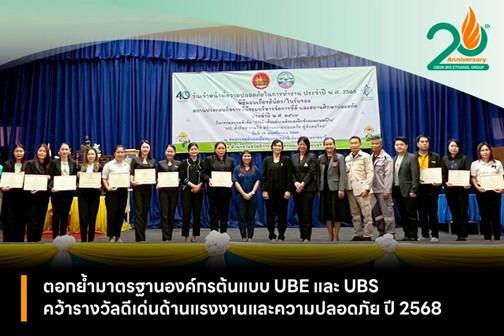
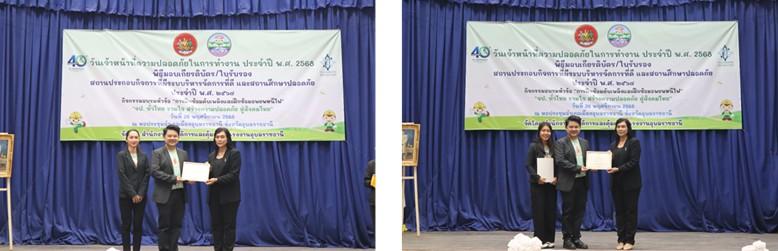
On November 26, 2025, Ubon Bio Ethanol Public Company Limited ("UBE") and Ubon Sunflower Company Limited ("UBS") participated in the Annual Occupational Safety Officer Day 2025, organized by the Ubon Ratchathani Provincial Welfare and Labor Protection Office at the Mueang Ubon Ratchathani District Auditorium.
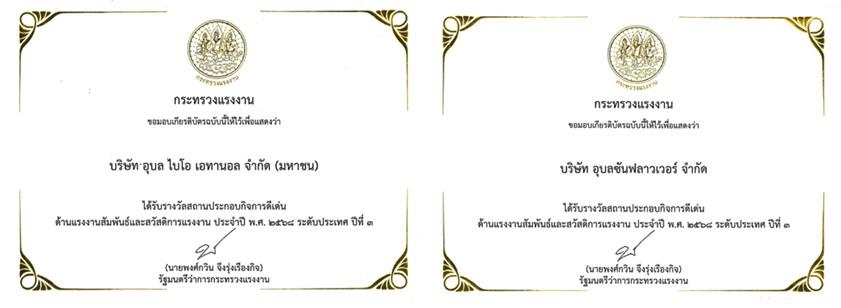
On this occasion, Mrs. Juthamas Saengsuk, Welfare and Labor Protection Officer of Ubon Ratchathani Province, honored the event by presenting certificates of recognition to establishments with excellent labor and safety management systems in various categories. Mr. Dechana Natee, Human Resources Management Department Manager, along with the Human Resources team and the Safety and Environment team, represented the company in receiving the awards at the ceremony, which included:
-
UBE and UBS received certificates for "Outstanding Establishment in Labor Relations and Welfare, National Level, Year 3, 2025" from the project promoting establishments with good labor relations and welfare management systems.
-
UBE and UBS received certificates for "Measures to Prevent and Solve Drug Problems in Establishments"
-
UBE and UBS received certificates for "Safety Culture Together in The Work Place" Campaign
-
Mr. Chaiyanan Phuchada, Safety and Environment Section Manager, received a certificate for "Safety Officer, Co-driver and Supporter of Occupational Safety Activities, Ubon Ratchathani Province, 2025"
The awards received reflect the organization's commitment to developing labor standards, safety, occupational health, and a sustainable work culture, leading to the promotion of a safe working environment and a good quality of life for everyone in the organization. This demonstrates a dedication to being a leader in labor relations management, welfare, and employee care at an exemplary organizational level, and a continued commitment to serving as a good role model for other establishments nationwide.
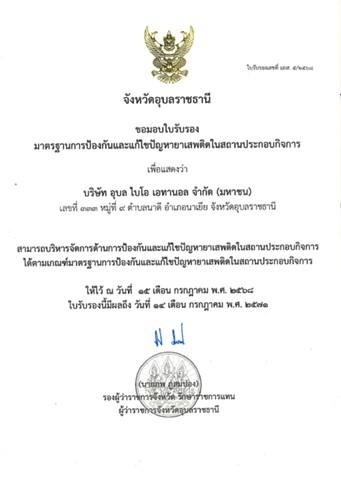

Human Resources Management Operations
Employee Branding Project
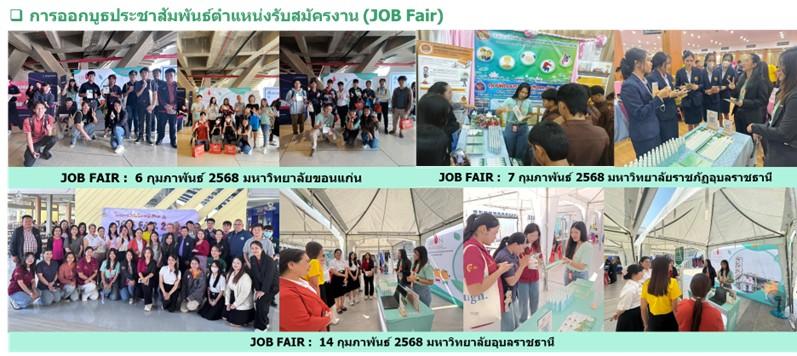
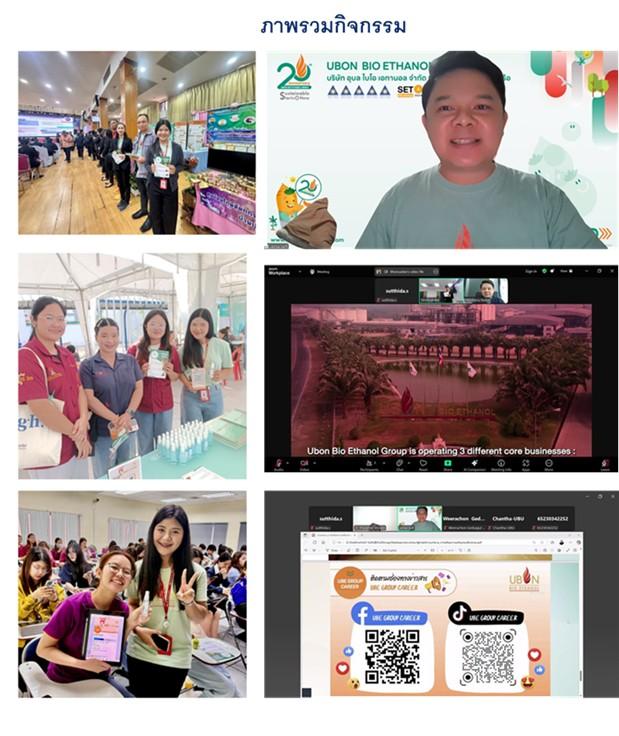
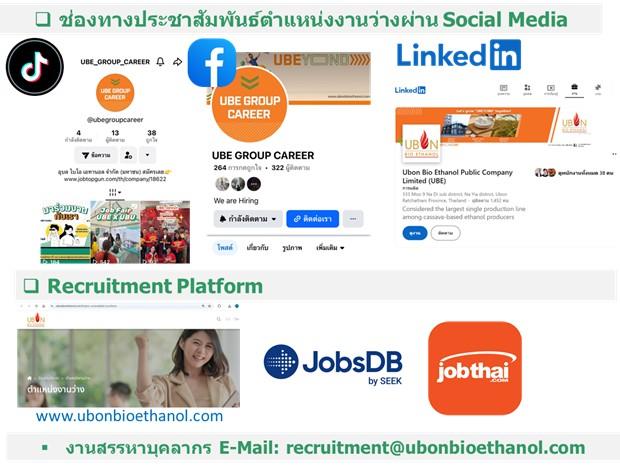
Example of a Friend Referral Program

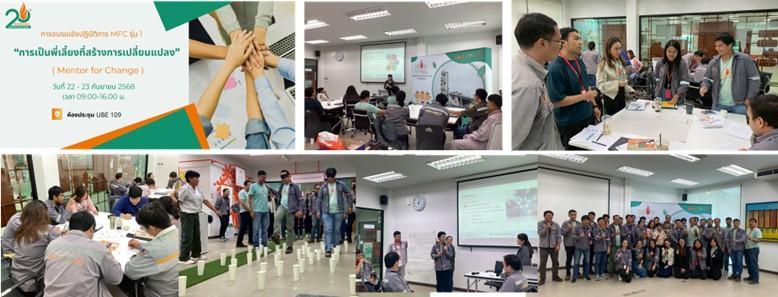
Project for Developing a Transformative Mentoring System (Mentor of Change)
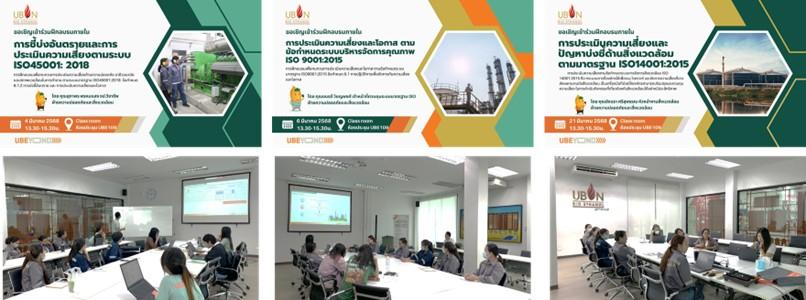
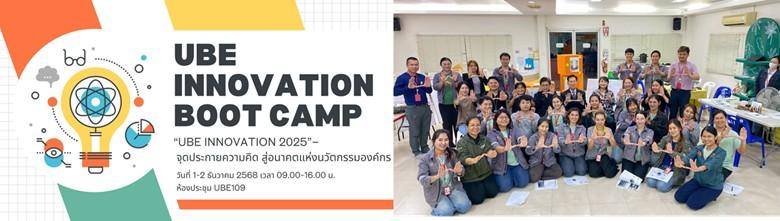
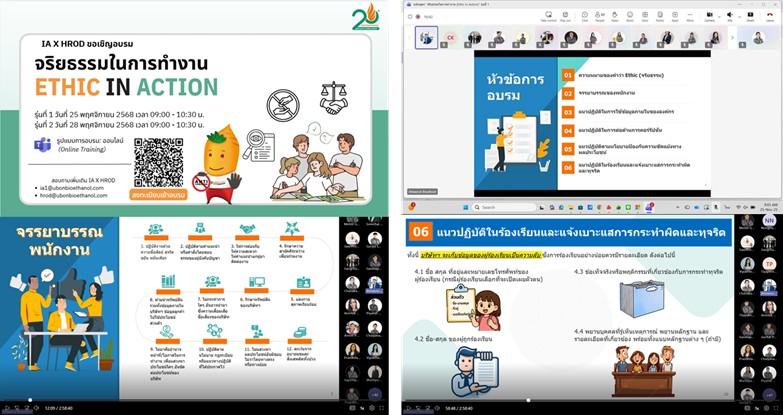
Personnel Development Training
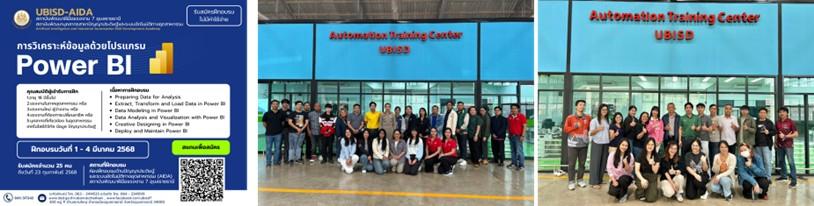
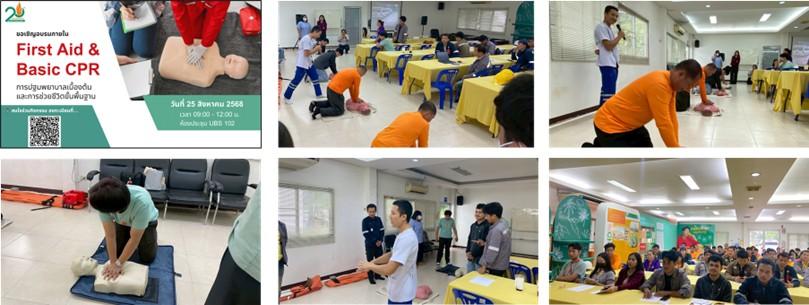

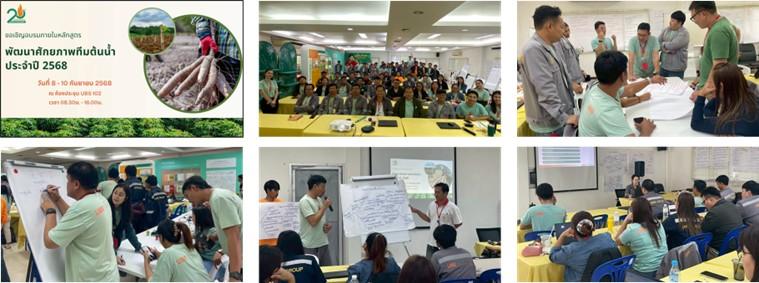
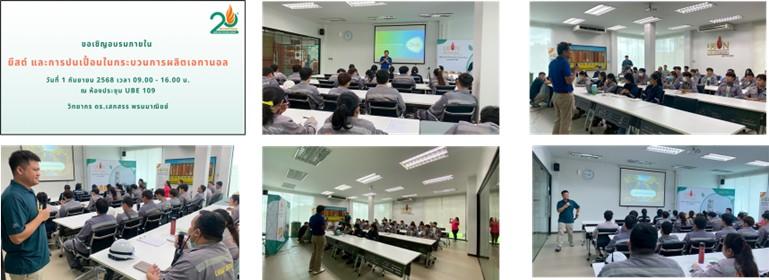
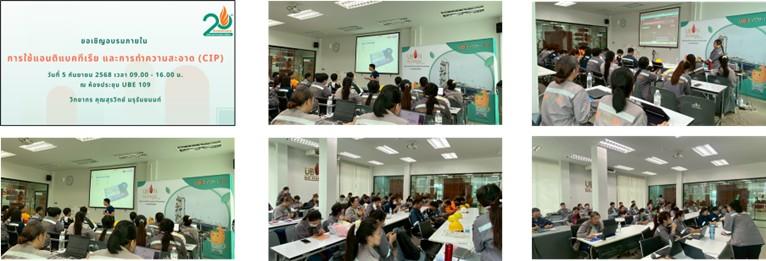
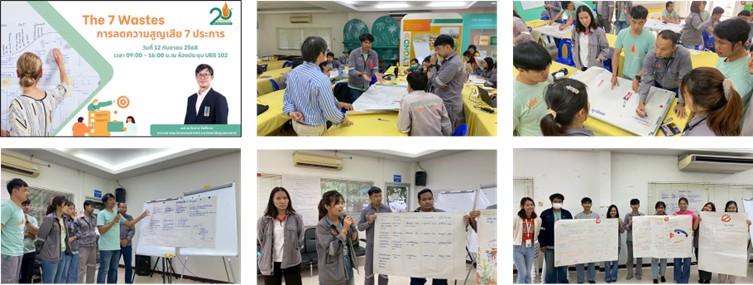
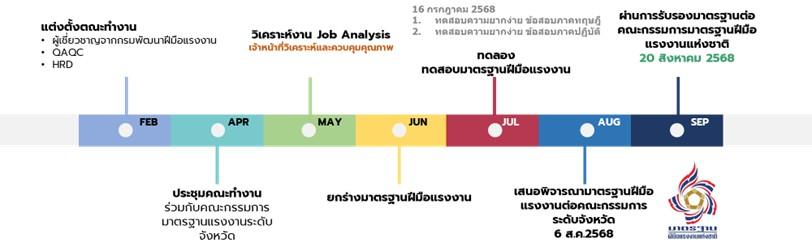
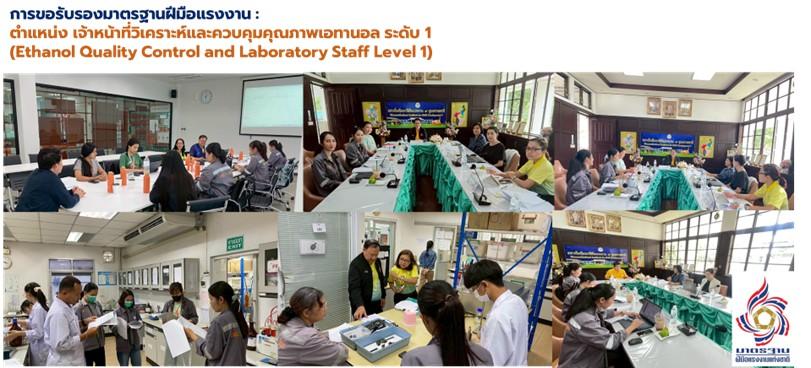
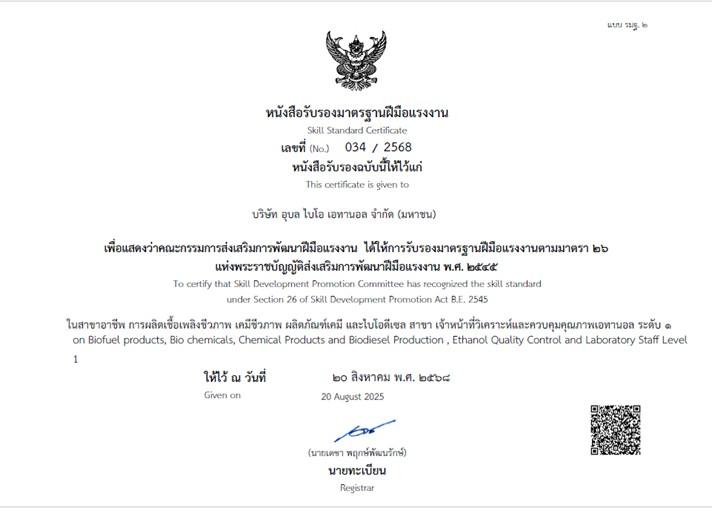
Project for Developing Labor Skill Standards for Ethanol Quality Analysis and Control Officer, Level 1
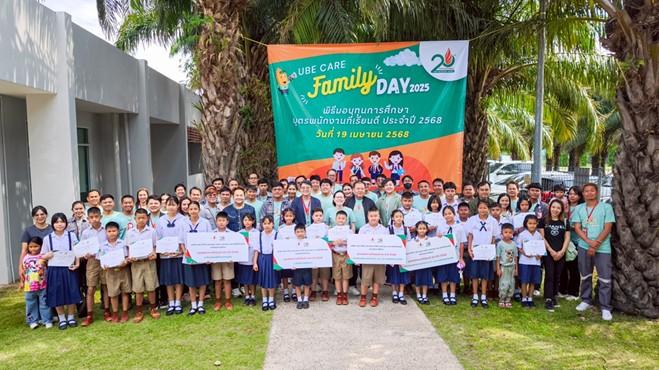
Scholarship Program for Children of Employees with Good Academic Performance, 2025

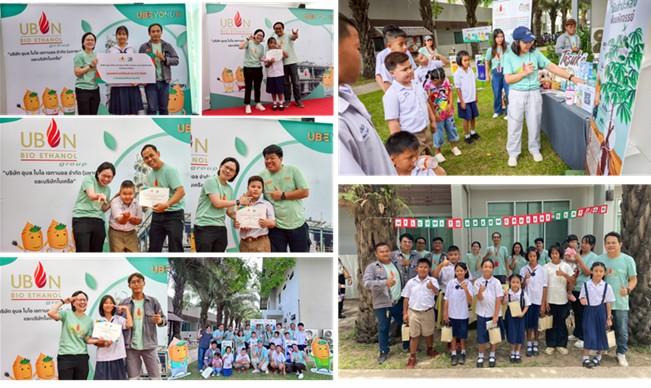
Good Labor, Sufficiency Economy Way Project
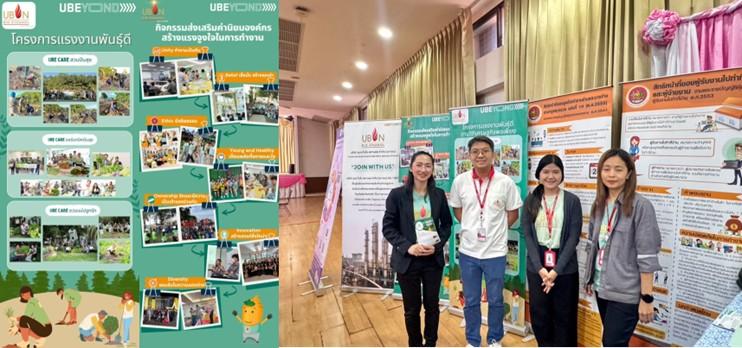
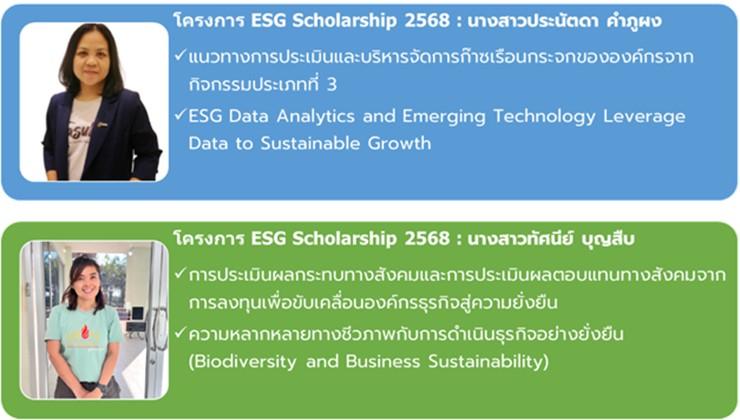
ESG Scholarship Project 2025
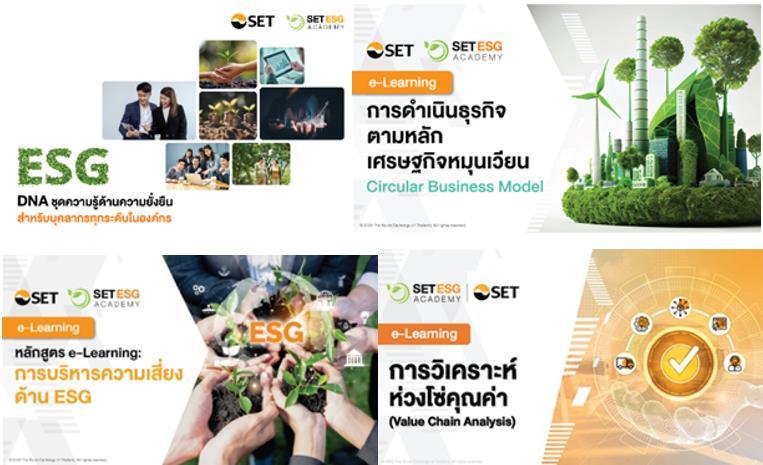
ESG DNA Phase 2 Project for 2025
|
ESG DNA Phase 2 Project |
Number of employees who completed training (persons) |
Calculated as % of the number specified in the application |
|
S02_1 Value Chain Analysis |
489 |
122.25 % |
|
<8zFcX53vvPcG> |
491 |
122.75 % |
|
ESG201 ESG Risk Management (ESG Risks) |
489 |
122.25 % |
|
Employees completed 3 training courses |
484 |
121% |
Succession Development Plan
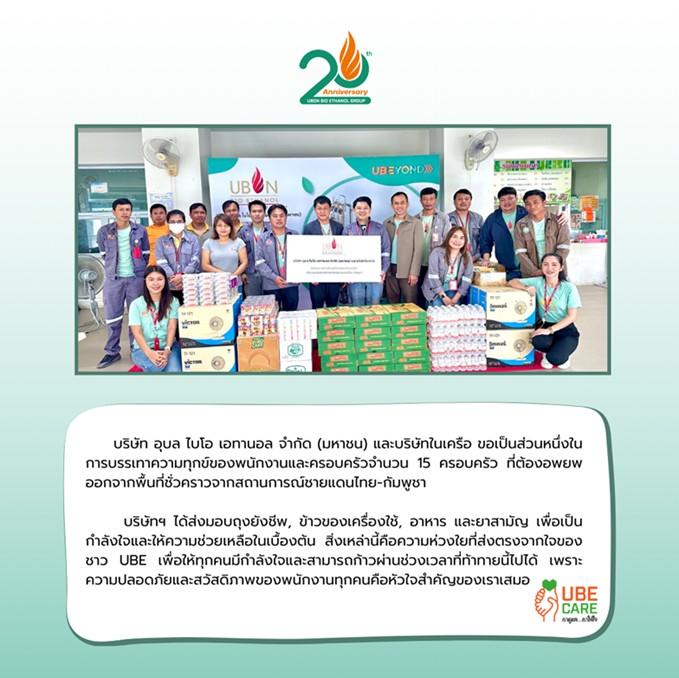
UBE assists employees and their families affected by the Thai-Cambodian border situation
Annual Blood Donation Activity 2025, Volume of Blood: 18,000 cc

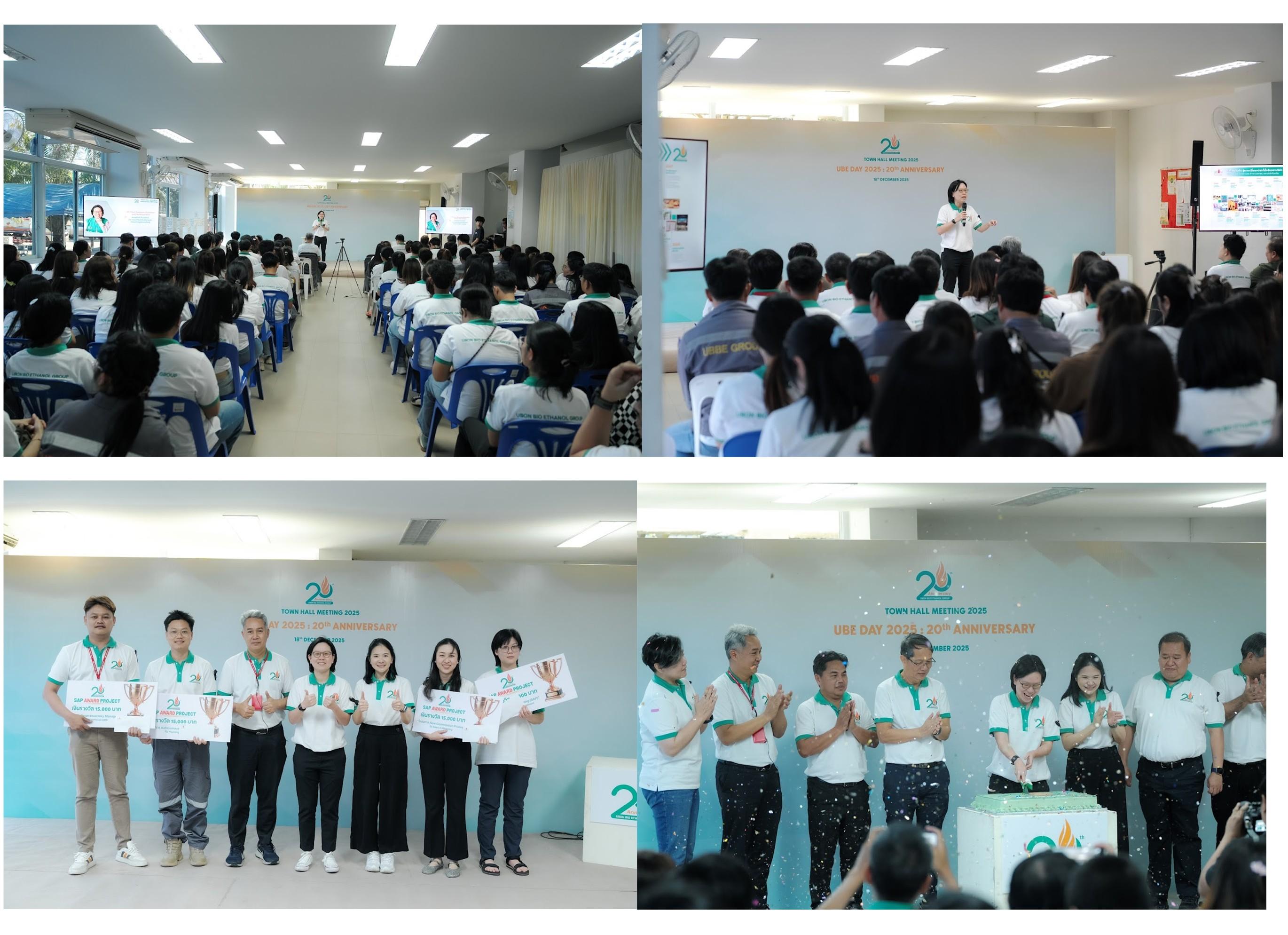
Town hall 2025 Activities
-
Town hall 2025 EP#1 “Lead the future”
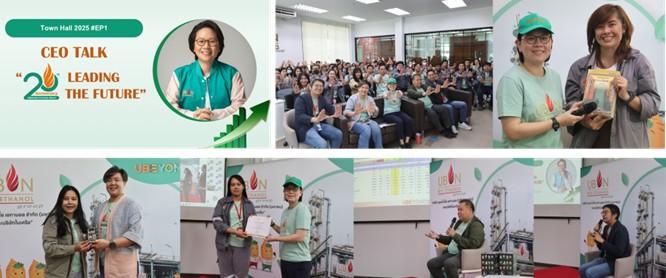
-
Town hall 2025 EP#2 “Organic Innovation and Sustainable Excellence”
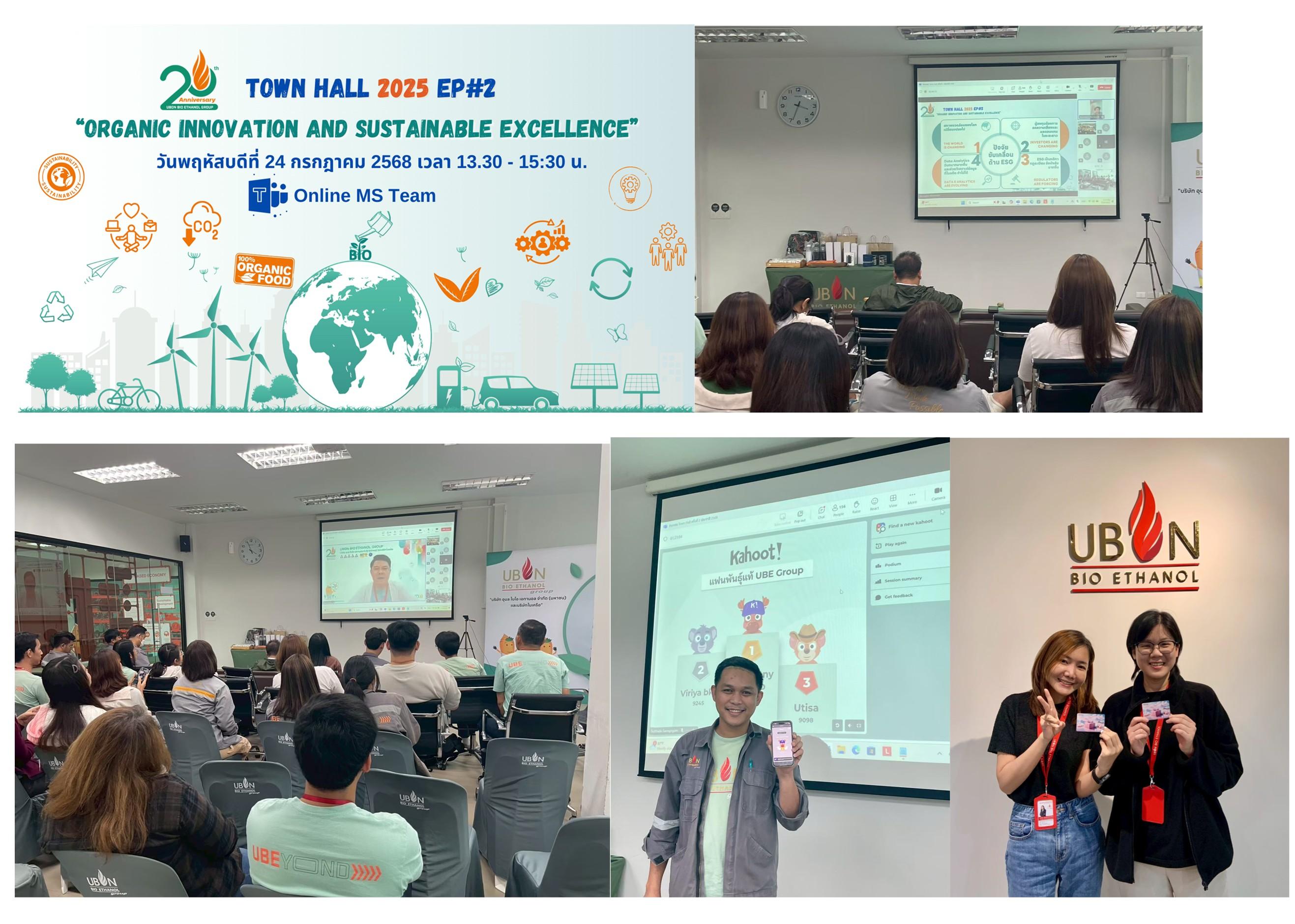
-
Town hall 2025 EP#3 "20th Anniversary of Growth towards A Sustainable Future"
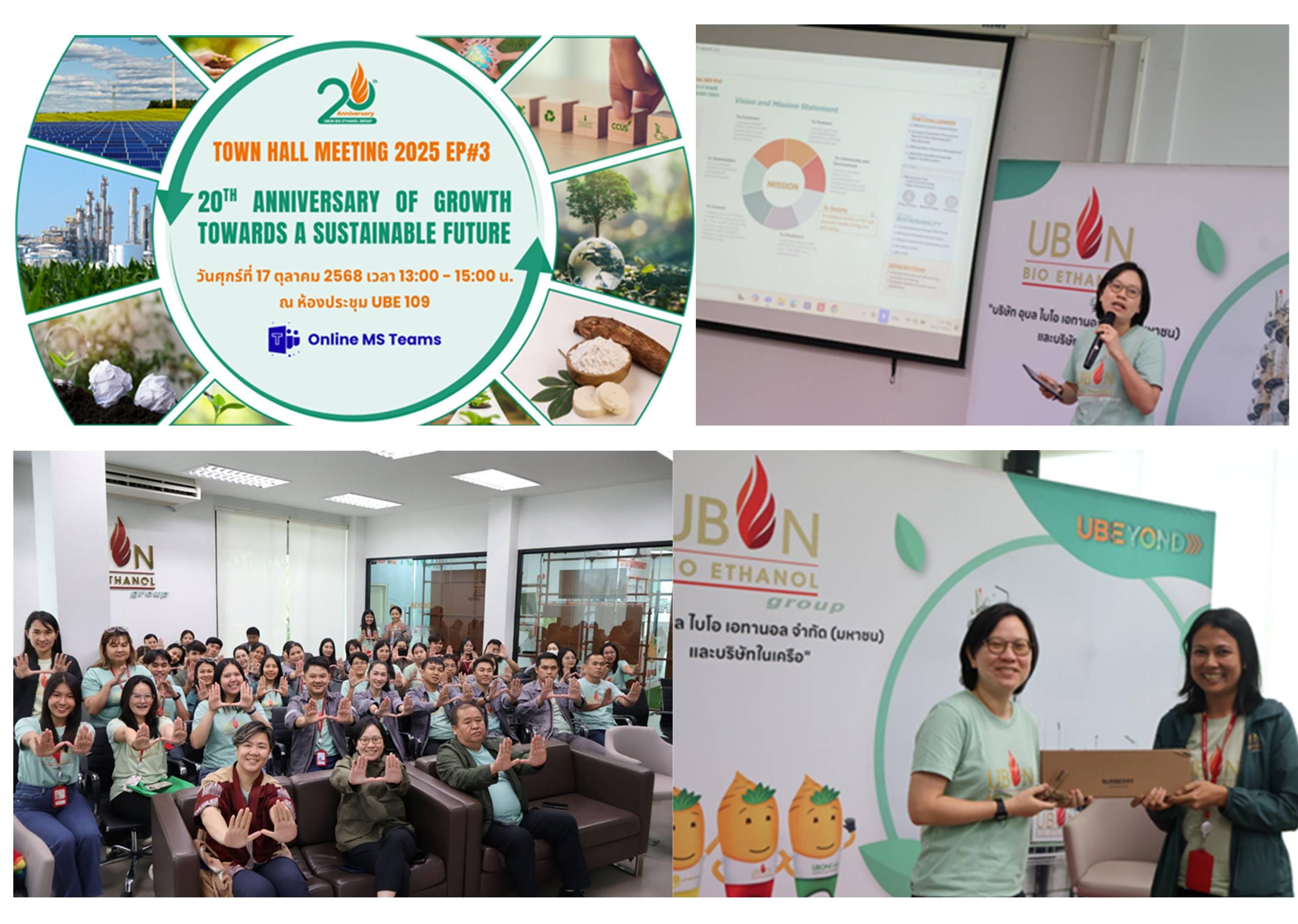
-
Town hall 2025 EP#4 “UBE GROUP 20 th Anniversary”
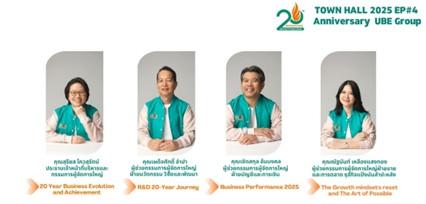
Compensation Structure Review Project
Mental Health Care Clinic Project
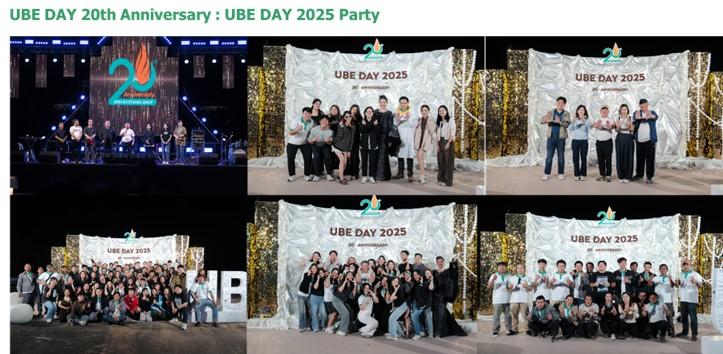
Activity “UBE Day 20 th Anniversary”

Customers — Plan & Guidelines
Has a Customer Management Plan
Yes
Plan Description
Responsible Production and Services for Customers
-
Quality and Safety Standards: The company is committed to continuously producing products (ethanol, tapioca starch, and flour) to international standards such as ISO 9001, GMP, HACCP, and BRC to meet customer expectations.
-
Health Innovation: Focuses on research and development (R&D) of high-value products, such as gluten-free tapioca flour, to address global health trends and the concept of "food of the future."
-
Supply Chain Security: Elevates raw material standards through the ISCC PLUS system and utilizes traceability technology to identify 100% of cassava cultivation sources, ensuring product quality from upstream.
-
Fairness and Continuity: Sets fair and appropriate product prices in line with market mechanisms, and operates ethanol production and delivery 365 days a year to facilitate customers during peak times.
Communicating Information on the Impact of Products and Services to Customers/Consumers
-
Accuracy and Transparency: Provides accurate, clear, and sufficient product and service information, adhering to ethical marketing communication principles and avoiding exaggerated advertising.
-
Modern Communication Channels: Develops public relations media through digital platforms (website, Facebook) and participates in domestic and international trade shows to disseminate product information quickly and comprehensively.
-
Labeling: Aims to display nutritional labels on products to inform consumers of important health-related information.
Developing Customer Satisfaction and Strengthening Customer Relationships
-
Satisfaction Target: By 2025, the company aims for an overall customer satisfaction score of no less than 85% (or more than 9.0 out of 10 points).
-
After-Sales Service: Focuses on continuously measuring and analyzing customer and market needs to improve services and create positive long-term customer experiences.
Protection of Customer Personal Data
-
Legal Compliance: The company has strict policies and practices for the retention of customer personal data in accordance with the Personal Data Protection Act (PDPA).
-
Cybersecurity Measures: Controls data access through standardized IT systems, such as Firewall installation and granting data access rights only to relevant personnel.
-
Operational Goal: Aims for zero customer data leakage incidents (0 cases) by 2025, with regular employee training on cybersecurity and personal data usage.
Plan Areas
| Plan Area |
|---|
| Responsible production and services for customers |
| Communication of product and service impacts to customers/consumers |
| Development of customer satisfaction and customer relationship |
| Protection of customer personal information |
Customers — Satisfaction Results
Customer Satisfaction Results
| Metric | Current Year | Previous Year | Two Years Ago |
|---|---|---|---|
| Evaluation results of customer satisfaction | 1 | 1 | 1 |
Customers — Targets
Has Set Customer Targets
Yes
Targets
| Indicator | Target Areas | Base Year | Base Year — Description | Target Year | Target Year — Description |
|---|---|---|---|---|---|
| Satisfaction Assessment Results | 3009 · Description: Development of customer satisfaction and customer relationship | 2,025 | >85% | 2,025 | >85% |
Customers — Performance & Outcomes
Has Performance Results
Yes
Performance Description
Quantitative Results and Customer Satisfaction
-
Customer Satisfaction Score: In 2025, the company achieved a customer satisfaction score of 99.33%, a continuous increase from 97.67% in 2024, and exceeding the target of 85%.
-
Complaint Management and Consumer Rights: The company maintained operational standards without any incidents or complaints regarding consumer rights violations throughout 2025.
-
Data Security: In 2025, no cases or incidents related to cybersecurity or customer data breaches were found, which is a result of strict adherence to the Personal Data Protection Act (PDPA).
Key Customer Management Projects in 2025
-
Open House Project 2025: Organized an open house event to welcome 23 visiting groups, totaling 925 people, from various sectors, including customers and business partners, to build confidence as a "Comprehensive Bioenergy Learning Center."
-
Enhancing Sustainability Standards (ISCC PLUS): The company has promoted cassava production in accordance with ISCC PLUS standards. For the 2025/26 production year, there are plans to expand the cultivation area to 5,500 rai to assure customers of traceable and environmentally friendly raw materials.
-
Product Innovation (Food Innovation Center): Focuses on the research and development of high-value products (HVA) such as gluten-free cassava flour, to meet health trends and the "Food for the Future" concept for customers.
-
Digital Marketing and Communication: Public relations materials and marketing activities are conducted through online platforms and trade shows both domestically and internationally, enabling customers to access product information quickly and up-to-date.
Awards and Achievements in 2025
Although most awards cover overall organizational management, they are crucial factors in building customer confidence.
-
Safety Awards: UBE and UBS received certificates from the “Safety Culture Together in The Work Place” campaign for 2025, reflecting standardized and safe production processes.
-
Outstanding Establishment Award: Received the National Outstanding Establishment Award for Labor Relations and Welfare for 2025 for the third consecutive year, which helps build a positive brand image in the eyes of customers.
-
Governance and Sustainability Standards: The company continues to maintain a 5-star corporate governance rating, or "Excellent CG Scoring," and has received an SET ESG Ratings of AA, which are crucial criteria customers use when considering long-term business partners.
Community & Social — Plan & Guidelines
Has a Community & Social Plan
Yes
Plan Description
Employment and Vocational Skill Development
-
Promotion of Local Employment: The company has a policy to promote the employment of local personnel to generate income and support sustainable economic development in the area, with the goal of continuously maintaining a high proportion of employees residing in Ubon Ratchathani province and the Northeastern region (2024 data shows 84.10%).
-
Ubon Model Plus Project: In 2025, the company focuses on transferring knowledge and low-carbon agriculture innovations through the "Ubon Model Plus" project to increase production efficiency and reduce costs for farmers, with the goal of expanding the area for international standard organic cassava production to 15,000 rai.
-
Community Career Support: Continuing the "UBE CARE Chuan Kin Sabai Jai" project to help network farmers around the factory earn supplementary income through selling community products on the company's online platform.
Education
-
Bioenergy Learning Center: Developing the establishment into a "Comprehensive Bioenergy Learning Center" to transfer knowledge on clean energy and sustainable resource management. In 2025, an Open House event will welcome visiting groups from educational institutions and various organizations to inspire youth in green industries.
-
Community Digital Learning Center: Operating the "UBE CARE Learning Center" project by providing computer and IT equipment to local schools (e.g., Ban Nong Paen School) to promote Information and Communication Technology (ICT) skills among youth.
-
Scholarships: Allocating scholarships under the "UBE CARE Scholarships for the future" project to students in 12 areas around the factory to create educational opportunities for academically proficient but financially disadvantaged youth, and continuing the "UBE CARE Sending Happiness on Children's Day Mobile Event" for the 11th time.
Forests and Natural Resources
-
No Deforestation Policy: The company strictly defines its intent in the Supplier Code of Conduct, requiring partners and farmers not to encroach on forest areas or burn topsoil throughout the supply chain.
-
Biodiversity Management: In 2025, the company plans to study and collect biodiversity data in areas around the factory and important ecosystems to assess risks and systematically define natural resource conservation measures.
-
Green Space Creation: Organizing tree planting activities with employees and the community, such as the "National Mother's Day...Invite to Plant with Love" event, to increase green areas in line with Ubon Ratchathani province's goals.
Water and Sanitation Management
-
Sustainable Water Management Policy: Aiming to create Water Security by setting water intensity targets per production unit, such as ethanol production not exceeding 14.73 cubic meters/liter and starch production not exceeding 15 cubic meters/ton.
-
Fertilizer Water Irrigation Project: Continuing the "Distribution of Treated Water for Agriculture" project by delivering treated water that meets circular economy standards to surrounding farmers (targeting over 10,000 rai of land) to alleviate drought and reduce fertilizer costs for the community.
-
Water Quality Monitoring: Implementing a project to conserve and monitor water quality in the Lam Dom Yai River in collaboration with the Joint Management Committee (JMC) and the community, to ensure that business operations do not impact shared natural water sources.
Plan Areas
| Plan Area |
|---|
| Employment and professional skill development |
| Education |
| Forests and natural resources |
| Water and sanitation management |
Community & Social — Targets
Has Set Community & Social Targets
Yes
Targets
| Indicator | Target Areas | Base Year | Base Year — Description | Target Year | Target Year — Description |
|---|---|---|---|---|---|
| Number of visitors to the company's Open House program | 3037 · Description: Education | 2,025 | 2024: Open House Visit Program, 22 organizations/groups / 808 persons | 2,025 | 2570: Cumulative number of visitors to the open house project from 2555 - 2570: 20,000 people. |
Community & Social — Performance & Outcomes
Has Performance Results
Yes
Performance Description
Key awards and achievements in 2025
The group of companies received awards reflecting organizational management standards that are employee- and socially-friendly, including:
-
National Outstanding Establishment Award for Labor Relations and Welfare for 2025, for the 3rd consecutive year (received by both UBE and UBS)
-
Certificate for "Safety Culture Together in The Work Place" Campaign and Certificate for "Measures to Prevent and Solve Drug Problems in Establishments"
-
Outstanding Safety Officer Award, presented to the Safety and Environment Department Manager, in recognition of their role in driving safety activities in Ubon Ratchathani Province.
-
Continuously maintained a 5-star corporate governance rating, or "Excellent" (Excellent CG Scoring), and an A-level SET ESG Rating.
Quantitative Results and Key Performance Indicators (KPIs)
-
Community satisfaction: The survey results for community satisfaction around the factory were 89.72%
-
Dispute Management: Maintained a record of zero disputes with the community and society (0 cases).
-
Social budget: In 2025, the company's expenses for social and environmental development projects totaled 2,102,362.37 Baht.
-
Participation: 24 communities, totaling over 3,000 people, participated in the company's activities.
Key community and social projects in 2025
Education and Learning (Education)
-
Open House 2025 activities: Developed the establishment into a "Comprehensive Bioenergy Learning Center," welcoming 23 groups totaling 925 visitors from government agencies, private sectors, and educational institutions,,
-
UBE CARE Learning Center: Supported 20 sets of computers and IT equipment for Ban Nong Paen School to serve as a community digital learning center.
-
Scholarships: Awarded 20 scholarships to students from 12 schools around the factory, along with support for lunch budgets,
-
Road of Concern Project: Supported the budget for improving and paving the road within Ban Nong Paen School for student safety.
Agricultural Innovation and Community Economy (Social & Economy)
-
Ubon Model Plus Project: Promoted knowledge of ISCC PLUS standard cassava production to 226 farmers, covering an area of 5,500 rai in 6 districts of Ubon Ratchathani Province.
-
Treated Water Distribution Project for Agriculture: Delivered standard-treated water to over 503 farmers to alleviate drought in over 10,000 rai of land.
-
UBE CARE Chuan Kin Sabai Jai (Eat with Peace of Mind): A platform to help sell community and network farmers' products through online channels.
Tradition, Culture, and Health (Cultural & Health)
-
Preserving Tradition: Organized the "Kathin Offering of the Scholar's Land 21st Edition" project, raising 239,029 Baht for religious maintenance, and supported the long-boat racing tradition in Na Yia District.
-
Public Safety: The "Safe Driving New Year 2025" project supported drinking water and beverages at 11 public service points to promote accident reduction.
-
Social activities: Employees jointly donated a total of 18,000 cc of blood and donated old calendars to produce educational materials for the blind,
Feedback and Impact Management Mechanisms
The company developed the UBE CARE CENTER as a 24-hour channel for feedback and complaints, and organized "UBE CARE Mobile" activities, visiting 22 villages to listen to concerns and transparently respond to community expectations.
Other Social Management
Plan & Outcomes — Description
Education
Open House Activities Open House 2025
Year In 2025, the Company organized open house activities to welcome visiting delegations from various sectors, including government, private sector, and educational institutions, to reflect the organization's role as a leader in integrated agro-industrial business operating on the foundation of sustainability within the ESG framework. The overall statistics are as follows:
Environmental Dimension (Environmental – E)
The organization has imparted knowledge and best practices in efficient resource management to visiting delegations, as follows:
-
Waste Management Zero Waste Management and circular economy principles ( Circular Economy), such as biogas production from wastewater treatment systems, and the utilization of waste and by-products from the production process to reduce end-of-pipe waste and enhance resource efficiency.
-
Organic Agricultural Innovation Demonstrated the "Organic Cassava Project" to promote soil resource conservation, reduce reliance on agricultural chemicals, and support the organization's goals for greenhouse gas emission reduction.
Social Dimension (Social – S)
UBE Group prioritizes human capital development and collaboration with communities and educational institutions, operating as follows:
-
Educational Support ( Education Support) Welcomed delegations from various educational institutions, such as Det Udom School and Sisaket Rajabhat University, to provide opportunities for youth to learn vocational skills and prepare for entry into the green industry labor market.
-
Community Engagement ( Community Engagement) Opened the area for local agencies to study and exchange knowledge about sustainable income generation models, to be applied concretely in the development of communities around the establishment.
Governance Dimension (Governance – G)
Open house activities enhance the organization's image in terms of transparency and corporate governance through the following key activities:
-
Transparency and Accountability ( Transparency & Accountability) Allowed delegations from government agencies and regulatory bodies, such as the Senate Energy Committee and the Excise Department, to study production processes, traceability systems, and legally compliant tax practices.
-
Safety Standards ( Safety Standards) Presented the safety, occupational health, and working environment management system to build confidence among stakeholders and confirm operations in accordance with international standards.
Activities Open House 2025 is a crucial mechanism for communicating and driving the "UBE CARE" strategy to the public. The organization has developed its facilities to serve as a "Comprehensive Bioenergy Learning Center." This center disseminates knowledge on bioenergy, sustainable resource management, and agricultural innovation to raise awareness and build confidence among stakeholders, investors, and business partners that UBE Group truly operates its business based on a balance between performance, environment, society, and good governance principles.
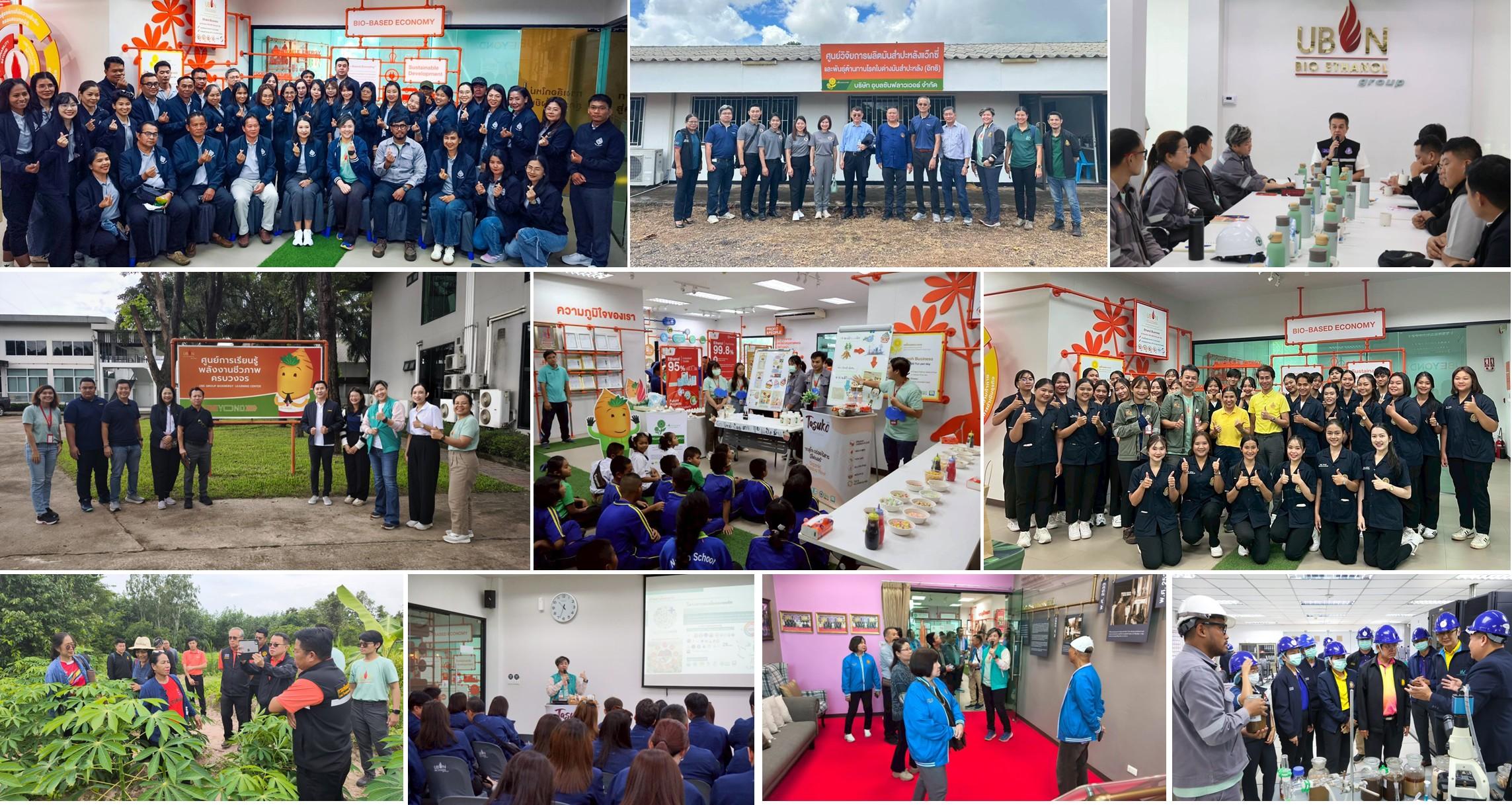
Law Violation Incidents
Law Violation Incidents
| Metric | Current Year | Previous Year | Two Years Ago |
|---|---|---|---|
| The total number of cases or incidents of significant violations of laws or regulations regarding social and human rights (Cases) | 0 | 0 | 0 |
| The total number of cases or incidents that cause significant labor disputes (Cases) | 0 | 0 | 0 |
| The total number of cases or complaints related to consumer rights violations (Cases) | 0 | 0 | 0 |
| The total number of cases or complaints related to partner rights violations (Cases) | 0 | 0 | 0 |
| The total number of cases or incidents that cause disputes with the community/society (Cases) | 0 | 0 | 0 |
| The total number of cases or incidents related to cyber security or customer data breaches (Cases) | 0 | 0 | 0 |
| The total number of cases or incidents related to safety and occupational health at work (Cases) | 0 | 0 | 0 |