

Business Operation · 2025
In this section23 topics
- Corporate Information4 items
- Dividend Policy2 items
- Major Shareholders1 item
- Business Strategies Overview6 items
- Material Changes & Developments1 item
- Use of Proceeds from Securities Offerings1 item
- Commitments Made in the Registration Statement1 item
- Group Operating-Structure Policy1 item
- Companies Where the Company Holds ≥10%1 item
- Shareholders with Potential Conflict of Interest1 item
- Relationships Among Major Shareholders2 items
- Shareholders' Agreement1 item
- Shareholding Diagram (Group Structure)2 items
- Income Structure3 items
- Product / Service Characteristics2 items
- Research & Development6 items
- Assets Used in the Business4 items
- Marketing Policy & Competition2 items
- Procurement of Products & Services2 items
- Product Information — Overview1 item
- Projects Under Construction1 item
- Debentures & Bills of Exchange1 item
- Convertible Securities1 item
Corporate Information
Company Name
UBON BIO ETHANOL PUBLIC COMPANY LIMITED
Telephone
0-2273-8666
Website
www.ubonbioethanol.com
comsec@ubonbioethanol.com
Dividend Policy
Dividend Policy
The Company has a dividend payout policy to shareholders of at least 30% of separated net profit after deducting the legal reserve specified by law or Articles of Association of the Company. Nonetheless, the consideration of a dividend payout shall depend on the Company’s performance, financial position, cash flow, contractual obligations (i.e. loan payments), working capital, investment plans, general economic situation, and related factors as deemed appropriate by the Board of Directors and when in compliance with the laws & regulations. The dividend payment will be approved by shareholders in the Annual General Meeting on a yearly basis, except for the interim dividend payment which can be approved by the Board of Directors when deemed relevant and reports the interim dividend payment to the shareholders for the next AGM.
Historical Dividend Payments
| This Year | Last Year | 2 Years Ago | 3 Years Ago | 4 Years Ago | Metric | Description |
|---|---|---|---|---|---|---|
| -0.09 | 0.03 | 0.26 | 0.07 | 0.1 | Net profit per share (Baht : Share) | Net profit per share (baht : share) |
| 0.02 | 0.02 | 0.02 | 0.04 | 0.13 | Dividend per share (Baht : Share) | Dividend per share (baht : share) |
| 0 | 0 | 0 | 0 | 0 | Dividend stock ratio (Number of original shares: dividend shares) | Ratio of stock dividend payment (existing share : stock dividend) |
| 0 | 0 | 0 | 0 | 0 | Dividend share value per share (Baht : Share) | Value of stock dividend per share (baht : share) |
| 0.02 | 0.02 | 0.02 | 0.04 | 0.13 | Total dividend payment value (Baht : Share) | Total dividend payment (baht : share) |
| 0 | 70 | 60 | 58.82 | 126.1 | Dividend payout ratio to net profit (%) | Dividend payout ratio compared to net profit (%) |
Business Strategies Overview
Introduction
The Board of Directors Meeting No. 4/2568, held on July 8, 2568, resolved to review and approve the Company's vision, mission, and strategic plan. This was done to establish the direction for business operations, ensuring that management and employees adhere to a unified approach, with a focus on conducting business to maximize benefits for shareholders and all stakeholders. Furthermore, the Company has implemented continuous monitoring and evaluation of performance against the strategic plan, comparing actual performance with established strategic objectives, to ensure that the Company's operations align with its intended direction and goals.
Chairman's Message
Dear Shareholders and all Stakeholders,
The year 2025 is another year in which the world is simultaneously facing structural changes in multiple dimensions, including economy, politics, technology, and environment. The volatility of global geopolitical situations, changes in international trade policies and tax measures, new forms of trade protectionism, and the establishment of international environmental regulations have all contributed to a more uncertain and complex global economic system. Concurrently, the rapid advancement of Artificial Intelligence (AI) technology has played a widespread role in decision-making processes, business operations, and social communication. While creating new opportunities, it also presents challenges related to ethics, data reliability, and governance that require greater prudence.
Within the context of this transitioning world, the business sector cannot merely consider impacts at the national or specific industry level. Instead, it must recognize the interconnected systemic risks throughout the global supply chain, especially in the agro-industrial sector, which relies on natural resources, agricultural raw materials, and the stability of the global trading system. The continuously intensifying climate change, along with frequent and unpredictable disasters, has become a critical factor affecting long-term global economic, social, and food security. Based on the assessment of risks and opportunities in the current global context, the Company has adjusted its strategic plan to drive the organization's ethanol business, starch factory business, and restaurant investment business, enabling the organization to operate amidst the evolving global rules in all dimensions.
In the past year, Ubon Bio Ethanol Public Company Limited and its subsidiaries (" The Company") has set long-term goals to reduce the organization's greenhouse gas emissions in line with national policies. The Board places importance on governing policies and directions for applying appropriate technology and innovation to concretely manage environmental impacts and prepare the organization for the transition to a low-carbon economy, which has become a crucial standard and condition for global trade and investment, and to operate towards Carbon Neutrality by reducing carbon dioxide (CO2 ) into the atmosphere across all operational processes, ensuring that the organization's growth creates long-term value without negatively impacting stakeholders throughout the supply chain.
Nevertheless, despite facing challenging environments, the Company has collectively driven and elevated its operational standards under the principles of good governance, transparency, and environmental and social responsibility. As a result, the Company has gained national and international recognition, such as being the first company in Thailand's ethanol industry to receive ISO 14064-1:2018 certification, achieving a 5-star rating or "Excellent" in Corporate Governance Scoring for the third consecutive year, and having its SET ESG Ratings upgraded to AA. This reflects the concrete integration of ESG principles into its strategies and business operations, with measurable results.
On behalf of the Chairman of the Board, I would like to express my gratitude to our shareholders, investors, business partners, farmers, employees, and all stakeholders for their continued trust and support. For the year 2026, we are prepared to drive our business under a new vision to foster stable, quality growth and create long-term value, thereby maintaining investor confidence and elevating the organization to compete on regional and global stages.
Mr. Palakorn Suwanrath
Chairman of the Board of Directors
Vision
Leading Organization that brings Organic, Bio-based, and regenerative innovation to elevate quality of life and well-being.
Objectives
-
Goals
The Company aims to enhance the quality of life and well-being of Thai farmers, as well as all stakeholders throughout the supply chain and society as a whole, through the development and distribution of internationally certified agricultural, food, and bio-based products. The Company prioritizes the continuous application of innovation in developing and expanding products and services, alongside responsible business operations, considering sustainable growth in all dimensions, including social, environmental, and governance aspects.
In addition, the Company has set a strategic goal to increase the proportion of earnings before interest, taxes, depreciation, and amortization (EBITDA) from the cassava starch business group and the restaurant business from the current 36% to 60% by the year 2030, in order to strengthen the revenue structure and support the Company's stable and sustainable long-term growth.
Business Strategies
Focusing on Research and Development of High-Value Products
The Company conducts integrated research and development of products in collaboration with external organizations, including government agencies, private sectors, and academic institutions, to develop High Value Products. This initiative aims to build upon the Company's current core products, tapioca starch and tapioca flour, while also diversifying product offerings to meet customer demands under the concept of "Food for the Future."
Expanding Investments in Downstream Businesses with Growth Potential and Increasing Business Flexibility
The Company aims to expand investments in downstream businesses with high growth potential and direct consumer connectivity, in order to increase market opportunities and expand distribution channels for current business segments, as well as to diversify the Company's revenue structure. Furthermore, such investments help mitigate risks from upstream businesses, which are subject to fluctuations in raw material volume and prices. The Company will carefully select businesses that can create long-term added value for its supply chain.
Accelerating Growth through Mergers and Acquisitions and Strategic Partnerships (M&A and Strategic Partnerships)
The Company implements strategies for mergers and acquisitions, strategic investments, and fostering partnerships with business allies from both public and private sectors. This is aimed at expanding business capabilities, strengthening the business ecosystem, and supporting continuous growth. Such collaborations generate synergies in terms of markets, resources, technology, and knowledge, thereby enabling the Company to enhance its competitive potential and effectively access new business opportunities.
Enhancing Operational Efficiency and Supply Chain Management with Digital Technology
The Company continuously prioritizes enhancing operational efficiency and supply chain management through the application of digital technology in production processes, warehouse management, and logistics planning, aiming to increase accuracy, speed, and overall operational efficiency of the organization.
Driving Greenhouse Gas Emission Reduction to Support Sustainable Growth
The Company aims to reduce greenhouse gas emissions throughout the supply chain by enhancing energy efficiency, utilizing renewable energy in operational processes, and promoting organic farming, which naturally absorbs carbon. This strategy helps mitigate the impact of climate change, strengthens the organization's sustainability image, increases long-term competitiveness, and addresses customer demand for reduced greenhouse gas emissions in products.
Material Changes & Developments
Material Changes & Developments
| Year | Description |
|---|---|
| 2,025 |
|
| 2,024 |
|
| 2,023 |
|
Use of Proceeds from Securities Offerings
Is There Money Raised from a Securities Offering Still to Report On?
No
Commitments Made in the Registration Statement
Are There Commitments or Conditions from an Offering or Listing?
No
Group Operating-Structure Policy
Description
The Ubon Bio Ethanol Group has established a policy for the division of operations and supervision of subsidiaries and associated companies through 5 governance principles to ensure consistent management, comprising: (1) defining key positions by assigning executives or employees to work there, (2) establishing standardized regulations and policies, (3) reporting operational results to the parent company, (3) hierarchical supervision from the parent company to subsidiaries, and (5) utilizing the Management Committee as a central body for setting directions and monitoring operational performance.
The Group's business operations are divided into 4 main segments, namely: (1) Ethanol business, operated by Ubon Bio Ethanol Public Company Limited (UBE); (2) Tapioca starch business, including biogas and electricity, operated by Ubon Sunflower Company Limited (UBS); (3) Organic agriculture business (coffee and rice), operated by Ubon Bio Agro Company Limited (UBA); and (4) Restaurant business under the "Oshinei" brand, operated through Upbeats Group Company Limited (UP) and Oshinei Enterprise Company Limited (OE).
Furthermore, the Company also prioritizes transparency by having a policy for directors or senior executives to hold positions in subsidiaries. This is to enable the Management Committee to monitor and oversee the operational efficiency of all companies within the group to truly maximize benefits for the Group.
Companies Where the Company Holds ≥10%
Companies (≥10% Holding)
| Company Name | Address | Province | Zip Code | Telephone | Business Type | Security Type | Shares | Paid-up Shares |
|---|---|---|---|---|---|---|---|---|
| Ubon Sunflower Company Limited | 299 Moo 9, Na Di Subdistrict, Na Yia District, Ubon Ratchathani Province 34160 | Ubon Ratchathani | 34160 | 045252777 | Tapioca Starch Business | Common shares | 1,439,998 | 0 |
| Ubon Bio Agro Company Limited | 168 Moo 9, Nadee Sub-district, Naya District, Ubon Ratchathani Province 34160 | Ubon Ratchathani | 34160 | 045252777 | Organic Agriculture and Trading Business | Common shares | 1,209,998 | 0 |
| Upbeats Group Company Limited | 130-132 Sindhorn Tower 2, 7th Floor, Witthayu Road, Lumphini, Pathum Wan, Bangkok 10330 | Bangkok | 10330 | 022738666 | Food service business in restaurants | Common shares | 99,999 | 0 |
Income Structure
Product / Service Income
| Category | Description | This Year | This Year % | Last Year | Last Year % | 2 Years Ago | 2 Years Ago % |
|---|---|---|---|---|---|---|---|
| Total revenue from operations | Total revenue from operations | 5,192,707.01 | 100 | 6,465,511.72 | 100 | 5,838,036.42 | 100 |
| Ethanol Business | 2,363,249.39 | 45.51 | 3,893,200.66 | 60.21 | 3,683,643.23 | 63.1 | |
| Tapioca Starch and Flour Business | 1,755,761 | 33.81 | 2,059,588.84 | 31.86 | 1,800,947.86 | 30.85 | |
| Food Business | 751,911.39 | 14.5 | 58,787.96 | 0.91 | 0 | 0 | |
| Other | Other | 321,785.23 | 6.2 | 453,934.26 | 7.02 | 353,445.33 | 6.05 |
Export Income
| Category | Description | This Year | This Year % | Last Year | Last Year % | 2 Years Ago | 2 Years Ago % |
|---|---|---|---|---|---|---|---|
| Total revenue | Total revenue from operations | 5,192,707.01 | 100 | 6,465,511.72 | 100 | 5,838,036.42 | 100 |
| Domestic | Domestic | 3,877,047.6 | 74.66 | 4,848,295.93 | 74.99 | 4,449,718.7 | 76.22 |
| International | International | 1,315,659.41 | 25.34 | 1,617,215.79 | 25.01 | 1,388,317.72 | 23.78 |
| China | China | 527,690.18 | 40.11 | 654,080.51 | 40.44 | 693,734.71 | 49.97 |
| United States of America | United States of America | 547,076.25 | 41.58 | 529,736.37 | 32.76 | 204,715.02 | 14.75 |
| Other countries | Other countries | 240,892.98 | 18.31 | 433,398.91 | 26.8 | 489,867.99 | 35.29 |
Other Income
| Operating Other Income | Non-Operating Other Income | Share of Profit |
|---|---|---|
| 1710 · As of year: 89211.04 · Description: Total other income · As of yesteryear: 78140.04 · As of year before yesteryear: 61805.43 · 1711 · As of year: 0.0 · Description: Other income from operations · As of yesteryear: 0.0 · As of year before yesteryear: 0.0 | 1712 · As of year: 89211.04 · Description: Other income not from operations · As of yesteryear: 78140.04 · As of year before yesteryear: 61805.43 | 1713 · Description: Share of profit |
Product / Service Characteristics
Business Type
3114
Business Groups
| Business Group | Description | ||||||||||||||||||||||||||||||||||||||||||||||||||||||||||||||||||||||||||||||||||||||||||||||||||||||||||||||||||||||||||||||||||||||||||||||||||||||||||||||||||||||||||||||||||||||||||||||||||||
|---|---|---|---|---|---|---|---|---|---|---|---|---|---|---|---|---|---|---|---|---|---|---|---|---|---|---|---|---|---|---|---|---|---|---|---|---|---|---|---|---|---|---|---|---|---|---|---|---|---|---|---|---|---|---|---|---|---|---|---|---|---|---|---|---|---|---|---|---|---|---|---|---|---|---|---|---|---|---|---|---|---|---|---|---|---|---|---|---|---|---|---|---|---|---|---|---|---|---|---|---|---|---|---|---|---|---|---|---|---|---|---|---|---|---|---|---|---|---|---|---|---|---|---|---|---|---|---|---|---|---|---|---|---|---|---|---|---|---|---|---|---|---|---|---|---|---|---|---|---|---|---|---|---|---|---|---|---|---|---|---|---|---|---|---|---|---|---|---|---|---|---|---|---|---|---|---|---|---|---|---|---|---|---|---|---|---|---|---|---|---|---|---|---|---|---|---|---|
| Ethanol Business | The Company is a key player in the business of producing and distributing ethanol from tapioca. Currently, the Company primarily produces and sells fuel-grade ethanol for domestic distribution. The Company's main customers are oil traders under Section 7 of the relevant laws.
Ethanol is a product regulated by the government. Before producing and selling ethanol, domestic ethanol producers must enter into a contract with the Excise Department to obtain a license to produce and sell ethanol for fuel purposes. This license permits producers to manufacture and sell only fuel-grade ethanol and grants an excise tax exemption for distilled spirits (ethanol). Consequently, domestic ethanol producers are generally unable to produce and sell industrial-grade ethanol within the country. Subsequently, in 2018, the Excise Department permitted ethanol producers to manufacture industrial-grade ethanol and deliver it to the Liquor Distillery Organization under a contract manufacturing arrangement. This required prior authorization from the Excise Department and relevant agencies. In 2020, the Excise Department issued temporary measures allowing ethanol producers to utilize surplus production capacity from fuel-grade ethanol to produce industrial-grade ethanol for use as a raw material in alcohol-based sanitizer products, in response to the COVID-19 pandemic. These measures took effect on March 6, 2020. As the Company's plant can produce both fuel-grade and industrial-grade ethanol, the Company began producing and selling additional industrial-grade ethanol from 2020, as temporarily authorized by the Excise Department. However, the Company no longer produces industrial-grade ethanol, following the Excise Department's revocation of the tax exemption for denatured spirits used in alcohol-based hand sanitizer production, effective December 31, 2023. Product Characteristics Ethanol, also known as Ethyl Alcohol, is a product derived from processing agricultural crops containing starch or sugar, such as molasses, tapioca, and corn. It has a boiling point of approximately 78 degrees Celsius. Ethanol is a clear, colorless, and highly flammable liquid. Generally, ethanol can be divided into two main types:
Fuel-grade Ethanol Fuel-grade ethanol has a purity of approximately 99 percent by volume and a high octane rating due to its high oxygen content. It can therefore be used as an additive to increase the octane rating in gasoline and as a substitute for methyl tertiary-butyl ether (MTBE), which is an octane enhancer in gasoline but raises environmental concerns such as the production of carbon monoxide and the risk of groundwater contamination. The use of ethanol as an MTBE substitute is widely accepted and used in many countries. The Thai government has a policy to promote the use of ethanol for gasohol production, such as the Alternative Energy Development Plan (AEDP), to help reduce gasoline imports, decrease MTBE usage, and support domestic renewable energy. This policy also helps increase farmers' income, create employment, and stimulate economic circulation within the country. Currently, the sale of fuel-grade ethanol must be in the form of denatured ethanol, as stipulated by the Excise Department and in accordance with the Department of Energy Business's announcement on the characteristics and quality of denatured ethanol B.E. 2548 (2005). The produced ethanol must be mixed with base gasoline before sale. The Company produces and sells fuel-grade ethanol to oil traders under Section 7, who then blend ethanol with gasoline to produce gasohol for use as vehicle fuel. The blending ratio of ethanol to gasoline varies depending on the type of fuel.
Table showing the properties of the Company's fuel-grade ethanol
Source: Company data Industrial-grade Ethanol Industrial-grade ethanol has a purity of approximately 95 percent and is primarily used as a raw material or component in the perfume, cosmetics, and other high-value product industries. Consequently, industrial-grade ethanol commands a higher selling price than fuel-grade ethanol. The main customer groups for these products are in South Korea and Japan. Historically, ethanol sales in Thailand were restricted to fuel-grade ethanol only, meaning industrial-grade ethanol had to be primarily sold through exports. Such exports required case-by-case authorization from the Director-General of the Excise Department before proceeding. Table showing the properties of the Company's industrial-grade ethanol
Note: (1) Add brilliant Blue FCF (INS No.133) (2) Warning for external use only Source: Company data Product Procurement Production Plant and Capacity The Company's ethanol production plant has an installed capacity (Nameplate Capacity) of 400,000 liters per day, or approximately 146 million liters per year. The Company continuously improves the efficiency of its production process, particularly by developing fermentation processes to increase alcohol concentration and optimizing the distillation column environment to enhance the efficiency of alcohol distillation to higher purity. Table showing production volume and average production rate of the ethanol plant in 2023–2025
Note 1 Production efficiency is calculated by dividing the actual production volume by the production capacity calculated from the number of actual production days. 2 Capacity utilization rate is calculated by dividing the actual production volume by the maximum annual production capacity, based on full-year production capacity. Maintenance The Company has an annual machinery repair and maintenance plan to ensure continuous and efficient production, enhance operational safety, reduce the risk of unexpected machinery downtime, and support efficient raw material and production cost management. In the event of an emergency, the Company has a maintenance team ready to promptly resolve issues and carry out machinery repairs, as well as important spare parts prepared and reserved to support such situations. In the past, the Company has not experienced any major machinery replacement or overhaul events, as it implements a Risk-Based Inspection (RBI) system to assess the condition and readiness of machinery, as well as to plan preventive maintenance before damage occurs. Additionally, machinery is regularly maintained and serviced according to the established plan. Currently, the Company operates its machinery 24 hours a day and schedules annual shutdowns for repair and maintenance, typically once a year for approximately 15-30 days, to clean machinery, inspect equipment, and address potential operational risks. Ethanol Production Process Currently, the Company's ethanol production plant can use various types of raw materials, including tapioca chips, fresh tapioca, molasses, raw sugar, and rice. However, due to the plant's location in a tapioca cultivation area, the Company primarily uses tapioca as the main raw material for ethanol production. The key principle of the ethanol production process is the enzymatic conversion of starch into sugar, followed by fermentation with yeast to convert sugar into alcohol in the form of fermented wash, before being sent to the distillation process to obtain ethanol that meets specified standards. The Company has designed its production process as a semi-continuous closed system to enhance energy efficiency, reduce ethanol loss, and improve production efficiency. The ethanol production process from tapioca can be divided into 5 main steps as follows:
Raw Material and Product Storage Facilities Raw Material Storage Facilities
The Company has a policy to rent external warehouses only during seasons of high tapioca purchasing volume. The Company will primarily consider warehouse selection based on location, which must be close to raw material sources to enhance transportation efficiency, and must not be located in areas prone to flooding. Additionally, the Company has arranged insurance for all warehouses and has Company personnel stationed at the warehouse facilities to manage storage space, raw material withdrawals, turning tapioca piles to reduce heat accumulation, and regular quality inspections of raw materials. Ethanol Storage Facilities
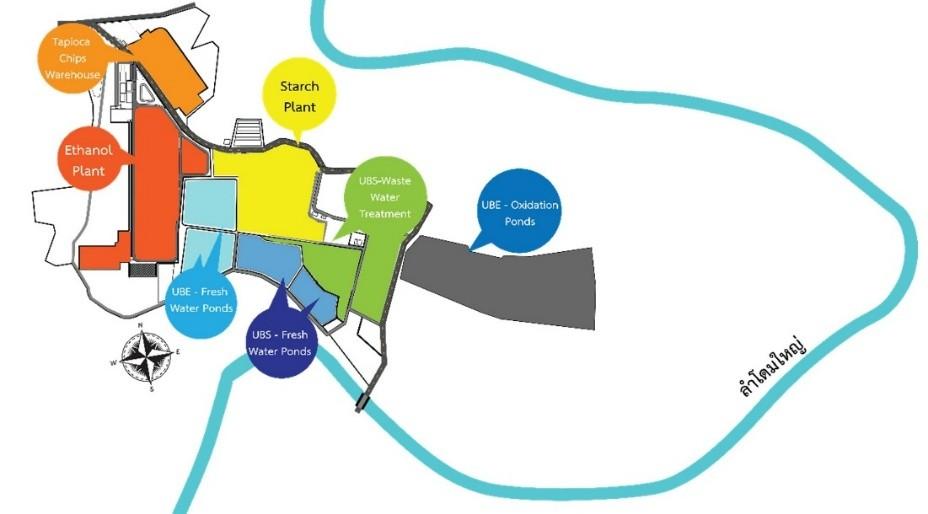
Energy and Utilities The Company's ethanol production process primarily uses electricity, water, and biomass fuel. Electricity is used to power machinery and equipment throughout the production process. Water is used as a raw material and in the ethanol production process. Biogas or biomass fuel is used as fuel in boilers to produce steam for use in the production process. For electricity supply, the Company will primarily use electricity generated from its biogas power plant and floating solar power plant. In cases where internal electricity generation capacity is insufficient, the Company will purchase additional electricity from the Provincial Electricity Authority. For water supply, the Company has a water reservoir with a capacity of approximately 1,000,000 cubic meters (shared with the Company's tapioca starch production plant). Water is pumped from the Lam Dom Yai River, a natural water source located near the plant, for use in the production process and various utilities within the plant. Diagram showing the location of the water reservoir
For biogas, the Company has a MUR (Modified Upflow Reactor) biogas production system, which can produce biogas from wastewater generated during the ethanol production process. The biogas obtained from this system is then reused as fuel in the ethanol production process, to increase energy efficiency and help reduce the cost of purchasing external biomass fuel. Marketing and Competition Distribution Channels and Target Customers The Company sells fuel-grade ethanol to oil traders under Section 7. The Company's ethanol sales methods can be divided into two types: sales through a bidding process and off-auction sales, where the trading price is determined by the market price on the transaction date (Spot Price). Most of the Company's ethanol sales are conducted through the bidding process, which is typically held quarterly. Marketing, Sales Promotion, and Customer Service The Company prioritizes building and maintaining business relationships with customers, thus focusing on developing service quality to efficiently meet customer needs. The Company regularly surveys customer needs and satisfaction to use this data for improving and developing production processes, as well as pre- and post-sales services, to build confidence and trust in doing business with the Company. A key strategy of the Company is to focus on delivering high-quality products to customers on time. Furthermore, the Company operates ethanol production continuously 365 days a year without holidays to promptly meet customer demand, especially during periods of increased ethanol consumption, such as festivals or long holidays. Distribution and Product Transportation Ethanol sold to customers must undergo a denaturing process, where the produced fuel-grade ethanol is mixed with gasoline or gasohol in a proportion of 0.5 percent, as stipulated by the Excise Department (referencing the Department of Energy Business's announcement on the characteristics and quality of denatured ethanol B.E. 2548 (2005)). This results in "Denatured Ethanol" for sale to oil traders under Section 7. The Company inspects the quality of ethanol both before and after loading into transport vehicles. Ethanol transportation can be divided into two types:
Currently, the Company employs external transportation service providers who are licensed transport operators and fuel transporters under Section 12. The transport vehicles are equipped with standard oil tanker equipment and components, along with GPS tracking systems that allow real-time monitoring throughout the route. Backup transport vehicles are also available to handle any breakdowns. Furthermore, insurance coverage is in place for the value of ethanol contained in the tanks. The Company continuously evaluates the qualifications and suitability of its transport service providers on a quarterly basis to ensure safe ethanol transportation and that customers receive products of the Company's quality standards. Quality and Safety Control The Company has a policy to produce goods in accordance with the standards for denatured ethanol products as specified by the Department of Energy Business, and implements strict quality control measures both before distribution and before delivery to customers. The Company has received certification for its quality management system according to ISO 9001:2015 and its testing laboratory standard according to ISO/IEC 17025:2017. Furthermore, the Company prioritizes workplace safety by establishing a Safety Committee and continuously monitoring, measuring, and analyzing the working environment, such as heat levels, lighting, and noise within the premises. This also includes controlling employee operations and working hours in compliance with relevant laws, such as the Occupational Safety, Health, and Environment Act B.E. 2554 (2011), the Factory Act B.E. 2535 (1992), and related announcements and regulations from government agencies. The Company continuously provides safety training and promotes safety awareness among employees, while also fostering safety measures at all organizational levels. The Company has implemented this safety policy with its subsidiaries, UBS and UBA, to ensure consistent safety operations. The Company has received certification for its occupational health and safety management system ISO 45001:2018 and its environmental management system ISO 14001:2015. | ||||||||||||||||||||||||||||||||||||||||||||||||||||||||||||||||||||||||||||||||||||||||||||||||||||||||||||||||||||||||||||||||||||||||||||||||||||||||||||||||||||||||||||||||||||||||||||||||||||
| Tapioca Starch Business | Cassava Starch Business The Company engages in the production and distribution of cassava starch for both food-grade and industrial-grade applications, with a maximum production capacity of 700 tons of starch per day. The Company’s food-grade cassava starch products include both conventional and organic types, marketed under the trademark “Ubon Sunflower.” In addition to cassava starch products, the Company also produces and distributes cassava flour, both conventional and organic, under the trademarks “Ubon Sunflower” and “Tasuko.” The Company’s products are manufactured under internationally certified food safety management systems, including GHPs, HACCP, and BRCGS, which is one of the standards recognized by the Global Food Safety Initiative (GFSI). The Company also complies with the United States Food Safety Modernization Act (FSMA). Furthermore, the Company has obtained Kosher and Halal certifications. For organic products, the Company has received international organic certifications from multiple countries, including the United States, Canada, the European Union, Japan, China, Korea, and Thailand, in order to support demand in both domestic and international markets.
Product Characteristics The Company’s main products in the cassava starch business consist of cassava starch and cassava flour, which are available in both conventional (native) and organic types. The details are as follows: Conventional Cassava Starch (Native Starch) Conventional cassava starch is a product derived from the processing of fresh cassava roots. It appears as a fine white powder with a smooth texture and silky feel. When heated and fully gelatinized, it becomes a viscous liquid, and upon cooling, it forms a thick and stable consistency. As a result, it is widely used across various industries. In the food industry, cassava starch is used as a raw material in the production of various products such as modified tapioca starch, monosodium glutamate (MSG), sweeteners, sago, and sauces. It is also utilized in other industries, including the paper and textile industries. Currently, the Company’s cassava starch products can be classified into two categories: food grade and industrial grade. Food-grade cassava starch must comply with the requirements of the Food and Drug Administration (FDA), while industrial-grade cassava starch contains an appropriate level of sulfur added to enhance product whiteness, and is primarily used as a raw material in the paper manufacturing industry. Comparison of Specifications: Food Grade vs. Industrial Grade Cassava Starch
Organic Cassava Starch (Organic Starch) Organic cassava starch has characteristics and properties similar to conventional food-grade cassava starch. It is produced from organic cassava roots cultivated without the use of agricultural chemicals throughout the production process. Currently, the Company’s organic cassava starch products have obtained international organic certifications from several countries, including the United States, Canada, the European Union, Japan, China, Korea, and Thailand, to meet the growing demand for safe and environmentally friendly food products. Cassava Flour Cassava flour is a processed product derived from fresh cassava roots. It appears as a fine white powder with a smooth and silky texture. Its appearance and taste are similar to wheat flour. However, cassava flour offers nutritional advantages, including higher dietary fiber content and being gluten-free, making it suitable for consumers with gluten intolerance or those who cannot consume wheat-based products. The Company produces and distributes cassava flour in both conventional and organic types. The organic products are certified to international organic standards by several countries, similar to the Company’s organic cassava starch products, in order to meet the needs of consumers in both domestic and international markets.
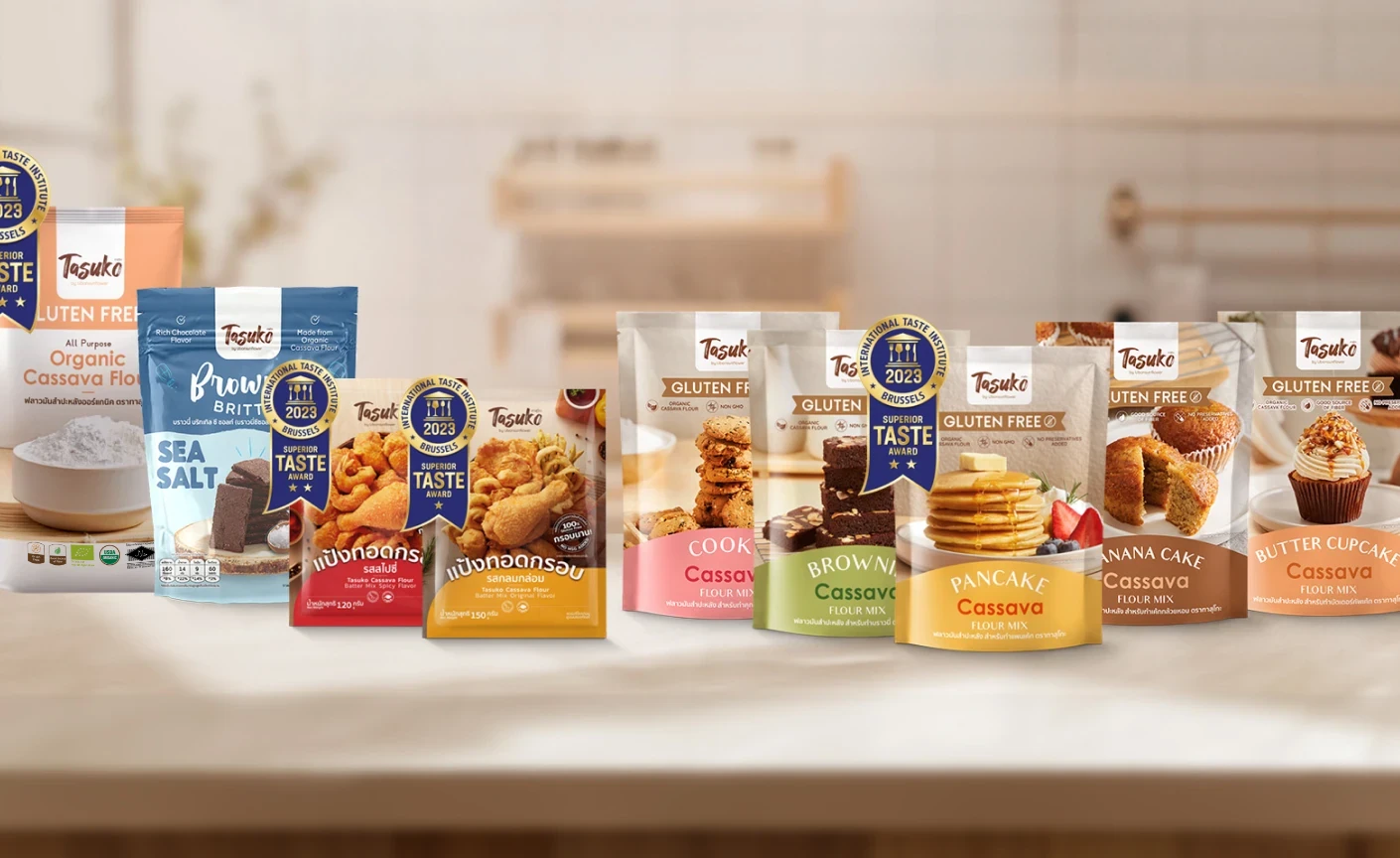
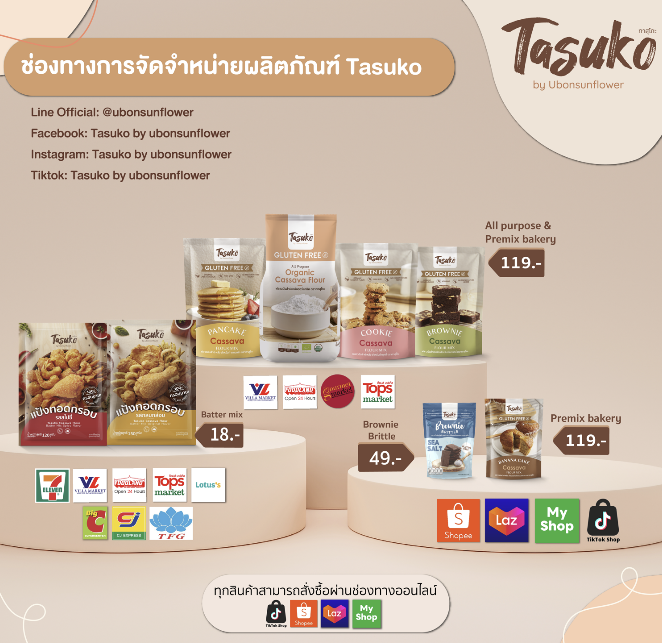
“Tasuko” is a brand under Ubon Sunflower Co., Ltd., developed to further leverage the Company’s organic raw materials and to align with the growing trend of clean-label and gluten-free food consumption in both domestic and international markets. Products under the Tasuko brand are manufactured through chemical-free processes. Currently, the Company has developed a range of ready-to-use flour products for cooking and bakery applications, including baking flour, crispy coating flour, and ready-to-eat crispy brownies. These products are designed to meet the needs of household consumers and retail channels. The Company has officially launched these products to the market.
Production and Sales Volume of Cassava Starch (2023–2025)
Remark: The cassava starch sales volume presented above includes both products manufactured by the Company and products purchased for resale (trading). The Company plans to further diversify its cassava starch product portfolio to better serve niche markets. The focus will be on research and development of high value-added products to expand the customer base, create new revenue streams, and enhance the Company’s long-term profitability. Product Sourcing Cassava Starch Production Facilities and Capacity The Company’s cassava starch production facility consists of two production lines, each with a nameplate capacity of 350 tons per day, resulting in a total installed capacity of 700 tons per day. Production Output and Average Operating Rates of the Cassava Starch Plant (2023–2025)
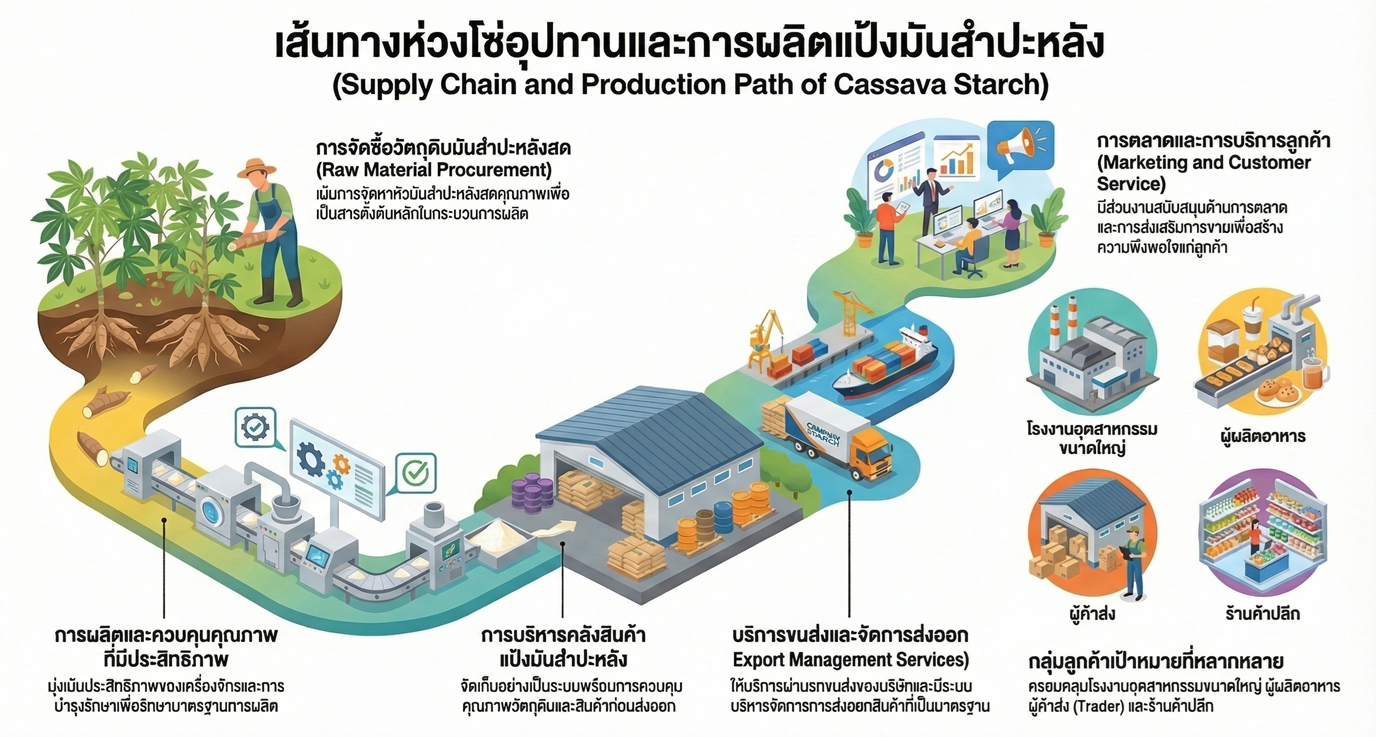
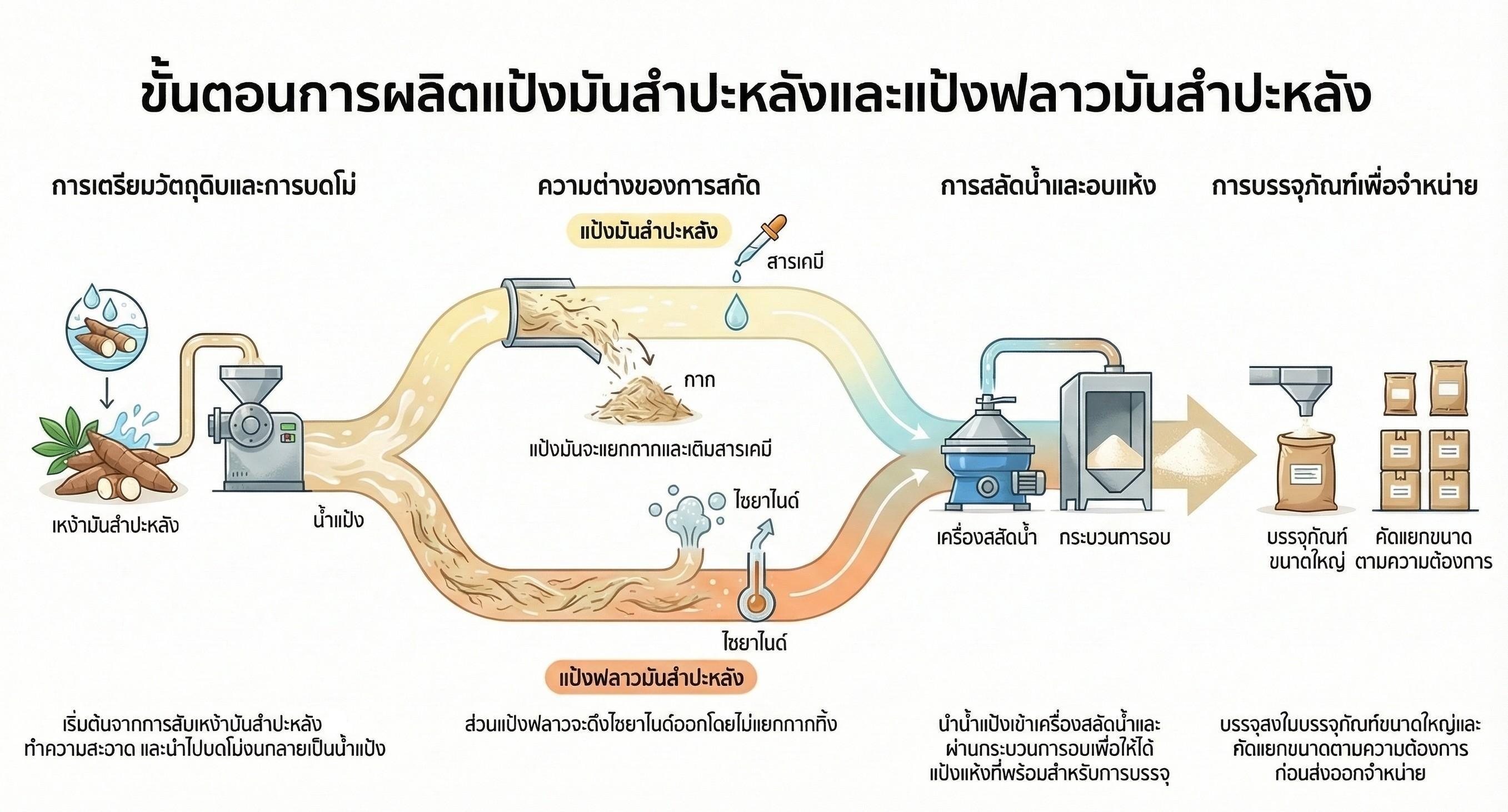
Remarks: The Company’s cassava starch production is primarily concentrated during the harvest season, which runs from November to April each year. Fresh cassava roots are used as the main raw material, which typically have a shelf life of no more than two days. Therefore, they must be processed promptly. As a result, the Company is unable to operate at full capacity throughout the year, and production is generally limited to the harvest season, mainly during the first half of the year. Maintenance The Company implements an annual maintenance plan for its machinery, including scheduled shutdown periods for repair and maintenance during the rainy season. This period is selected as it typically coincides with a lower supply of cassava raw materials in the market. Such maintenance planning not only enhances production efficiency and raw material management but also helps reduce the Company’s production costs. Cassava Starch Production Process The cassava starch production process is primarily based on extracting starch from fresh cassava roots. The extracted starch is then dried and packaged according to specified sizes. The production process can be divided into four main stages as follows:
Raw Material Preparation
Packaging
The Company distributes cassava starch products both domestically and internationally, with the majority of sales derived from exports to key markets such as China, the United States, and European countries. Storage Facilities Currently, the Company operates a total of seven warehouses for cassava starch storage. Six of these are Company-owned facilities with a combined storage capacity of approximately 33,000 tons. In addition, the Company leases one warehouse located at Laem Chabang Port, Chonburi Province, with a storage capacity of approximately 500 tons, bringing the total storage capacity to approximately 33,500 tons. All warehouses are located in areas with low flood risk and are fully insured. The Company also assigns dedicated personnel to each warehouse to manage storage areas, control product dispatch for export, and record inventory data in computerized systems to ensure accurate and up-to-date inventory tracking. Energy and Utilities The Company’s cassava starch production process primarily utilizes electricity, water, and fuel. Electricity is used to operate machinery and equipment, while water is used in raw material washing and production processes. Biogas or fuel oil is used as fuel in the drying process. For electricity supply, the Company utilizes part of its electricity from its biogas power plant and procures additional electricity from the Provincial Electricity Authority (PEA) to meet production needs. Regarding water supply, the Company operates a reservoir with a capacity of approximately 1,000,000 cubic meters, shared with its ethanol production plant. Water is sourced from the Lam Dom Yai River, a nearby natural water source, for use in the production process. For biogas, the Company operates UASB (Upflow Anaerobic Sludge Blanket) and CLBR (Circulating Loop Bioreactor) systems to generate biogas from wastewater produced during cassava starch manufacturing. The biogas generated is reused as fuel in the production process. In addition, the Company procures fuel oil as a supplementary energy source in cases where biogas production is insufficient. Marketing and Competition Distribution Channels and Target Customers The Company sells cassava starch products to both domestic and international customers. In 2025, the Company primarily exported cassava starch to China and the United States, accounting for 30.1% and 31.2% of total cassava starch sales revenue, respectively. The Company aims to further diversify its product portfolio, enhance product quality, and better meet customer needs by focusing on the development of high value-added products to strengthen long-term competitiveness. Revenue and Sales Proportion by Customer Region (2023–2025)
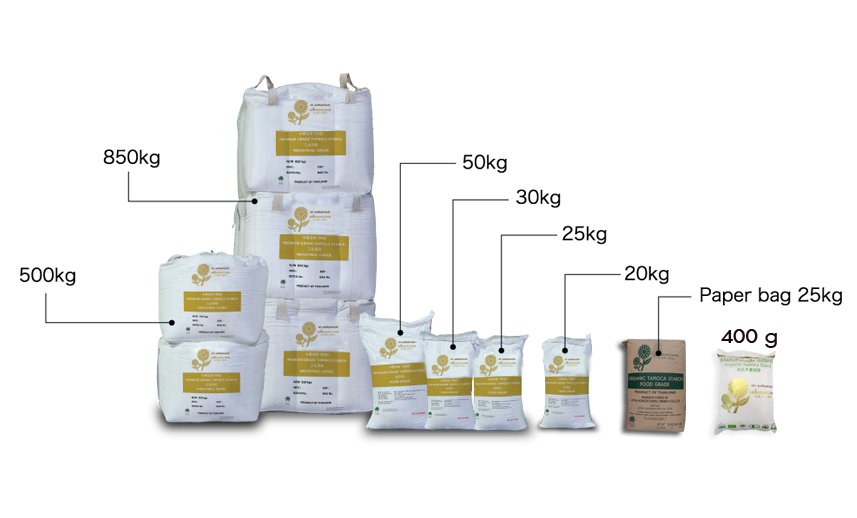
The Company exports its products to multiple countries, primarily in bulk packaging (Big Bag), which is suitable for use as raw materials in industrial manufacturing. To enhance distribution efficiency in international markets, the Company has a policy of selling products through traders (distributors) in overseas markets. For domestic sales, the Company focuses on expanding its customer base to household consumers by increasing the proportion of retail-size packaging and distributing products through retail stores, wholesalers, and convenience stores, particularly in provincial areas. Retail packaging products typically generate higher gross margins compared to industrial-size packaging. Marketing, Promotion, and Customer Service In the past year, the Company has undertaken various initiatives to strengthen customer relationships and improve customer management. These efforts focus on delivering added value, retaining existing customers, and expanding the new customer base, resulting in improved customer satisfaction scores. The Company also emphasizes creating strategic value for its products through collaborative research and development with customers to enhance product differentiation and gain deeper insights into customer needs. This enables the Company to offer products that more effectively meet customer requirements, fostering long-term business relationships and trust. Distribution and Logistics The Company’s export logistics can be categorized into three terms: (1) FOB (Free on Board), (2) CIF (Cost, Insurance and Freight), and (3) CFR (Cost and Freight). Most sales are conducted under FOB terms, whereby the Company delivers goods to Laem Chabang Port, and customers arrange shipping vessels themselves. For CIF and CFR arrangements, the Company coordinates with shipping companies to manage transportation to the destination country, with freight and related logistics costs included in the product pricing. Quality Control and Safety The Company is committed to producing food-grade cassava starch in compliance with applicable laws and regulations. Production is carried out under internationally certified food safety management systems, including GHPs, HACCP, and BRCGS, which are aligned with the Global Food Safety Initiative (GFSI), as well as compliance with the Food Safety Modernization Act (FSMA). The Company has also obtained Halal and Kosher certifications. In addition, the Company has the capability to further develop product characteristics to meet specific customer requirements, supported by a quality management system certified to ISO 9001:2015, covering all production processes. | ||||||||||||||||||||||||||||||||||||||||||||||||||||||||||||||||||||||||||||||||||||||||||||||||||||||||||||||||||||||||||||||||||||||||||||||||||||||||||||||||||||||||||||||||||||||||||||||||||||
| Organic Agriculture Business | The Company recognized opportunities arising from the growing consumer trend towards food safety and health. Consequently, it began developing an integrated organic agricultural ecosystem business in 2017, starting with organic cassava cultivation. Leveraging the Company's expertise in cultivation and its long-standing relationships with local farmers through a Contract Farming system, this serves as a crucial foundation for the continuous development of high-quality organic raw materials. Subsequently, the Company expanded its business into products supporting organic farming, such as organic soil conditioners and agricultural bioproducts (PGPR), to help enhance production efficiency and elevate organic farming standards for farmers within its network. Leveraging the advantageous location of its factory in Ubon Ratchathani province, the Company can expand its organic raw material base and further develop into other types of agricultural products in the future. This integrated organic agricultural development strategy enhances competitiveness, creates added value for agricultural products, and aligns with government policies to elevate Thailand's agricultural sector to international standards. Furthermore, under the energy strengthening strategic plan, the Company aims to develop 100% renewable energy systems for internal use within the group to reduce energy costs, decrease reliance on external energy sources, and enhance the energy security of the organization, alongside sustainable environmental stewardship. Currently, the Company utilizes waste from its production processes for renewable energy generation and has installed solar power generation systems for use within the group. This is part of the Company's drive towards clean energy utilization and operating its business in accordance with Environmental, Social, and Governance (ESG) principles, by focusing on efficient resource utilization and sustainable environmental preservation. | ||||||||||||||||||||||||||||||||||||||||||||||||||||||||||||||||||||||||||||||||||||||||||||||||||||||||||||||||||||||||||||||||||||||||||||||||||||||||||||||||||||||||||||||||||||||||||||||||||||
| Food Business | Based on the Company's strategic plan to expand investments into new potential businesses to diversify risks and reduce the volatility of performance from its current core business, which relies solely on cassava as its primary raw material, the Company faces risks from climatic factors that may affect production volume and raw material price fluctuations. Furthermore, to accommodate the rapid changes in industry conditions and mitigate risks from existing businesses such as ethanol and tapioca starch businesses, which are categorized as Upstream Businesses heavily dependent on cassava raw material and subject to relatively high volatility, the Company has adjusted its business strategy. It now focuses more on diversifying investments into Downstream Businesses, which are less volatile and possess long-term growth potential. Concurrently, the Company continues to operate its original core businesses while emphasizing research and development of high-value products to build competitiveness and sustainable growth in the future. Under this approach, the Company has sought investment opportunities in the food business group with potential for continuous growth and profitability. This involves considering businesses with recognized brands, experienced management teams and personnel, and the ability to further expand product distribution and consumer reach. In this regard, the Board of Directors' Meeting No. 6/2567 held on August 27, 2567, considered the management's proposal and resolved to approve the submission of the matter to the Extraordinary General Meeting of Shareholders No. 1/2567 for consideration and approval for the Company and/or its subsidiaries to enter into an asset acquisition transaction and related party transactions from investing in Oshinei Enterprise Company Limited (“ Oshinei Enterprise ” or “ OE ”) Oshinei Enterprise Company operates three main types of businesses:
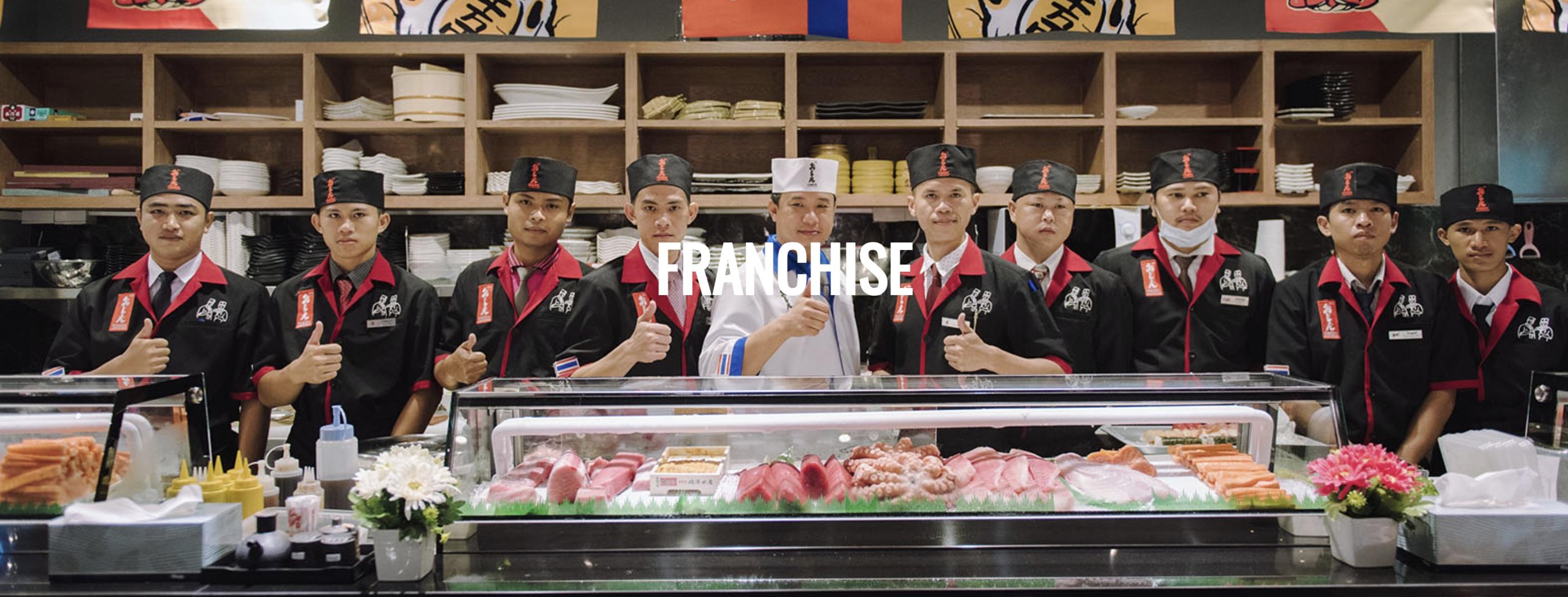
The Japanese restaurant brand “Oshinei” opened its first branch in Ubon Ratchathani Province in 2014, before expanding to Udon Thani and Nakhon Ratchasima provinces, and further expanding its business to Vientiane Capital, Lao People's Democratic Republic, in 2019. Currently, Oshinei Japanese restaurants offer a variety of Japanese dishes, both buffet and a la carte styles, with a total of 30 branches in Thailand and abroad. These are distributed across various regions of Thailand, including 14 branches in the Northeast, 11 branches in the Central and Eastern regions, 3 branches in the North, 1 branch in the South, and 1 international branch. Oshinei's primary target customers are consumers who value good value, menu variety, and standardized service. Nature of Business Operations The Company's businesses can be divided into three main groups: Japanese restaurant business, Japanese restaurant franchise business, and Japanese food ingredient distribution business, with details as follows: Japanese Restaurant Business (Company-operated branches) Japanese Restaurant Franchise Business Japanese Food Ingredient Distribution Business
Raw Material Quality Control The Company places importance on controlling the quality of raw materials at every stage, from supplier selection, quality inspection, and storage to their use in the cooking process. Strict checks are conducted regarding freshness, cleanliness, and food safety. Some key raw materials are imported from Daiki Food Co., Ltd., undergoing thorough quality inspection processes before being used in the restaurant's menu. This ensures that the raw materials meet specified quality and standards. Such quality control enables the company to maintain food standards in terms of taste, quality, and consumption safety, while also assuring customers that Oshinei restaurants prioritize quality at every stage of service. Marketing and Sales Promotion The Company focuses on marketing strategies to build brand awareness and expand its customer base through online channels and social media, coupled with various promotional activities such as promotions on special occasions, member privileges, and marketing campaigns designed to suit each customer segment. Additionally, the Company develops special seasonal menus and family packages for various festivals to enhance product variety and create positive customer experiences, thereby attracting new customers and increasing the frequency of visits from regular patrons. The operation of Oshinei restaurants under Oshinei Enterprise Company Limited reflects a commitment to maintaining high standards of product quality and service, along with adapting marketing strategies to align with changing consumer behavior and demands. These are crucial factors in building customer trust, enhancing brand image, and supporting long-term business growth. |
Research & Development
Has R&D Policy (Y/N)
Yes
R&D Cost — Description
The company has a research and development policy that aims to utilize innovation as a key mechanism to enhance competitiveness and support the organization's sustainable growth. The company implements comprehensive innovation development across the entire value chain, from upstream to midstream and downstream.
The company's research and development policy can be divided into three main dimensions as follows:
-
Process Innovation
The company aims to develop process innovations to continuously enhance operational efficiency, reduce production costs, and elevate product quality, with a focus on key issues such as:
-
Enhancing the efficiency of raw material and energy utilization in production processes.
-
Reducing chemical usage and environmental impact.
-
Increasing yield and stability of industrial production processes.
The development of these process innovations enables the company to manage costs efficiently and better cope with fluctuations in raw material prices and the business environment.
-
-
Product & Service Innovation
The company prioritizes the development of high-value-added products and services to meet the demands of the future food market, focusing on:
-
Development of tapioca-based products with specific properties (Functional or Value-added Products).
-
Utilizing the innovation center and laboratories for formula development, testing, and analyzing product properties.
-
Providing technical support to customers for co-developing specific products tailored to their needs.
An example of an innovative product developed by the company is UBON BOBA Ready-to-Eat Tapioca Pearls, which extends research into commercial product development that adds value to the business.
-
-
Business Model Innovation
In 2025, the company continues to drive the organization under the UBEYOND – Innovation values, building upon the establishment of
The foundational structure and innovation strategies implemented in 2024 to further drive concrete commercial outcomes.
The company has established a Food Innovation Center, which serves as a crucial mechanism to support the organization's strategy, with roles encompassing:
-
Developing new products.
-
In-depth analysis and testing of product properties.
-
Providing technical support to customers.
This innovation center plays a crucial role in developing and testing products that respond to future food industry trends, utilizing laboratories for product property analysis, technical problem-solving, and developing specific formulations for customers, thereby reducing time to market and enhancing efficiency in responding to market demands.
Furthermore, the company utilizes the innovation center as a platform to foster collaboration with customers, partners, and allied organizations both within and outside the industry, in order to:
-
Creating new business opportunities.
-
Strengthening customer relationships and brand loyalty.
-
Elevating the company's role from a raw material producer to a Solution Provider in the food and biotechnology industries.
Success from internal innovation development.
In 2025, the company's total research and development (R&D) expenses exceeded 10 million baht. This investment builds upon previous research projects and innovation infrastructure, focusing on generating concrete commercial outcomes from research. Innovation activities in that year prioritized key issues, including:
-
Developing and extending research projects and pilot projects into commercial applications.
-
Developing innovative products that can generate revenue for the company.
-
Utilizing the innovation center as a key mechanism to support product development with customers and create new business opportunities.
This approach enables the company to transform research outcomes into business value creation and enhance the organization's long-term competitiveness.
Key Achievements in Research and Innovation Development
During 2024-2025, the company made significant progress in developing high-value-added innovative products (High Value Products: HVP), focusing on leveraging the potential of tapioca raw materials and tapioca starch to develop products that can increasingly meet the demands of specialized markets.
Development of UBON BOBA Ready-to-Eat Tapioca Pearls.
The company has developed UBON BOBA Ready-to-Eat Tapioca Pearls, an innovative product that reduces the preparation steps for operators in the food and beverage industry, making it more convenient and faster to use, while also helping to maintain product texture quality and consistency.
The development of these products is a result of integrating knowledge in tapioca starch, waxy starch, and food processing technology to create products that meet commercial market demands and generate new business opportunities for the company in the Ready-to-Use Food Products group.
Developing High Value Product (HVP) groups.
The company focuses on developing High Value Products (HVP) from Starch, Waxy Starch, and Flour product groups, emphasizing the adjustment of product properties to suit specific applications in the food and related industries.
The product development approach covers key issues, including:
-
Development of various forms of Modified Starch to improve properties such as viscosity, texture, stability, and resistance to processing.
-
Developing products that meet specialized applications, such as in processed food, beverage, bakery, and ready-to-eat food industries.
-
Adding value to products derived from tapioca starch and waxy starch to meet customer demands for quality, consistency, and production efficiency. The development of these HVP products enables the company to expand its customer base in specialized markets, increase product profit margins, and reduce reliance on price competition in the commodity market.
Connecting research outcomes to business results.
The company's research and development achievements in various product groups are crucial mechanisms for extending pilot projects into commercial applications. In 2025, innovation projects that have been developed and implemented generated a total business return of approximately 11 million baht, reflecting the company's ability to concretely transform research and innovation into economic value.
Furthermore, the Innovation Department has established policy frameworks and innovation development directions aligned with each of the company's business groups, with clear development goals to meet the needs of both internal and external customers, as follows:
|
Types of Innovation Groups |
Goals |
|
1. Food of the Future Group |
|
|
2. Biotechnology Group |
|
|
3. Agricultural Development Group |
|
Continuous internal innovation development.
In 2025, the company continues to emphasize fostering an internal innovation culture by organizing the UBE Innovation 2025 project competition for the second consecutive year. This initiative provides opportunities for employees at all levels to participate in developing ideas and translating them into practical applications. The project aims to create business value in multiple dimensions, including developing new products and services to generate additional revenue, improving production efficiency to reduce costs, utilizing by-products from production processes to create added value, and modernizing production processes to align with the rapidly changing business, social, and environmental contexts.
R&D Cost — Label
Research and development (R&D) expenses over the past 3 years (Million Baht)
R&D Cost — This Year
12.48
R&D Cost — Last Year
25.6
R&D Cost — 2 Years Ago
12.1
Assets Used in the Business
Permanent Assets — Description
Major fixed assets used in the business operations of the Company and its subsidiaries as of December 31, 2023 to 2025 consist of the following significant items:
|
Item |
December 31, 2023 (Million Baht) |
December 31, 2024 (Million Baht) |
December 31, 2025 (Million Baht) |
|
Land, Buildings, and Equipment |
4,589.22 |
4,432.06 |
4,126.21 |
|
Right-of-Use Assets |
143.99 |
116.12 |
83.86 |
Intangible Assets — Description
Significant intangible assets of the Company and its subsidiaries as of December 31, 2023 to 2025 consist of the following important items:
|
Items |
December 31, 2023 (Million Baht) |
December 31, 2024 (Million Baht) |
December 31, 2025 (Million Baht) |
|
Intangible Assets |
29.53 |
302.92 |
283.78 |
Has Subsidiaries Investment Policy (Y/N)
Yes
Subsidiaries Investment Policy — Description
The Company focuses on investing in businesses with growth potential and the ability to generate good returns from investments. In this regard, Approval for investment in subsidiaries or associated companies must comply with the notifications of the Securities and Exchange Commission. Ref. TC. 20/2551 Subject: Criteria for significant transactions classified as acquisition or disposal of assets (including any amendments) and the Notification of the Stock Exchange of Thailand Board of Governors regarding the Disclosure of Information and the Operations of Listed Companies concerning the Acquisition or Disposal of Assets B.E. 2547 (including any amendments)
The Company may consider investing in other businesses that are not its core business in the future. Such investments must be consistent and appropriate with the Company's business conditions and strategic plan.
In making any investment decision, etc. The Company will analyze project feasibility and consider potential, as well as investment risks, and present the investment plan to the Company's Board of Directors for consideration and recommendations on mitigating potential investment risks. This includes screening for alignment with investment goals and strategic plans, which encompass plans for deploying personnel to participate in management, overseeing compliance with expectations for operational efficiency and effectiveness to achieve expected investment returns, and ensuring the investment budget expenditure plan aligns with fund allocation. Once this screening is complete, approval will be sought through the subsequent steps.
To ensure that the investment policy in subsidiaries and associated companies remains current, appropriate for practices and changes, and consistently in line with relevant regulations, reviews are mandated Investment in subsidiaries and associated companies regularly or when there are any changes. etc. as appropriate.
Marketing Policy & Competition
Reporting Mode
3116
Per-Business-Group Breakdown
| Marketing Policy | Industry & Competition | ||||||||||||||||||||||||||||||||||||||||||||||||||||||||||||||||||||||||||||||||||||||||||||||||||||||||||||||||||||||||||||||||||||||||||||||||||||||||||||
|---|---|---|---|---|---|---|---|---|---|---|---|---|---|---|---|---|---|---|---|---|---|---|---|---|---|---|---|---|---|---|---|---|---|---|---|---|---|---|---|---|---|---|---|---|---|---|---|---|---|---|---|---|---|---|---|---|---|---|---|---|---|---|---|---|---|---|---|---|---|---|---|---|---|---|---|---|---|---|---|---|---|---|---|---|---|---|---|---|---|---|---|---|---|---|---|---|---|---|---|---|---|---|---|---|---|---|---|---|---|---|---|---|---|---|---|---|---|---|---|---|---|---|---|---|---|---|---|---|---|---|---|---|---|---|---|---|---|---|---|---|---|---|---|---|---|---|---|---|---|---|---|---|---|---|---|---|---|
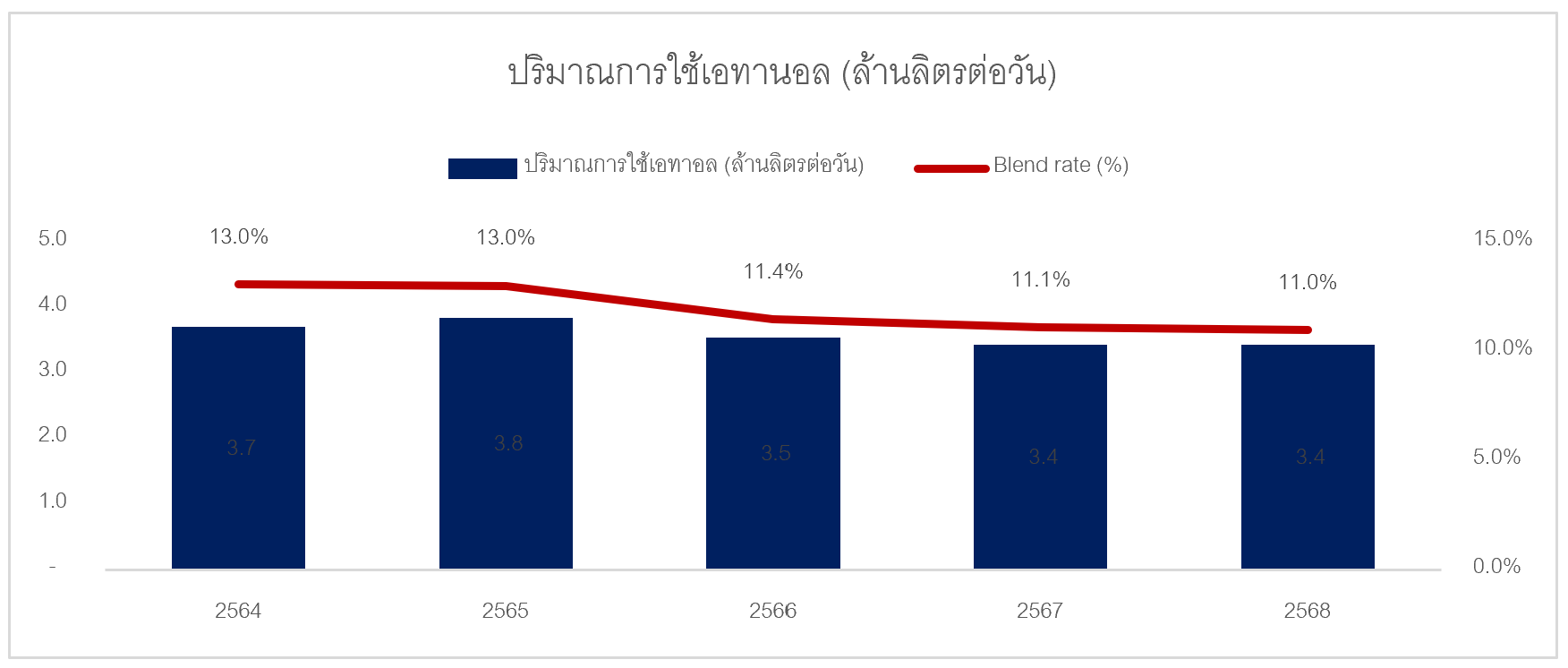
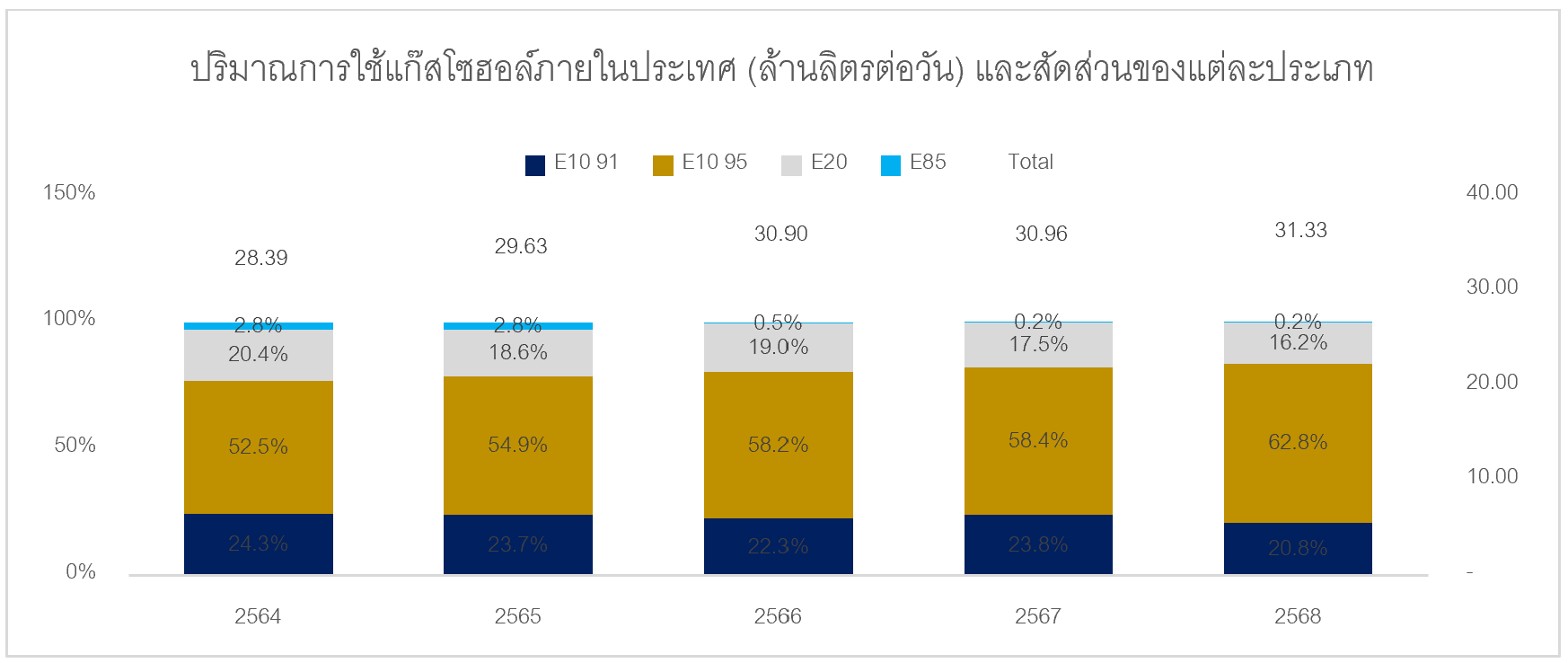
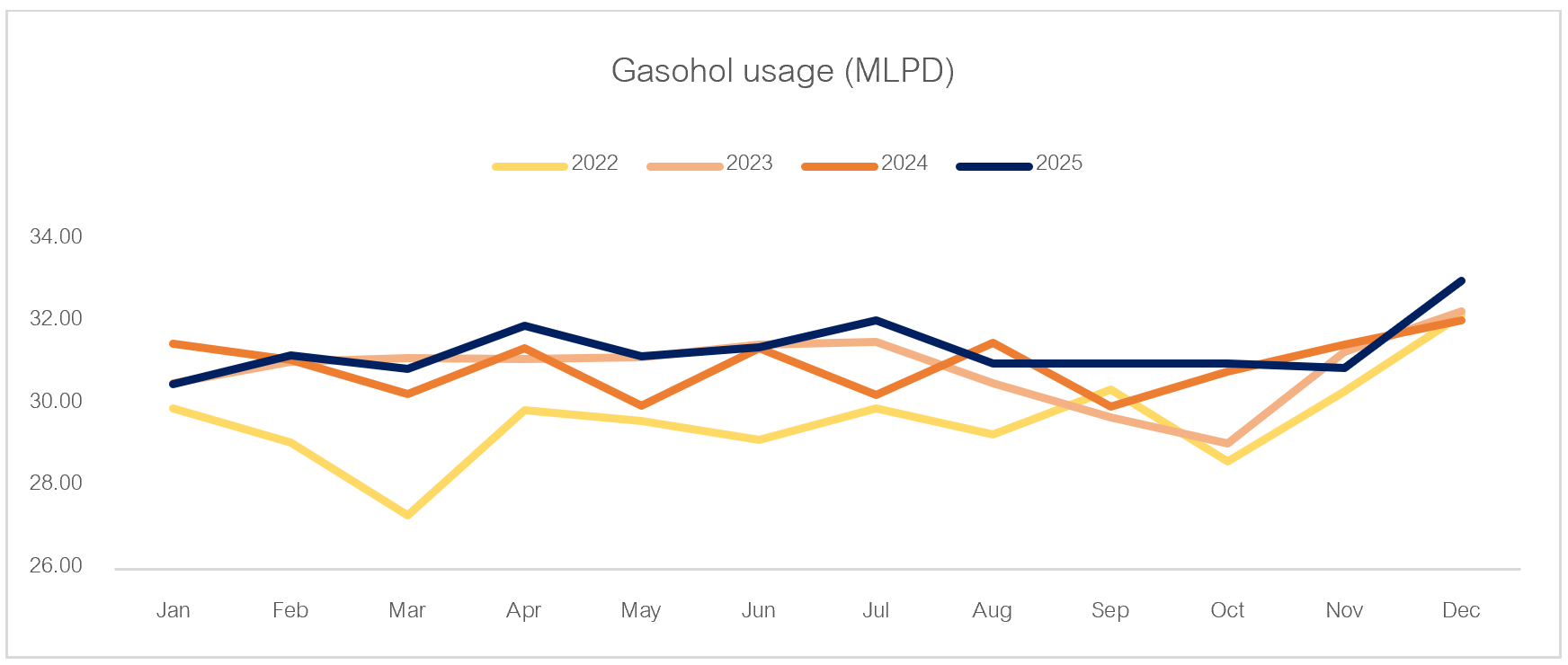
In 2025, the country's demand for fuel-grade ethanol averaged approximately 3.4 million liters per day, similar to the 2024 level. Meanwhile, the proportion of ethanol blended in fuel slightly decreased from 11.1 percent in 2024 to 11.0 percent in 2025. This change aligns with the trend of decreasing domestic consumption of gasohol, particularly E20 and E85, which are fuels with a high proportion of ethanol blending. Consequently, the overall demand for ethanol has slightly decreased compared to the previous year.
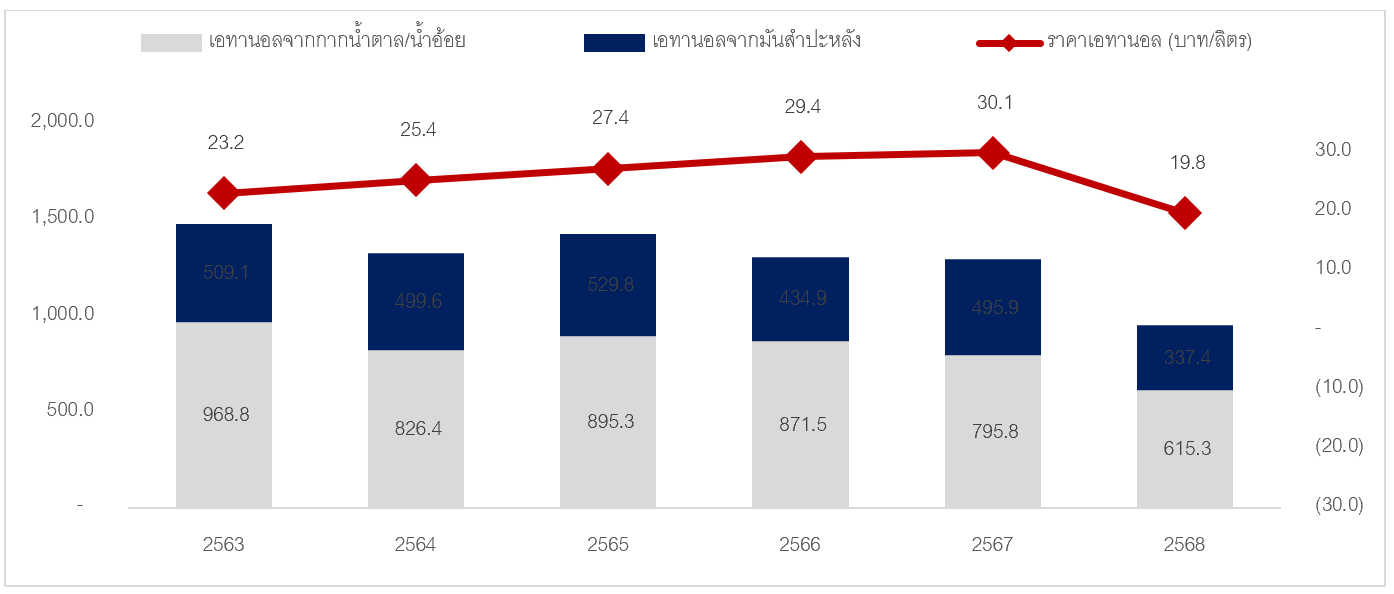
Regarding the main raw materials used for domestic ethanol production, they can be divided into two primary types: molasses and cassava. Most ethanol producers are operators in the sugar industry who utilize molasses, a byproduct of sugar production, as a raw material for ethanol production. Consequently, the majority of domestically produced ethanol originates from molasses, accounting for approximately 62.3-72.3 percent of the country's total ethanol production. Therefore, the domestic reference ethanol price tends to fluctuate primarily with the cost of ethanol production from molasses. The Energy Policy Administration Committee ("EPAC") has established criteria for calculating the reference ethanol price, considering the lower of (1) the ethanol price reported by producers to the Excise Department and (2) the ethanol price reported by Section 7 oil traders to the Energy Policy and Planning Office ("EPPO"). The company's ethanol selling price will be determined based on production costs combined with an appropriate profit margin (Cost Plus Margin), taking into account market supply and demand conditions, as well as the competitive landscape within the industry.
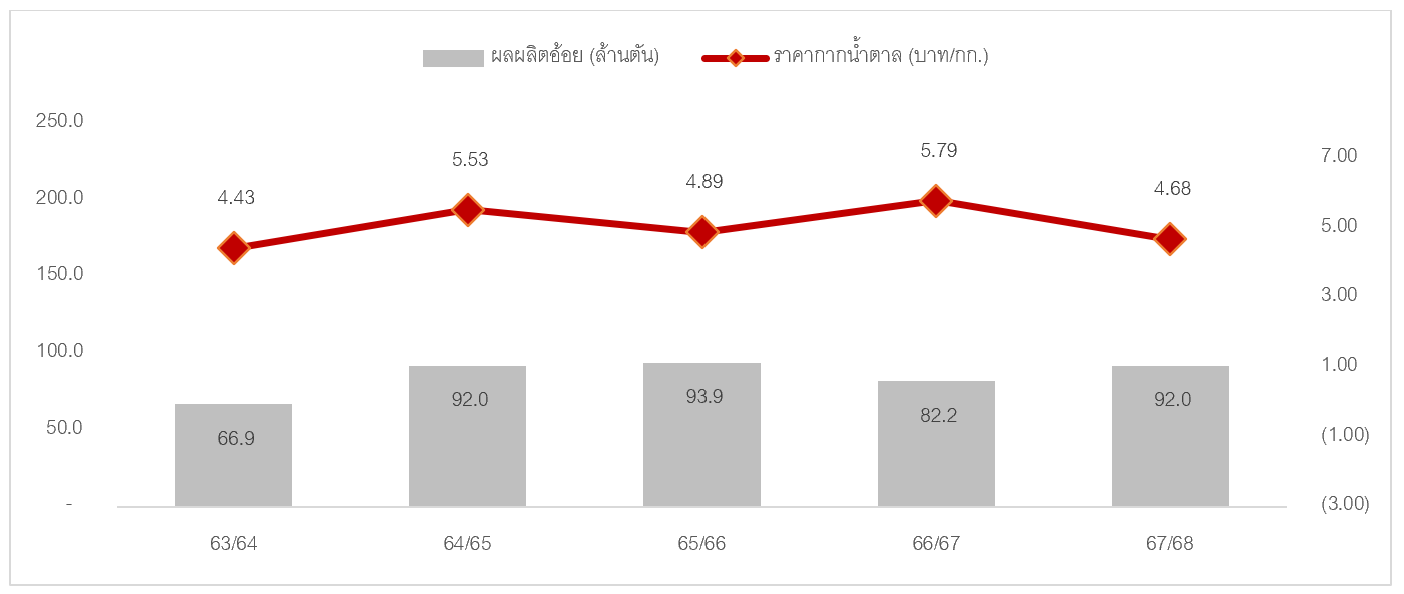
Source: Department of Alternative Energy Development and Efficiency, Ministry of Energy (September 2025) In the 2024/2025 crop year, the cultivated area and sugarcane yield increased compared to the 2023/2024 crop year. This was a result of incentive measures for sugarcane farmers to harvest 100 percent fresh sugarcane, a policy continued from the previous year. Consequently, the market supply of molasses increased, leading to a significant decrease in molasses prices. These factors also contributed to a decline in ethanol prices in 2025.
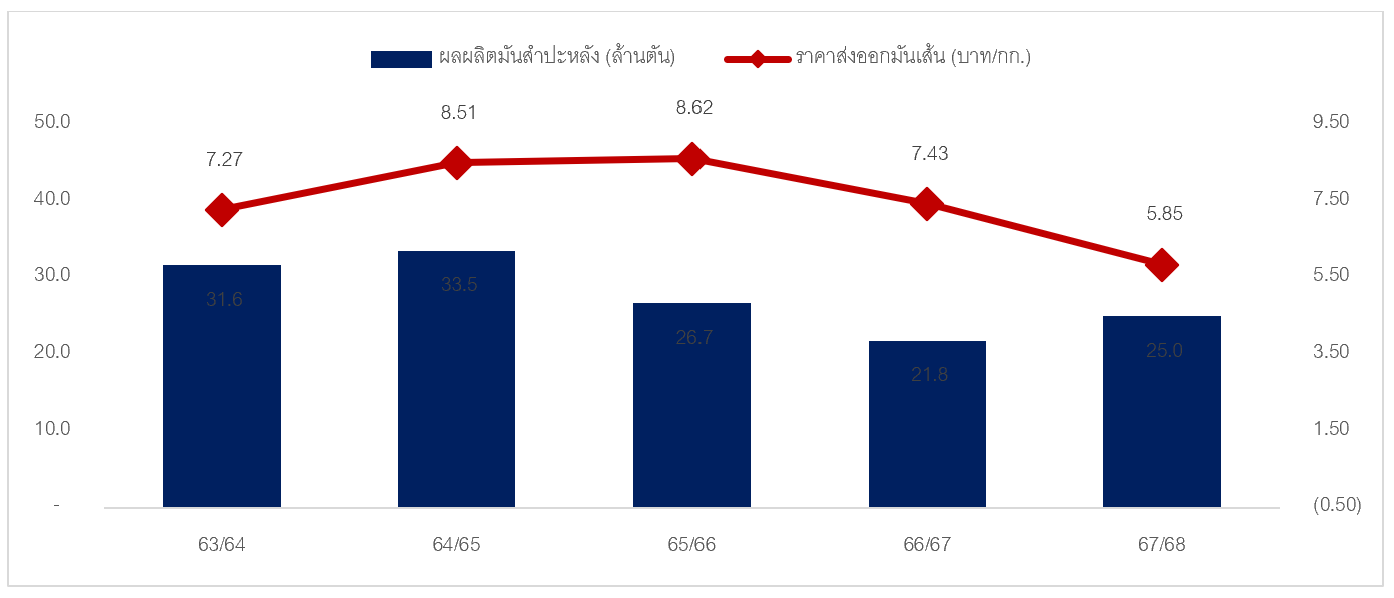
Source: Office of the Cane and Sugar Board, Customs Department Meanwhile, the cassava yield in the 2024/2025 crop year slightly increased compared to the 2023/2024 crop year. However, the export price of cassava chips decreased due to a slowdown in import demand from key trading partners.
Source: Thailand Tapioca Development Institute Foundation | In 2025, Thailand has a total of 29 ethanol production plants, comprising 28 commercially operating plants and 1 plant under construction. The operating plants have a total production capacity of 7,220,000 liters per day, which can be categorized by the main raw materials used for ethanol production as follows: Table showing names of ethanol producers and installed production capacity
Source: Department of Alternative Energy Development and Efficiency, Ministry of Energy (September 2025) Note : 1 Production capacity registered with the Excise Department The company's ethanol sales can be divided into two forms: (1) sales through a bidding process and (2) sales outside the bidding process, which are transactions based on the spot price. The majority of the company's ethanol sales are conducted through the bidding process, which is typically carried out quarterly.
| ||||||||||||||||||||||||||||||||||||||||||||||||||||||||||||||||||||||||||||||||||||||||||||||||||||||||||||||||||||||||||||||||||||||||||||||||||||||||||||
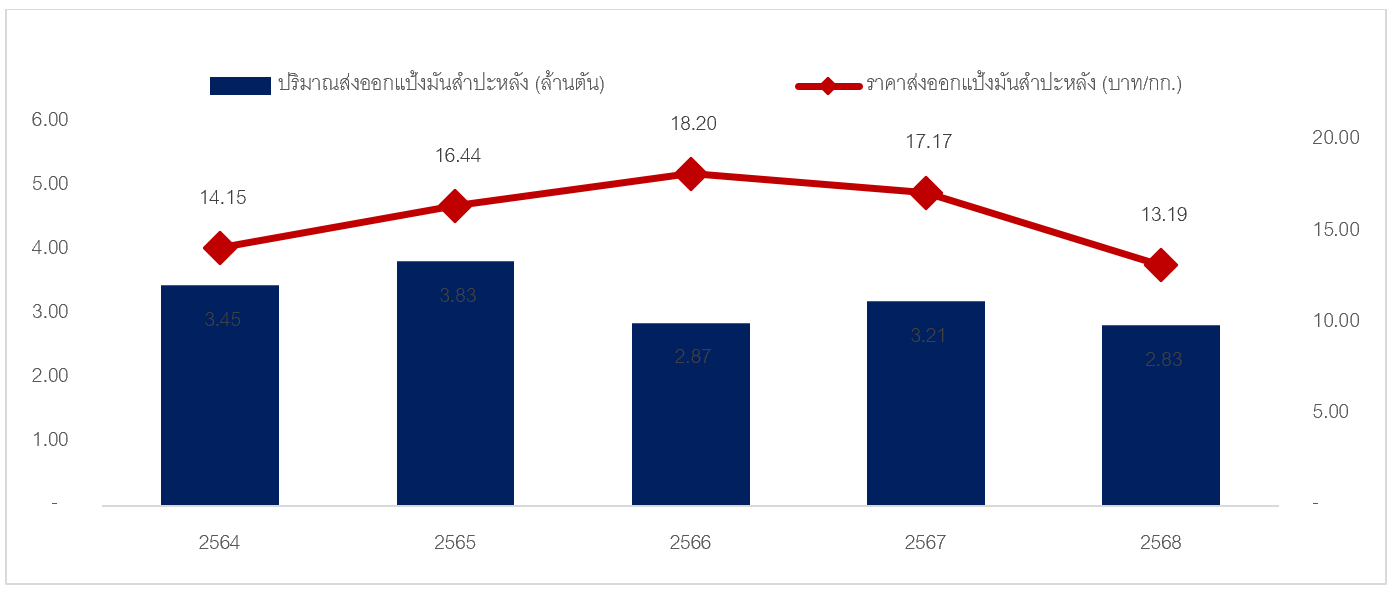
In 2025, the volume of Thai tapioca starch exports decreased by 11.65% compared to 2024, and the price of tapioca starch significantly decreased by 23.18%. This was primarily because China is the main export market for raw tapioca starch from Thailand. In 2025, the price of corn starch, a substitute for tapioca starch, decreased in China due to an increase in corn production in China, leading to reduced demand for tapioca starch. Furthermore, the significant appreciation of the Thai Baht compared to competitors such as Vietnam reduced Thailand's price competitiveness in the global market, consequently leading to a substantial decrease in tapioca starch export prices.
Source: Thai Tapioca Trade Association, Customs Department Domestic tapioca starch selling prices are referenced from prices announced by the Thai Tapioca Starch Association (“TTSA”), and generally, the trend of these prices moves in line with export prices. Furthermore, the export price of tapioca starch produced in Thailand is influenced by several factors. One of the significant factors affecting the price level is the price of corn starch in China, which is considered a substitute for tapioca starch in various applications, both in the food industry and other industries. When the volume of corn stock in China is high and corn starch production increases, this will lead to a decrease in corn starch prices and consequently put downward pressure on the export price of Thai tapioca starch. Conversely, if the volume of corn stock in China decreases and corn starch prices increase, this will likely lead to an increase in the export price of Thai tapioca starch as well, along with a potential expansion in the volume of tapioca starch exports due to increased demand from the Chinese market. | In the past, the native cassava starch industry (Native Starch) has experienced relatively high competition because most competitive operators are typically large-scale enterprises that focus on selling products in large volumes and possess advantages in production costs and economies of scale (Economies of Scale). However, at present, the cassava starch industry has developed towards the production of higher value-added products such as cassava flour (Cassava Flour), modified starch (Modified Starch), sago (Pearl), and sweeteners, among others. This trend has resulted in competition in the industry not being solely based on price, but also emphasizing product specific characteristics (Specialty Products) as well as the ability to understand the market and develop products that align with specific customer needs (Customized Products). This trend represents a significant opportunity for cassava starch producers in Thailand seeking to expand their markets, especially small-scale entrepreneurs who possess high flexibility and adaptability. They can leverage their businesses to enhance competitiveness, strengthen income stability, and sustainably compete with large-scale operators in the long run. | ||||||||||||||||||||||||||||||||||||||||||||||||||||||||||||||||||||||||||||||||||||||||||||||||||||||||||||||||||||||||||||||||||||||||||||||||||||||||||||
In 2025, Thailand's agricultural sector continues to face pressure from uncertainties in demand and supply conditions, as well as volatile climatic factors, which affect the production volume of various agricultural products. Specifically, Thailand's coffee production in the 2024/2025 crop year is estimated at approximately 16,020 tons, which is still insufficient to meet domestic consumption needs. Consequently, Thailand must increasingly rely on coffee imports from abroad, leading to a rise in domestic coffee prices in line with strong demand. Concurrently, tapioca chips, which are crucial raw materials for the animal feed, energy, and ethanol production industries, continue to face fluctuations in both volume and price levels in the export market, particularly due to demand from China, which varies according to global economic conditions and uncertain climatic conditions. Furthermore, Thailand's agricultural sector is also facing pressure from geopolitical factors, which increase uncertainty for global trade and supply chains, such as changes in trade policies of key trading partners, geopolitical tensions in various regions, and the implementation of trade protectionist measures, which could impact Thailand's agricultural exports. Moreover, operators in the agricultural sector also face pressure from the appreciation of the Thai Baht, which could reduce the competitiveness of Thai products in the global market. These factors therefore represent significant challenges for Thailand's agricultural sector in 2025 and may continue into the following year. | For the organic agriculture industry in 2025 (and continuing into 2026), the competitive landscape has transitioned from being a "niche market" to an "indirect mandatory standard" in the global trade arena. A summary of the competitive landscape and key driving factors is as follows: Competition in "Standards and Sustainability" (Non-Tariff Barriers) In 2025, competition is not solely about organic products themselves, but also about "data transparency."
Cost Wars and Adaptation to "Precision Agriculture" (Smart Farming) Although the demand for organic products is increasing, farmers face pressure from persistently high production costs.
Shifting the Battleground from "Price" to "High Value" (High Value Agriculture) The government and large private sector entities are pushing for "high-value agriculture" policies to escape price competition from rival countries such as Vietnam or India.
Consumer Behavior: "Organic is the New Normal"
| ||||||||||||||||||||||||||||||||||||||||||||||||||||||||||||||||||||||||||||||||||||||||||||||||||||||||||||||||||||||||||||||||||||||||||||||||||||||||||||
In 2025, Thailand's restaurant industry is still projected to expand, although growth is expected to slow compared to the previous year. The total market value is estimated to be approximately 64,600–65,700 million baht, representing a growth of about 2.8–4.6 percent from 2024. This reflects intense competition within the industry, coupled with pressure from consumers' limited purchasing power. Furthermore, competition in the industry is likely to intensify due to the continuous increase in the number of operators, both in major cities and secondary provinces, as well as operators' adjustments to cope with rising operating costs and changing consumer behavior. Regarding consumer behavior, it has become more diverse and complex. Consumers prioritize menu novelty, dining experience, ingredient quality, health consciousness, and reasonable prices. These factors have become the new standard for consumers today. At the same time, consumer demand remains uncertain and changes rapidly according to trends. This necessitates continuous adaptation of business models and marketing strategies by operators. Although entering the restaurant market can be relatively easy, the high level of competition makes maintaining consistent profitability a significant challenge for operators in the industry. The buffet restaurant business continues to be popular among consumers seeking value for money and a variety of menu options. However, price competition remains high, while service costs tend to increase. Operators must therefore differentiate themselves in terms of menu items, service experience, and promotional activities to maintain market share. Meanwhile, the Japanese restaurant business continues to be one of the business groups with a continuous growth trend, especially in tourist cities and major economic centers. This is supported by the popularity of Japanese cuisine among Thai consumers, as well as the recovery of the tourism sector. However, this business still faces high competition, both from operators within the same business group and from foreign restaurants continuously expanding their investments and opening branches in Thailand. | The overall restaurant industry in 2025 is entering an era of "Hyper-Competition," or intense, all-encompassing competition. This is not merely a battle of taste, but a war of data, technology, and value for money amidst fragile purchasing power. Details are as follows: Price War and Value for Money Consumers are exercising greater caution in their spending, leading to a reinterpretation of "value for money." It is no longer just about low prices, but about the quality received in proportion to the price paid.
The Advancement of "Ghost Kitchens" and "Virtual Brands" Competition is no longer limited to physical stores.
The Use of Data and AI (Personalization) The restaurants that will survive in 2025 are those that know their customers better than customers know themselves.
Competition in Experience (Experience Economy) When food can be easily delivered home, "dining in" must offer something that delivery cannot.
Soaring Costs (Supply Chain Challenges) Although revenues are volatile, costs (raw materials, labor, energy) continue to rise steadily.
|
Procurement of Products & Services
Reporting Mode
3116
Per-Business-Group Breakdown
| Procurement | Raw Material Acquisition | No. of Distributors | Production Capacity | Purchase Proportion | ||||||||
|---|---|---|---|---|---|---|---|---|---|---|---|---|
The characteristics of procuring products for sale in the ethanol business (operated by Ubon Bio Ethanol Public Company Limited or UBE) are as follows:
| The primary raw material used in the Company's ethanol production process is cassava chips. The Company procures raw materials through 3 main channels to ensure sufficient supply and efficient cost management, namely:
These raw material procurement guidelines enable the Company to continuously manage raw material sources, reduce supply risks, and efficiently meet the raw material demands for ethanol production. The Company has established criteria for purchasing cassava chips as follows:
However, the Company may purchase cassava chips that do not meet the specified quality criteria, which will be considered on a case-by-case basis, and the purchase price will be adjusted to align with the quality level of the received raw material. The Company plays a crucial role in supporting farmers in Ubon Ratchathani province and neighboring provinces to increase cassava cultivation. It has collaborated with government agencies and relevant organizations to initiate the Cassava Cultivation Agricultural Promotion Development Project, or “Ubon Model Plus” which is a project resulting from the integrated cooperation of various agencies in defining common operational guidelines and translating them into concrete actions. The project focuses on transferring knowledge to enhance production efficiency for farmers through practical training workshops, establishing learning bases covering all stages of cassava production, and developing model plots for research and development of cultivation technology. Under this project, the Company also plays a key role as a primary supporter in providing cassava planting materials suitable for the soil and climate conditions in the area, encouraging farmers to expand their cassava cultivation areas. Furthermore, the Company significantly contributes to helping farmers substantially increase their crop yield per rai through the transfer of technology and knowledge on increasing cassava production in the form of integrated practical learning workshops. This collaboration is a crucial factor that has made Ubon Ratchathani province and neighboring provinces, such as Yasothon, Amnat Charoen, and Sisaket, one of Thailand's important cassava cultivation areas. | 1,726 | Ethanol Plant · Unit: Others · Spent: 80.6 · Total: 146.0 · Unit code: 2961 · Unit other name: million liters | 1933813081.35 · Country code: 211 · Country name: Thailand · Raw material name: Fresh Cassava / Cassava Chips · 45357578.99 · Country code: 211 · Country name: Thailand · Raw material name: Biomass | ||||||||
The nature of procuring products for sale in the cassava starch business (operated by Ubon Sunflower Co., Ltd. or UBS) involves upstream raw material sourcing and processing through its own factories, as well as trading. The main raw material used is fresh cassava, which the company procures through three main channels: (1) direct purchase from farmers at the factory gate, (2) purchase through the company's branch cassava collection points, and (3) purchase through network cassava collection points in Ubon Ratchathani province and nearby areas. The company has a policy to purchase only from farmers engaged in contract farming to ensure control over the quality and standards of organic products throughout the production chain. The company supports farmers through the "Ubon Model Plus" project by distributing suitable and disease-resistant planting materials (e.g., Pirun 4 and Itthi varieties) and transferring technology to increase crop yield per rai. Furthermore, the Biofarm application has been developed and implemented to control promotion processes, standard certification, and enable 100% traceability of organic raw materials back to their cultivation sources. Regarding the processing stage, the company operates two cassava starch production lines with a combined installed capacity of 700 tons of starch per day. Production line 1 primarily produces organic cassava starch, while production line 2 has been upgraded to produce 100 tons of cassava flour per day. Additionally, the company emphasizes the circular economy by utilizing wastewater and cassava pulp from the production process to produce biogas, which serves as the main fuel for starch drying, effectively reducing energy costs. | The Company procures fresh cassava, the primary raw material for producing cassava starch and cassava flour, through three main channels, similar to the procurement of cassava chips for ethanol production: (1) direct purchase from farmers at the factory gate, (2) purchase through the Company's branch cassava yards, and (3) purchase through the Company's network of cassava yards in Ubon Ratchathani province and nearby areas. The Company has established the following criteria for purchasing fresh cassava:
The Company has a policy to purchase fresh cassava throughout the year, with most purchases occurring from November to April, which is the peak season for cassava production. However, the Company may purchase fresh cassava that does not meet the specified quality standards, on a case-by-case basis, by deducting the purchase price according to the quality deficiency. The Company has a policy to purchase organic cassava (or organic tapioca) only from farmers participating in the Contract Farming program with the Company. This is to enable the Company to control the quality of organic cassava roots and oversee organic product manufacturing standards throughout the entire production chain. To mitigate the risk of raw material shortages for organic cassava starch production, the Company has promoted and supported organic cassava farmers in Ubon Ratchathani, Yasothon, and Amnat Charoen provinces to cultivate cassava according to international organic agricultural standards through the Ubon Model Plus project. This project aims to increase the value of agricultural products, improve farmers' income and quality of life, and support the Company's business expansion and development using other types of certified organic agricultural raw materials in the future. Currently, more than 1,000 farmers have joined this project with the Company. | 1,726 | Tapioca Starch Mill · Unit: Ton · Spent: 30.27 · Total: 255500.0 · Unit code: 2950 | 1933813081.35 · Country code: 211 · Country name: Thailand · Raw material name: Fresh Cassava / Cassava Chips | ||||||||
The procurement characteristics for products to be sold by the organic agriculture business (operated by Ubon Bio Agricultural Co., Ltd. or UBA) are distinguished by comprehensive management from the cultivation plot to the customer. Key operational details are as follows:
| The sourcing of raw materials for the organic agriculture business (operated by Ubon Bio Agro Co., Ltd. or UBA) focuses on creating a complete organic agricultural ecosystem to ensure that upstream raw materials meet the highest standards of quality and safety. The sourcing details are as follows:
| No manufacturing plant/production capacity · Unit: Others · Spent: 0.0 · Total: 0.0 · Unit code: 2961 · Unit other name: kilogram | 80773750.0 · Country code: 211 · Country name: Thailand · Raw material name: Green coffee beans | |||||||||
Characteristics of Product Procurement for the Food Business (operated by Oshinei Enterprise Co., Ltd. or OE): It involves managing and selecting high-quality raw materials through the company's own network structure, with the following key details:
This integrated supply chain management is a key strength that enables the Group's food business to maintain standards and continuously expand its growth in a highly competitive market. | The sourcing of raw materials for the food business (operated by Oshinei Enterprise Co., Ltd. or OE) involves a process that emphasizes supply chain management to obtain the highest quality raw materials for Japanese cuisine, with details as follows:
Sourcing that emphasizes quality control from the origin and having an affiliated company specializing in raw materials is a strategic strength that helps reduce quality risks and create maximum customer satisfaction. | No manufacturing plant/production capacity · Unit: Others · Spent: 0.0 · Total: 0.0 · Unit code: 2961 · Unit other name: kilogram | 51975737.16 · Country code: 186 · Country name: Japan · Raw material name: Tera Norwegian Salmon |
Product Information — Overview
Introduction
The Company is the largest integrated tapioca producer and processor in the lower Northeastern region. It operates under the concept of a "Well-Integrated Tapioca Player," utilizing tapioca as the primary raw material for producing key products such as ethanol, tapioca starch, and tapioca flour. Furthermore, the Company emphasizes the circular economy by converting by-products from the production process, such as wastewater and tapioca pulp, into biogas and electricity for internal factory use, which helps reduce energy costs and environmental impact.
The Group's operations are divided into four main business segments, comprising: (1) Ethanol business, which produces both 99.5% purity fuel-grade ethanol for blending with gasohol domestically and 95% purity industrial-grade ethanol for export for use in cleaning products; (2) Tapioca starch business, covering general tapioca starch, organic starch, and gluten-free tapioca flour under the "Tasuko" brand; (3) Organic agriculture business, focusing on organic coffee and rice products; and (4) Restaurant business, through investment in the Japanese restaurant brand "Oshinei," which operates both raw material distribution and franchise systems.
In terms of business direction, the Company focuses on transitioning from upstream to downstream businesses and moving towards becoming a "Food Tech Company" by utilizing innovation and research to create high-value products such as organic sweeteners and future foods, to mitigate risks from natural raw material price fluctuations, increase profit margins, and foster sustainable growth in collaboration with farmers within the "Ubon Model Plus" network.
Projects Under Construction
Has Projects Under Construction (Y/N)
No
Debentures & Bills of Exchange
Has Debentures (Y/N)
No
Convertible Securities
Has Convertible Securities (Y/N)
No